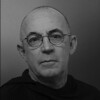
Man has been attempting to fly for around 2400 years yet has only begun to master the process in the last century. In the history of flight, 2004 is shaping as a good year. One of the pioneers of human flight, Yves Rossy, recently achieved a landmark which went largely unheralded. Rossy’s feats might well go down among the most daring as well as momentous in aviation history.
Rossy made headlines in 2003 when he flew 12 kilometres for the loss of just 3000 metres of altitude, achieving his feat by jumping out of plane wearing three metre, carbon fibre wings.
The former military pilot, 45, who flies Airbuses for Swissair, spent five years developing his wings for his flying man project but went one better with his 'jet-man' project by adding two kerosene-powered jet engines to his original wing design to become the first man to fly like a bird: horizontally.
At 7:30pm on June 24, 2004 Rossy dropped from 4000m over the Yverdon airfield. After opening the wings, he glided to 2500m, ignited the engines and waited 30 seconds for them to be able to stabilize and begins to open the throttle. At 16m, he achieved horizontal flight for more than 4 minutes at 100 knots (115 mph).
"It was absolutely fantastic; freedom in three dimensions...I felt like a bird." That's how Rossy described his land-mark flight. Looking like Buzz Lightyear from the film Toy Story as he soared over the Alps at 180km/h. To perfect the performance, the aerodynamic wings were improved and their span was increased to 3 meters.
Because there was a loss of rigidity due to the inflatable side of the wings, Yves had to stop his collaboration with "Prospective Concepts", who made the original design, and work only with "ACT Composites" who then created foldable carbon wings, able to be used from a Pilatus Porter plane.
Handles were also fixed onto the wings so that Yves could electronically manipulate the wingtips, this giving him the freedom to decide when he wanted to either glide or dive.
These new wings were tested quite a few times with different weights on them so as to see how and where the kerosene port and engines would be placed.
Many simulations were tested before being able to fix on the real engines and most importantly before being ignited.
The veteran thrillseeker has entered the Guiness Records for various pioneering flights and was just as enthused about this one.
"It would be a great device for James Bond so he can go behind enemy lines," he said. He also holds a record for dangling from the wing of a biplane, and lists his hobbies as "bare-foot water-skiing, wakeboard, hydro-speed, delta flying and paragliding, snowboarding and aerobatic flying". In 2002 Yves contacted the worlds leading model jet engine Company, "Jet-Cat", based in Germany.
The company, which specialises in motorising miniature planes, quickly showed its interest to help Yves install engines onto his wings. Many tests were made with different engines, different air intakes, and they even had to test at altitudes reaching 4000 m as these particular engines had never been tested before at such an altitude.
A test team was taken up in a Pilatus Porter so that fine-tuning could be made until the engines worked perfectly at high altitude. Once all ignition tests had been done at ground level, the real thing was ready to be done, but like all prototype experiments, success is certainly not guaranteed on the first trial.
Anything is possible, ignition failure, ignition of only one engine, flight instability and even spinning is possible,but all of these failure tests were made during the long testing sessions.
After running in to turbulence Yves cut off the two engines despite having half full tanks at the time.
But the most important was achieved, the Jetman flew. Yves parachuted safely to ground to be welcomed by a jubilant crowd.