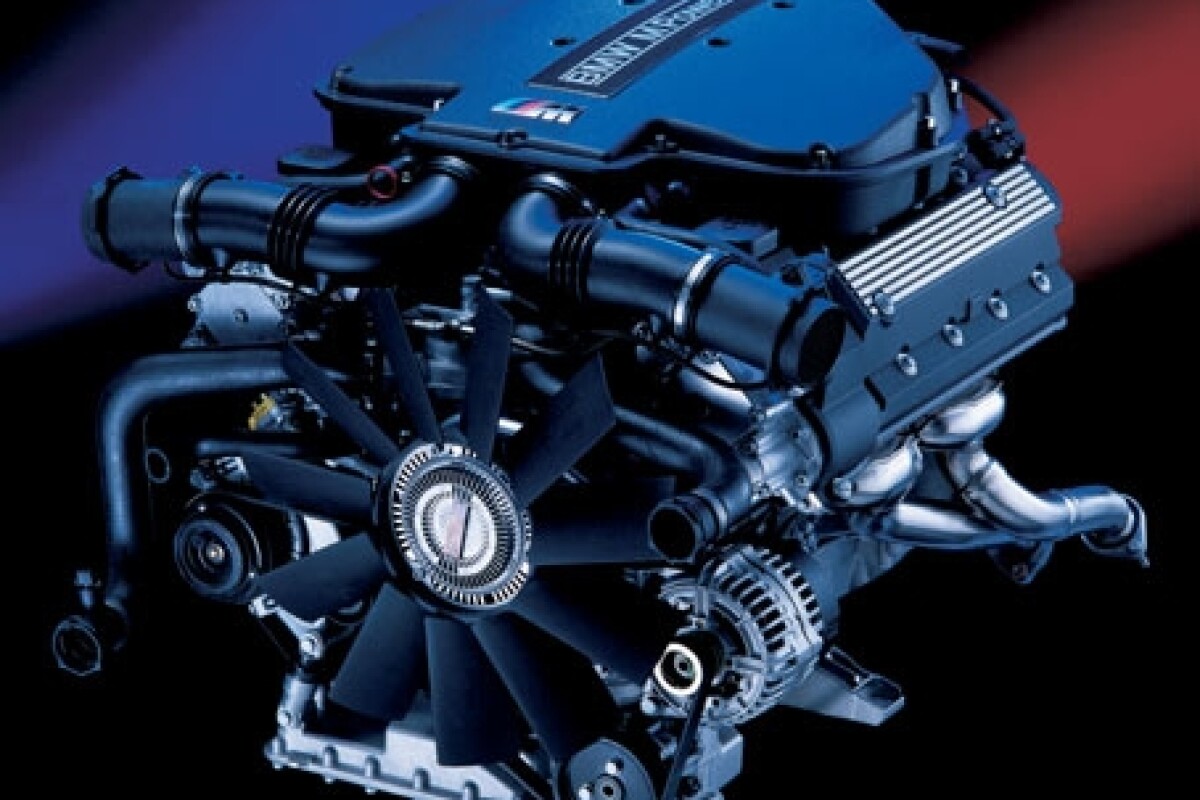



Each time BMW M introduces a new model, the focus of attention is rightly centred on what lurks beneath the domed bonnet bulge.
For the E60 M5 sedan due on sale in Australia mid-2005, the answer is a high-revving ultra-powerful V10.
The engine shares more than just its number of cylinders with the Formula 1 engine that powers the BMW WilliamsF1 team. Technology forged in the heat of motorsport has enhanced the processes and components used in this new powerhouse engine.
As you would expect from BMW M, this high-performance normally aspirated engine generates enormous pulling force over its entire speed range.
The BMW M V10 is the only high-revving power unit to be featured in a series-production car. The M5's V10 boasts a cubic capacity of 5.0-litres and produces a maximum output of 507 BHP (378 kW) and a maximum torque of 520 Newton metres, making the M5 the most powerful production model in the BMW line-up.
It has been 20 years since BMW introduced the concept of the ultra-high performance sedan with the arrival of the original E28 M5. At that time the straight-six engine set the benchmark for naturally aspirated performance power units, and every successive M5 has continued this tradition.
M drivers thrive on accelerative thrust and driving dynamics. Engine torque and the transmission ratio significantly influence the drive forces at the driven wheels and the high-revving V10 allows an optimum transmission ratio, thus guaranteeing impressive forward thrust. The compact, high-revving normally aspirated engine boasts a red line of 8,250 rpm. Compared to the previous M5 V8 engine, performance has increased by a massive 25 per cent. In keeping with its racing bloodline, the M5 surpasses the magical 100 BHP per litre output, its specific output being on par with that of racing cars.
BMW, one of the leaders in engine construction, has made a name for itself primarily as a manufacturer of inline engines. But its V-engines are also something extremely special. The two five-cylinder banks of the V10 are arranged at an angle of 90-degrees to achieve a mass balance of the crankshaft drive, optimised for low vibration and increased comfort.
To ensure maximum stiffness and resist the high loads resulting from combustion pressure, engine speed and vibrations, a bedplate design has been chosen for the crankcase. For an optimum alignment of the crankshaft, grey-cast iron inserts have been integrated into the aluminium bedplate, which also serve to enhance acoustics, increase vibrational comfort and ensure a high oil supply rate.
The extremely stiff crankshaft is supported by six bearings. In the new M5, it is the first time that BMW has used a bedplate design for a production V-engine.
The one-piece aluminium cylinder heads of the V10 engine are arranged in banks. The V10 power unit features four valves per cylinder, a typical BMW trait. All valve train components are of low mass. Thus, for example, the M engines feature for the first time low-weight, flow-optimised 5 mm-shaft valves, spherical valve tappets with hydraulic valve play compensation and single valve springs. All this results in a considerable mass reduction, which is a prerequisite for the realisation of the high-revving concept. The bi-VANOS variable valve timing featured in the new M5 engine ensures an optimum charge cycle, thus helping to achieve extremely short adjustment times. This means in practice: increased performance, an improved torque curve, optimum responsiveness, lower consumption and fewer emissions. Thanks to the bi-VANOS technology, intake and outlet valves are always opened and closed at precisely the right moment. The naturally aspirated engine uses ten flow-optimised intake trumpets to "inhale" air from two intake plenums.
Each cylinder has its own throttle, a feature typical of racing cars. All throttles are actuated simultaneously and are electronically controlled in order to make the engine highly responsive in the lower speed range, as well as to achieve an immediate response of the vehicle at the high end of the performance spectrum.
The exhaust system of the new M5 engine is made of seamless stainless steel and has a dual-flow design all the way to the silencers. The exhaust gases leave the system through four tailpipes, now a regular M trademark. The exhaust system complies with the European EU4 and the US LEV2 emission standards.
The MS S65 engine management system is the central factor behind the V10's outstanding performance and emission data. With more than 1,000 individual components, this engine management system is unparalleled in its package density. Its processors are the most powerful currently approved for use in automobiles, as high engine speeds and comprehensive management and control tasks demand the utmost from this system. Receiving more than 50 input signals, this system calculates for each individual cylinder and for each individual cycle the optimum ignition point, the ideal cylinder fill, the injection quantity and the injection point. At the same time this system calculates and makes the necessary adjustments for the optimum camshaft angle and the optimum position of the ten individual throttles.
The ionic current technology featured by the engine management unit is a technological highlight which serves to detect engine knock, misfiring and combustion misses.
Utilising the spark plug in each cylinder, this system helps to pinpoint engine knock, to check for correct ignition and to detect any ignition misses. Thus the spark plug has a dual function - as an actuator for the ignition and as a sensor for monitoring the combustion process.
Ionic current measuring is done directly during the combustion process. The ionic current satellite receives signals from the five spark plugs of each cylinder bank. Dependent on the load, it amplifies these signals and transmits them to the engine management system for analysis, which, for example, perfectly adjusts the ignition point of each cylinder via knock control to the combustion process. All this results in benefits for the driver of the new M5 - lower fuel consumption, higher torque and enhanced performance.
The high-revving M5 maximises the driver enjoyment quotient via a new seven-speed gearbox optimised for split-second changes.
BMW M is the first manufacturer worldwide to offer a seven-speed sequential gearbox with drivelogic function. Even more highly refined than the previous six-speed transmission, the seven-speed SMG gearbox enables manual gear selection with ultra-short shifting times as well as comfortable cruising thanks to the automatic gear selection mode. The purpose of the additional seventh gear is to reduce engine speed and torque gaps.
The new seven-speed SMG gearbox allows gears to be changed using the central gearshift lever or via paddles mounted on the steering wheel. Compared to the previous SMG transmission, gear change times are increased by 20 per cent. The advantage for the M5 driver is a smooth and super slick gear-change, accomplished at speeds impossible to reach even by the most proficient driver, thus smoothing out the traditional imperfections in the power flow through the gears. The M5 delivers an almost jerk-free performance when accelerating from a standstill to its top speed.
Thanks to the SMG's drivelogic function, the driver can choose from eleven gear change options, which enable them to adapt the SMG's characteristics to their very own style of motoring.
Six of these programs can be preselected in the sequential manual gearbox mode (S mode), the spectrum ranges from balanced dynamic to very sporty. With the gearbox in the S mode, the driver always shifts gears manually. Whenever the driver activates the Launch Control function, the SMG Drivelogic shifts gears shortly before the maximum engine speed is reached at precisely the right moment and with optimum slip until the M5 reaches its top speed.
In the D (Drive) automatic gearshift mode, the transmission shifts the seven gears automatically, depending on the program selected, the driving situation, the road speed and the position of the accelerator pedal.
The seven-speed SMG gearbox not only supports the driver in achieving motor sports performance, but also offers scores of safety features. In critical situations, when the driver shifts down on a slippery surface, for example, the gearbox opens the clutch in the fraction of a second in order to prevent the M5 from swerving out of control in the event of excessive drag torque at the driven wheels.
An anti-roll feature prevents the car from rolling backwards during hill starts. A hill detection programme adjusts the shift points on gradients and descents. This prevents gear hunting when charging up a long hill. For down hill runs, hill detection holds the lower gears for longer in order to make effective use of the engine's braking power.
The high-performance power unit featured in the new BMW M5 reflects the engineering competence of the BMW engine construction specialists.
The most powerful production engine in the company's history is manufactured along with other BMW special engines on a highly flexible production line at the BMW plant in Munich.
The wide selection of products requires very agile processes and demands the utmost flexibility, profound product knowledge and skilful craftsmanship from the qualified staff.
The most stringent quality standards are met in the mechanical production and assembly of the high-revving engine. As the materials and components are exposed to heavy loads, extremely high demands are placed on surface quality and production tolerances.
Some parts and components are processed at a precision of up to one thousandth of a millimetre.
The coding of the core components enables the staff to keep track of each individual component from goods receipt to processing and through to installation. A storage medium is provided for each engine to ensure, by data transfer to the assembly stations, that the right parts and tools are used.
The M5 is due on sale in Australia mid-2005. Pricing and further specification details will be announced closer to launch.