


After three years in development, Flow (or strictly speaking ~Flow, with a leading tilde), a floating musical watermill has opened to visitors at Newcastle Quayside in England's North East. Actually a tide mill, Flow's waterwheel powers a variety of handcrafted electroacoustic instruments. The sound of the instruments changes dynamically according to the conditions of the river itself. In a sense, the river is playing the mill.
Trying to define electroacoustic music in an effort to present an idea of what Flow is about is problematic. Even practitioners of electroacoustic music struggle to define it and, tellingly, the Wikipedia article on the subject makes little or no attempt to explain what it is, either. In many cases, though, electroacoustic music makes use of electronic technology not only as the final source of the sound, but also as a catalyst or influencing presence in the recording.
In the case of Flow, sensors are used to detect the Tyne's status with respect to the tidal cycle. These sensors influence "three inter-connected sonic instruments" which make use of both electronic and non-electronic technology. Water is drawn directly from the Tyne and then passed through "a series filters, lasers and sensors, which bubble, beep, hiss, creak and groan."
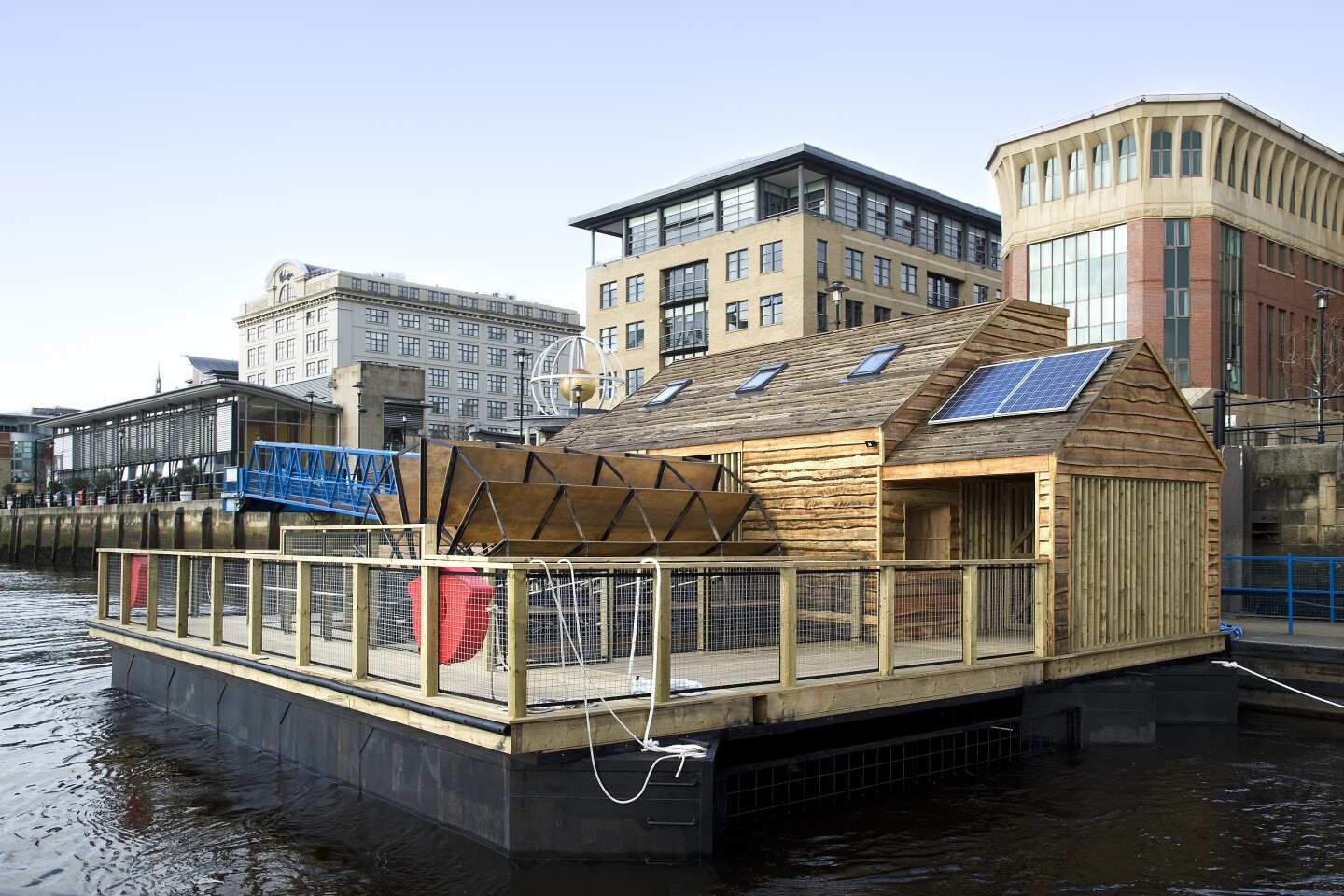
The three instruments are also influenced by different properties of the water samples. A (wonderfully named) Salinity Sampler Sequencer "plays" hourly river water samples with the assistance of a wooden conveyor belt and electronic sensors. A Bubble Synth is influenced by the chemical makeup of the river, also making use of a "giant overhead bellows." And an equally-wonderfully titled Laser Turbidatron is influenced by the muddiness of the river samples, driven by a series of gears and cranks. Other factors such as water temperature and direction also influence the sounds generated.
And as well as being influenced by the river, the music is also affected by visitors to what is, in effect, a walk-in musical exhibit that floats upon the river.
Flow was commissioned by the Arts Council England as part of the London 2012 Olympic celebrations. The project is a collaboration between artist group Owl Project, music and arts producer Ed Carter, boat-builder Nick Spurr, architect Nicky Kirk and waterwheel designer David Wilcox.
Flow can be visited Wednesdays through Sundays throughout England's summer months, though we gather it is wise to plan your visit to coincide with the waxing or waning of the tide. At high and low tide the waterwheel doesn't turn and Flow falls quiet. A time-lapse video of Flow being constructed is below.
Source: ~Flow, via the Northumberland Gazette