Spicy paper claimed to keep fruits and veggies fresh longer
By Ben Coxworth
November 20, 2012
FreshPaper is herb-infused paper, that is claimed to prolong the shelf life of fresh fruits and vegetables
Image Gallery (3 images)While we all know how important it is to eat plenty of fruits and vegetables, it can often be difficult to use all that we buy before they spoil. A product known as FreshPaper, however, is claimed to keep such foods fresh two to four times longer than normal – and it does so just using spices.
The proprietary mix of organic spices infused in every paper sheet was discovered by inventor Kavita Shukla, when she paid a visit to her grandmother in India. It turned out that her grandmother’s family had been using the formulation for generations, to prolong the shelf life of fruits and vegetables. Although the exact ingredients are a trade secret, the fact that Shukla’s company is called Fenugreen points to the fact that fenugreek is one of them.
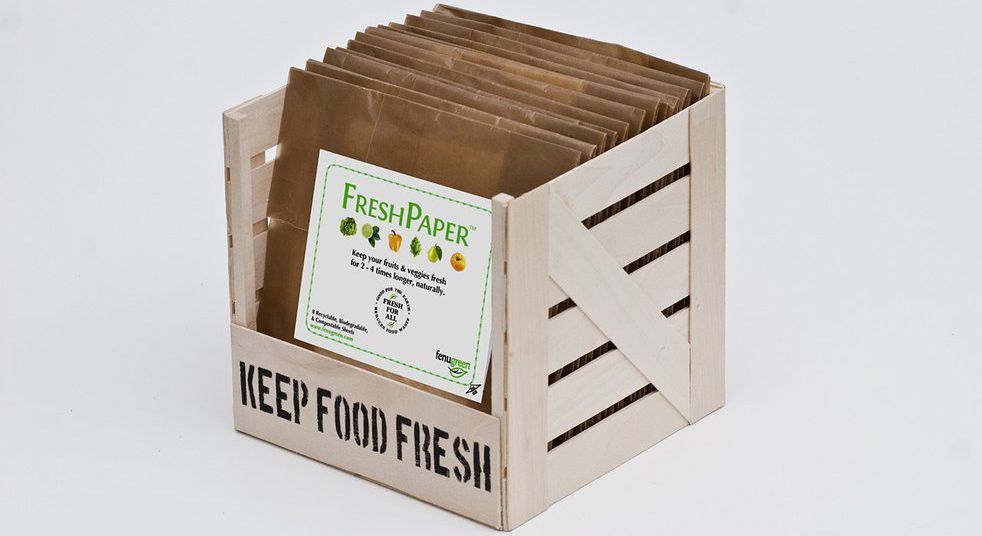
The sheets themselves can just be placed in the bottom of a fruit bowl, fridge drawer, or anywhere else that fresh produce is being stored. The produce itself is then placed directly onto the sheet, the herbs in which reportedly inhibit bacterial and fungal growth.
As long as the sheet emits a maple-like odor, that means it’s active. After about two or three weeks, the smell will fade and the biodegradable sheet should be replaced.
FreshPaper sells for US$4.99 for a pack of eight sheets, or $42.99 for ten eight-packs.
Source: Fenugreen via Fast Company

An experienced freelance writer, videographer and television producer, Ben's interest in all forms of innovation is particularly fanatical when it comes to human-powered transportation, film-making gear, environmentally-friendly technologies and anything that's designed to go underwater. He lives in Edmonton, Alberta, where he spends a lot of time going over the handlebars of his mountain bike, hanging out in off-leash parks, and wishing the Pacific Ocean wasn't so far away. All articles by Ben Coxworth
@bergamot69 - if tainting occurs, I'd guess it would be maple-like, which might be fun/nice anyhow.
christopher21st November, 2012 @ 04:50 pm PST
Hmph. Typical abuse of the broken USA patent system: in what universe could an idea handed down through generations still be patentable?
christopher21st November, 2012 @ 05:00 pm PST
Yes, it will probably taste spicy (or with a bit different flavor) but if humans can get used to the taste of scotch, whiskey, vodka, caviar, etc then this will be a minor adaption. In fact, you might even come to like it and expect it?
Pres21st November, 2012 @ 09:23 pm PST
The TED talk about the discovery describes the home remedy as something that was actually used to prevent sickness, not for food: https://www.youtube.com/watch?v=UrqRudIUPWs
foodie30th November, 2012 @ 05:43 pm PST
Or Login with Facebook:
Just enter your friends and your email address into the form below
For multiple addresses, separate each with a comma
Privacy is safe with us because we have a strict privacy policy.

Interesting, but will it taint the fruit?
I used to live near an Indian grocers shop where they sold lots of spices (very cheaply too compared to supermarkets). Only problem was, that everything else in the shop, from breakfast cereals to toilet paper, would be tainted by the odour from the spices- even if they were stored at the opposite end of the shop. So I'd want to know that my fruit wouldn't taste spicy when stored on these sheets.
bergamot6921st November, 2012 @ 04:00 pm PST