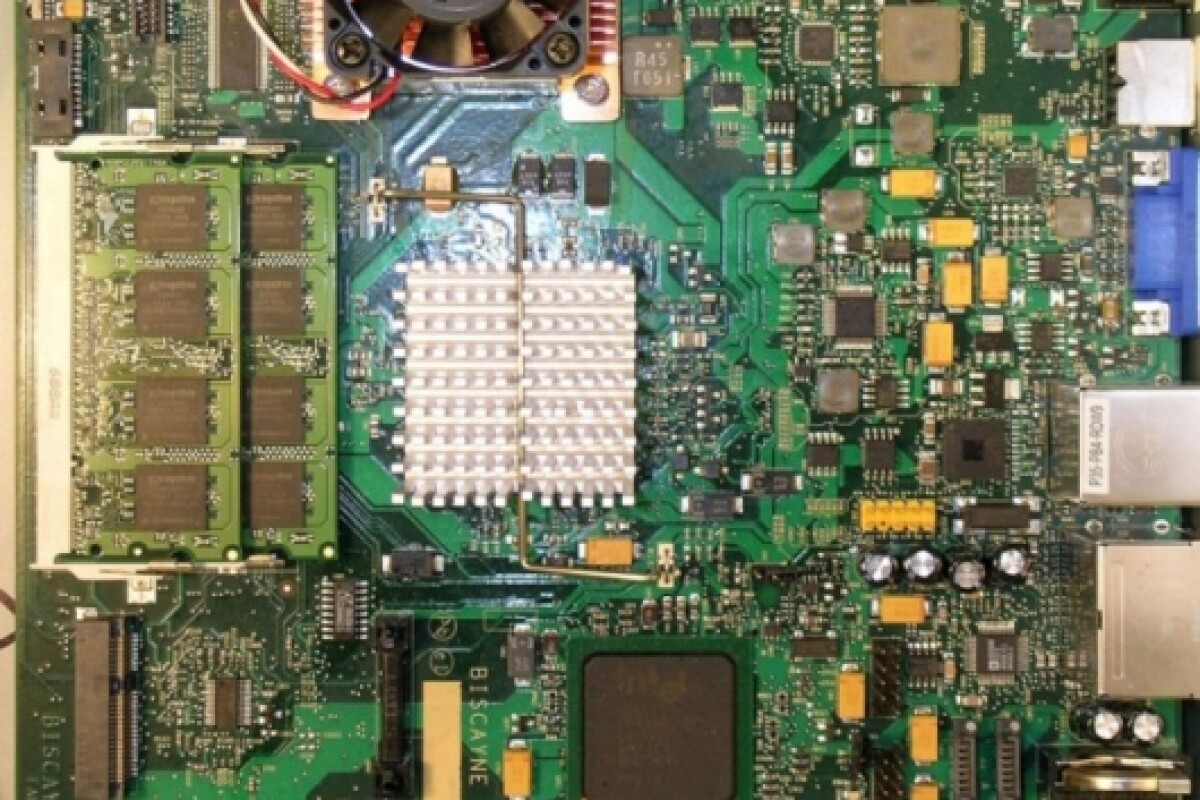



April 13, 2008 Using off the shelf technology researchers have developed a highly energy efficient computer that consumes 70 percent less energy than ENERGY STAR labeled computers. Researchers Peter May-Ostendorp and Nathan Beck of Ecos collaborated with chip makers Intel, AMD and Via Technologies to see how much they could reduce the energy demand of computers operating in today’s business environment by using the hardware makers’ most-efficient computer platforms and adding best-in-class components such as hybrid hard drives and right-sized 80 PLUS power supplies.
Typically, commercial desktops use about 95 percent of their energy while operating, and much of that time is spent in idle, rather than active, mode. With funding and support from the California Energy Commission’s Public Interest Energy Research (PIER) program, researchers from Ecos developed several office desktop computers for testing. They installed the Windows Vista operating system and then tested the machines’ performance using the SYSMark 2007 PC performance metric to establish benchmarks for each. Ostendorp and Beck compared the performance of a Class B ENERGY STAR computer that consumes 65 watts at idle with several desktop computers they designed to come up with a market-ready system and an ultimate efficiency system. All of the machines tested consumed from 40 percent to 70 percent less electricity than allowed under ENERGY STAR standards. The most-efficient computer consumed just 19 watts at idle. Most of the computers had sufficient performance to conduct the most common business computing functions.
With the point of the exercise being to design the most efficient system possible with the technology that is available today, cost was not a consideration, however Ostendorp says the market-ready efficient desktop Ecos built is a cost-effective option for adoption today. It would add less than US$40 at retail, and the payback would be within the first three to four years — or even less, if users were very aggressive with their power management settings. Over the course of a year, a single machine would use roughly 190 kWh and run up US$18.98 in electricity costs, compared with 408 kWh and $40.84 for a Class B ENERGY STAR computer. “If every U.S. business purchased computers comparable to the ultimate efficiency model,” says Ecos Policy and Research Director Chris Calwell, “it would eliminate the need for about three typical coal-fired power plants.”
Ostendorp and Calwell demonstrated the machines at the American Council for an Energy Efficient Economy, (ACEEE), Market Transformation Symposium in Washington. Ecos’ work on efficient computers is ongoing.