
Highlights from the 2012 Beijing Motor Show
MORE TOP STORIES »
AERO GIZMO

AgustaWestland AW609 tiltrotor aims for 2016 FAA certification

By

23:42 February 14, 2012

The AW609 tiltrotor aircraft from AgustaWestland combines the benefits of a helicopter wit...

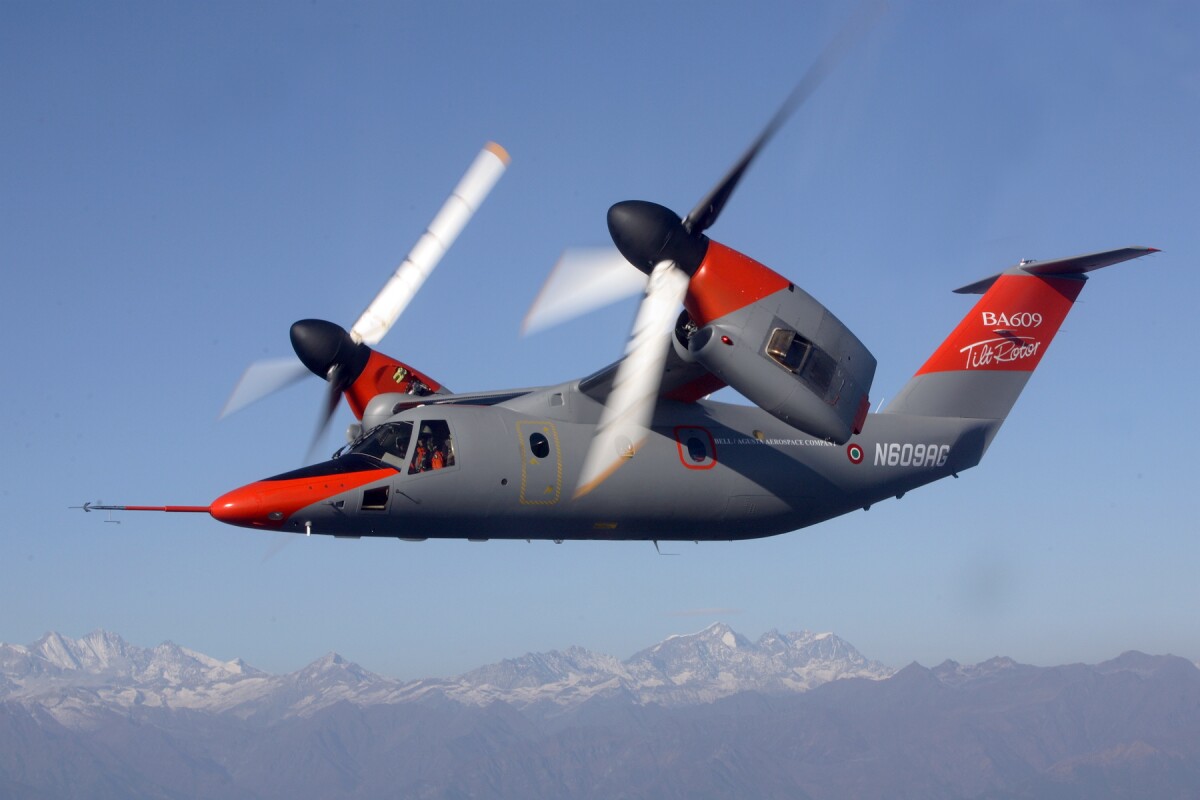
The AW609 tiltrotor aircraft from AgustaWestland combines the benefits of a helicopter with the benefits of a fixed wing aircraft

Image Gallery (12 images)

We've been following the development of Eurocopter's X3 demonstrator with interest in recent years, but it's far from the only aircraft that aims to combine the vertical takeoff and landing (VTOL) capabilities of a helicopter with the speed, range and altitude capabilities of a fixed wing aircraft. Tiltrotor aircraft that feature powered rotors mounted on rotating shafts or nacelles at the end of a fixed wing have been around for half a century, the most famous probably being the Bell Boeing V-22 Osprey. While the V-22 is a military aircraft, AgustaWestland is developing its AW609 as a multi-role aircraft aimed at private, commercial, and government markets.

The AgustaWestland AW609 started life in 1996 as the experimental tiltrotor Bell XV-15 developed by Bell/Boeing. After Boeing pulled out of the project in March 1998, Agusta came on board in September of that year. It then became the Bell/Agusta BA609 and development continued through the merging of Agusta and Westland Helicopters in 2000.

AgustaWestland announced another name change for the aircraft to the AW609 at the Paris Air Show in June 2011 as it announced its intention to buy Bell Helicopter out of the program. This acquisition was completed in November 2011 and AgustaWestland has established a new subsidiary at a site in Arlington, Texas, to manage FAA certification and flight-testing of the first AW609 prototype.
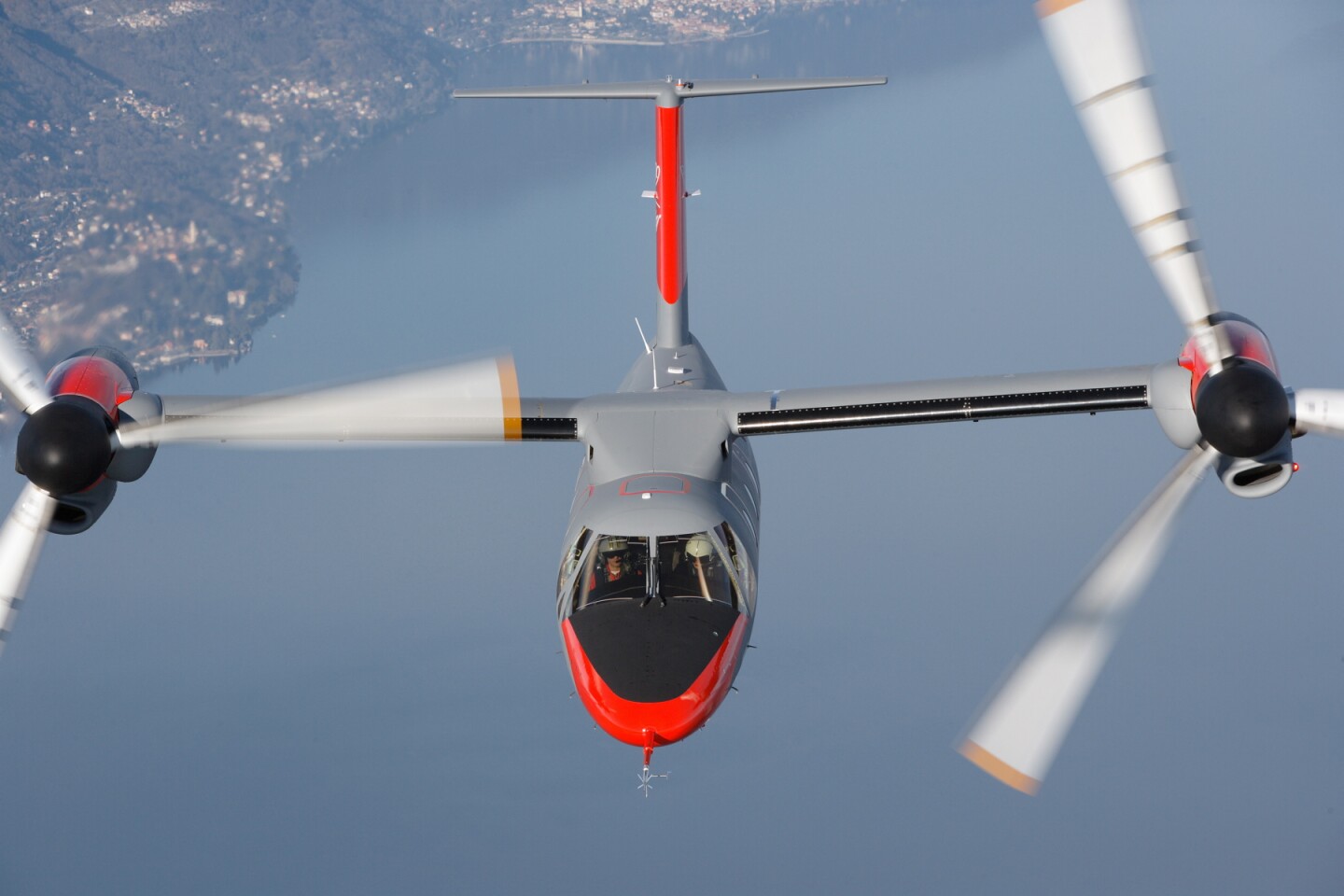
A second prototype is continuing testing in Cascina Costa di Samarate, Italy, with a third currently being assembled that will be devoted to icing certification testing. A planned fourth prototype will be used for the development and integration of new avionics and mission avionics.

AgustaWestland says the first two prototypes have already clocked up more than 650 flight hours and have proven the aircraft's ability to fly at altitudes of up to 25,000 feet and cruise at speeds of up to 275 knots at the aircraft's maximum takeoff weight of 16,800 lb (7,620 kg).

The AW609 is designed to fly with a crew of one or two and accommodate six to nine passengers. Powered by two Pratt & Whitney Canada PT6C-67A turboshaft engines, each delivering 1,940 hp (1,447 kW), the AW609 boasts a range of 700 nautical miles (805 miles, 1,296 km).
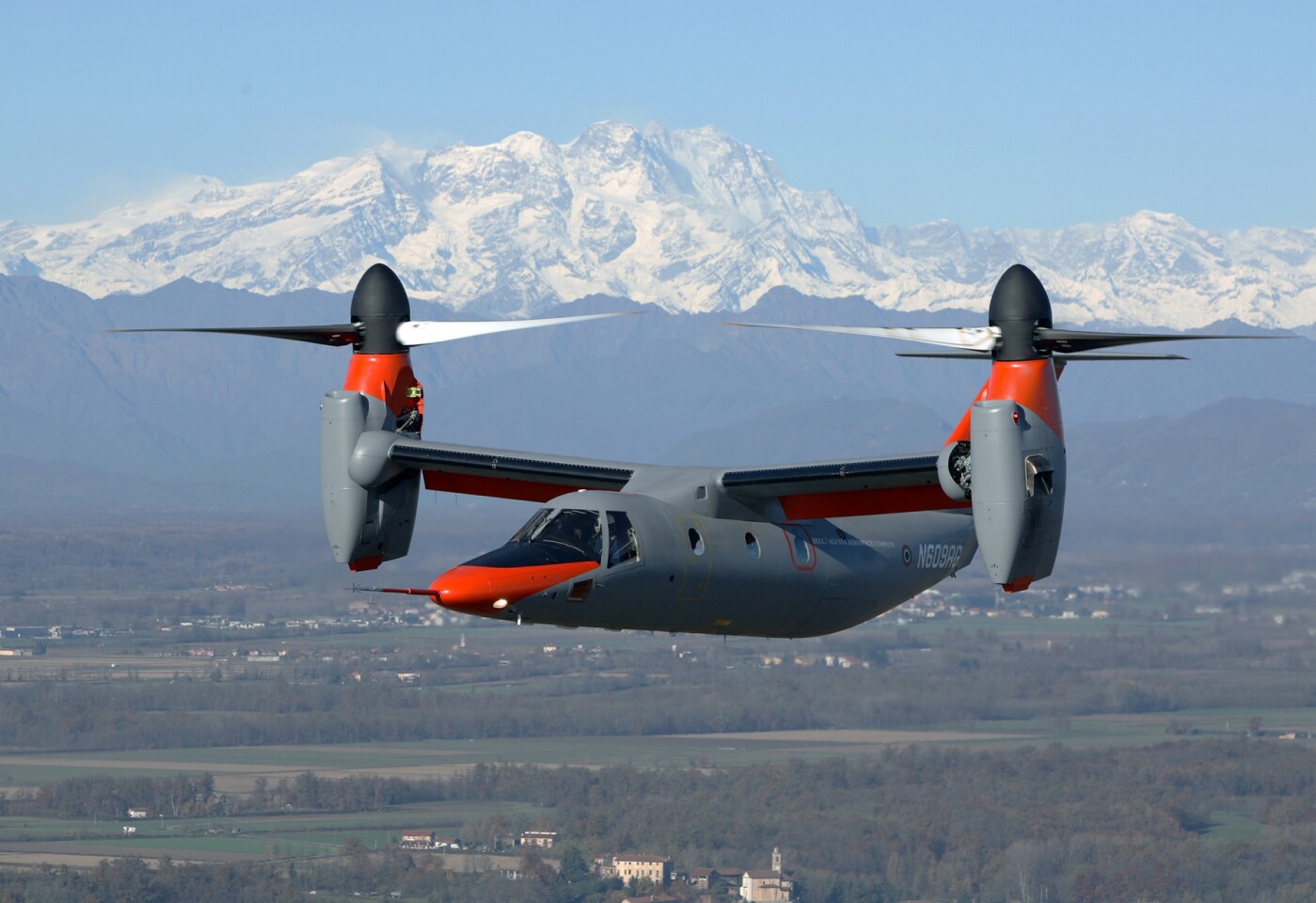
AgustaWestland is aiming to receive FAA certification for the AW609 in the first half of 2016 with deliveries set to begin immediately after. The company says it has already received orders for around 70 of the aircraft to perform a range of commercial and government roles. AgustaWestland says the AW609's capabilities make it ideal for applications such as emergency medical services (EMS), search and rescue (SAR), transport for "deepwater" oil and gas facilities, and transporting VIPs and Heads of State to and from congested urban areas inaccessible for fixed wing aircraft.

Source: AugustaWestland

Tags
User Comments (8)
 

I assumed that anyone building a Tiltrotor that didn't need to fold up to conserve deck space on a carrier would have gone with a greater number of shorter rotor blades.

comment Slowburn - February 15, 2012 @ 01:59 am PST

@ Slowburn - I think hover stability is helped by having a larger rotor disc.

comment PeetEngineer - February 15, 2012 @ 10:53 am PST

from what I understand of the aerodynamics and stability the larger rotors also use less fuel with the added benefit of not vibrating the plane apart. Ad to that the speed at the end of the blade not having to be faster than the speed of sound.

comment Hilary Albutt - February 15, 2012 @ 01:46 pm PST

I am still waiting for one of these companies to throw the current designs in the trash and build an electric four prop vehicle with two turbines that are for generating with battery backup for emergency landing.

Granted, electric motors and generators have weight and efficiency issues.

But it would be much simpler (no 3000 PSI hydraulic systems, no rotating gas/electrical/hydraulic systems coming from the engines) and be able to land with a rotor out of commission.

Maybe I am missing it, but these guys just keep doing more of the same.

If it was not for the Osprey I doubt Sikorsky would be pushing forward on their X2 program......

comment Dennis - February 15, 2012 @ 06:09 pm PST

re; PeetEngineer

The Sikorsky Skycrane has six blades on the main rotor and hovers just fine.

..........................................................................................................................

re; Hilary Albutt

The longer the rotor blade the lower the RPM it takes to get the blade tips going supersonic. In fixed wing mode the smaller rotor disk is advantages for speed and efficiency.

comment Slowburn - February 15, 2012 @ 09:40 pm PST

need more information about asymmetrical thrust and autorotation. in the osprey, when one engine fails or doesn't tilt properly due to sand, etc., you go down fast.

comment Ben Crumpacker - February 16, 2012 @ 10:09 am PST

Problem with long rotor blades is the tip speed. Spin too fast, the tips will approach supersonic speed which would create unwanted vibrations. Then there is the safety issue with longer rotor blades. There is a balance between blade length and blade speed. A ducted fan might work but that would increase the weight, maintenance and cost.

comment Ed Yee - February 16, 2012 @ 12:01 pm PST

re; Ben Crumpacker

The V-22 osprey has a power sharing system for single engine operation and a feedback system to maintain symmetrical power and tilt.

comment Slowburn - February 16, 2012 @ 06:40 pm PST
Post a Comment

Login with your gizmag account:


Or Login with Facebook:


Related Articles Email this article to a friend

Just enter your friends and your email address into the form below

For multiple addresses, separate each with a comma


Privacy is safe with us because we have a strict privacy policy.

Looking for something? Search our 18,058 articles