
Wearable
-
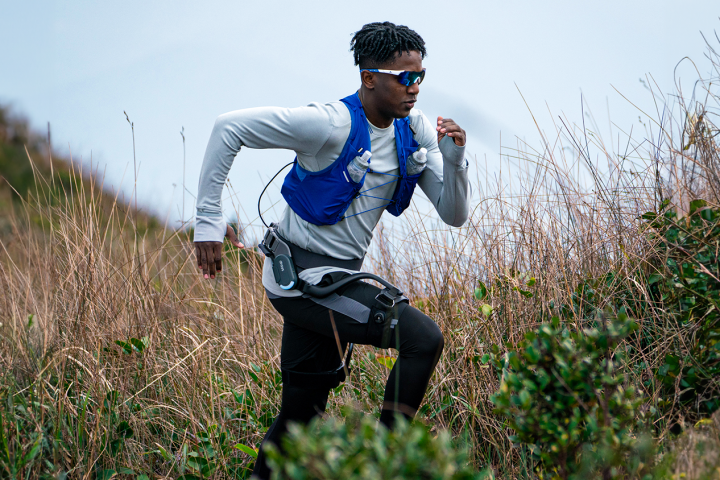 This new recreational adventure exoskeleton welcomes anyone to high-level hiking, scrambling and climbing, upgrading your anatomy with an extra 900 W of leg power. It shoulders up to 83 lb of load, sprints at speeds over 16 mph and packs down small.
 -
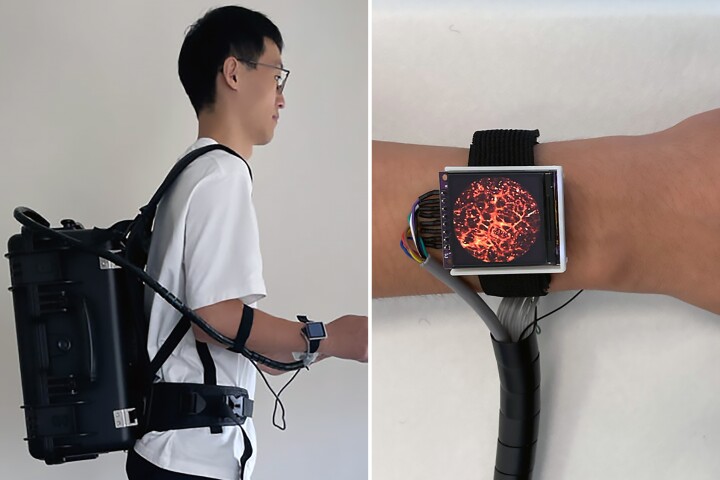 A tiny high-resolution photoacoustic imaging device that fits into a watch has been developed, offering a non-invasive way of measuring health parameters that indicate how well your heart is ticking along. It also looks cooler than any Apple Watch face.
 -
 In an effort to diagnose glaucoma, a condition that can cause vision loss, earlier, researchers have developed contact lenses with sensors that measure the pressure inside the eye and send the information to an ophthalmologist for evaluation.
 -
 Just like dry-land athletes, swimmers can benefit from monitoring their performance and vital signs while training. The iSwimWeaR device is designed to let them do so – plus it may even help keep them from drowning.
 -
 Researchers have developed an ultrathin electronic tattoo capable of reproducing the localized sensation of touch in its wearer. The device has the potential to be used to manufacture haptic displays and devices for healthcare and robotics.
 -
 MIT researchers have designed a wearable ultrasound patch that can image the bladder as well as a conventional ultrasound does, without the need for cold gel or an operator. The device could also be adapted to image other internal organs.
 -
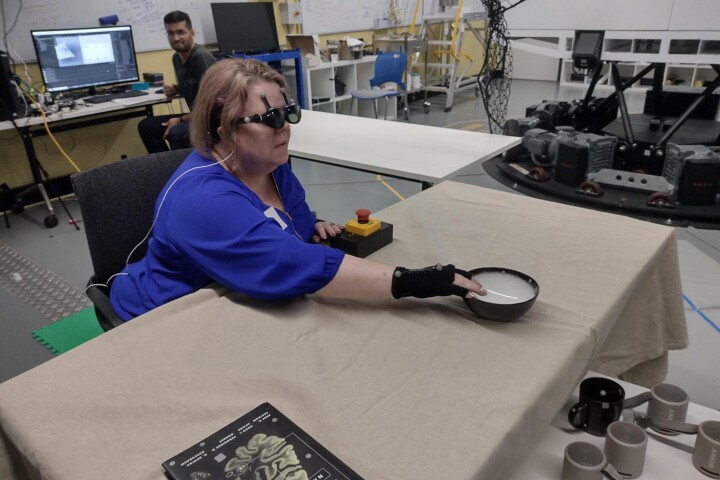 Inspired by bats’ use of echolocation, researchers have developed smart glasses that transform visual information into unique sound representations that enhance the ability of blind and vision-impaired people to navigate their surroundings.
 -
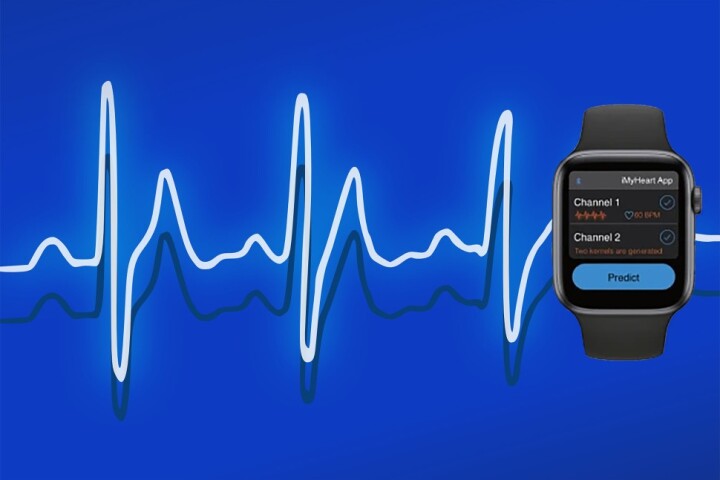 AI machine learning uses so much computing power and energy that it's typically done in the cloud. But a new microtransistor, 100X more efficient than the current tech, promises to bring new levels of intelligence to mobile and wearable devices.
 -
 Ordinarily, headlamp users have to manually switch the angle of their device, depending on what they're doing. The Adaptev Headlamp isn't like that, in that it automatically switches beam angles based on its wearer's head movements.
 -
 While it's important for dermatologists to know how itchy a person's skin is, patients' self-assessments are quite subjective. A new wearable sensor could help, by objectively measuring the frequency and intensity of its user's scratching sessions.
 -
 In fast-paced sports such as tennis, keeping your eye on the ball – and on your opponent – is essential to success. The FalconFrames wearable was designed with that fact in mind, as it's claimed to help boost its user's neuro-visual skills.
 -
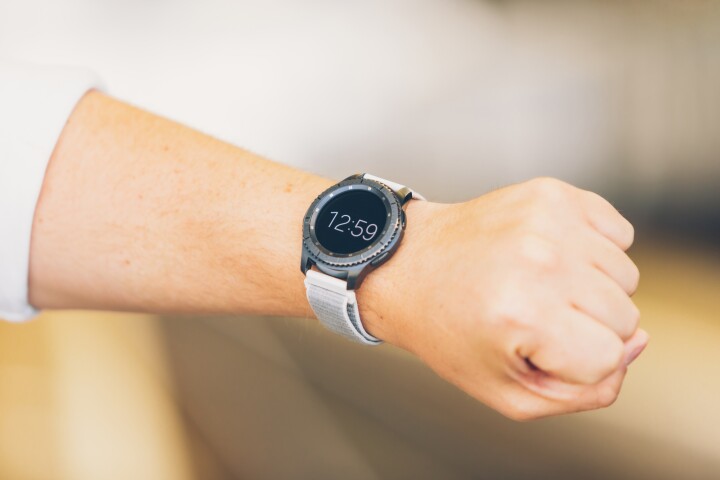 A new study has found that almost all wristbands harbor bacteria that have the potential to make us sick, but some wristband materials are prone to higher bacterial counts than others. It's a reminder to regularly sanitize these commonly used items.
Load More