
Water
-
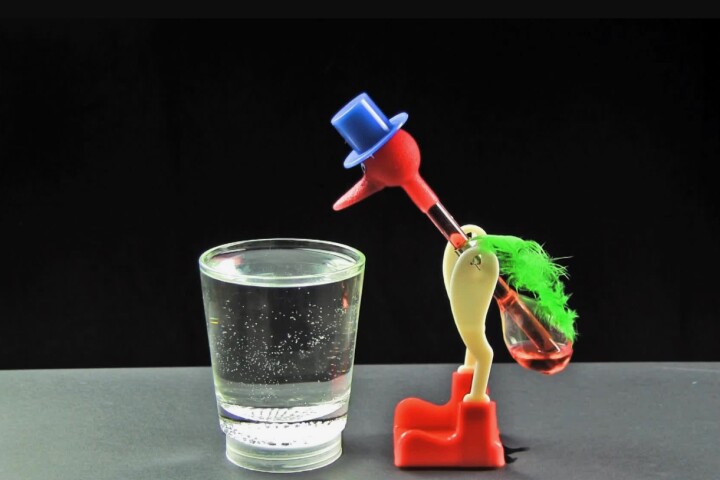 Scientists have converted a children's "drinking bird" toy into a tool that generates usable amounts of electricity. The generator could one day be utilized to power a wide variety of small electronic devices, both indoors and outside.
 -
 When you pour milk into breakfast cereal, the floating cereal tends to clump together. In fluid mechanics, that phenomenon is known as the ‘Cheerios effect,’ and it’s inspired the development of a unique but more efficient water-harvesting system.
 -
 When it comes to cleaning up marine oil spills, it's best if you can use a material that separates the oil from the seawater. Scientists have created a new organic membrane which does exactly that, and it's derived from oyster mushrooms.
 -
 While we've seen quite a few filtration systems for making polluted water drinkable, many are quite complex, or utilize costly materials. By contrast, an experimental new setup simply requires users to inject dirty water through a layer of cellulose.
 -
 To address the prospect of parched astronauts on Mars, NASA is considering a proposal. The agency may develop a method of using synthetic biology to remove toxic perchlorates from Martian ice deposits, thus making water from those deposits drinkable.
 -
 Japanese researchers have created and open-sourced a flying firefighting hose that levitates and steers itself to fight fires using its own water pressure as a two-part propulsion system, spraying water down onto fires and keeping operators safe.
 -
 With most of Arizona in a state of moderate to extreme drought, the Gila River Indian Community and the US Army Corps of Engineers have signed a deal to begin a solar-over-canal project designed to cut down evaporation and boost solar efficiency.
 -
 The James Webb Space Telescope has made the first direct analysis of clouds on a nearby alien world. These aren’t just made of water vapor but also sand, which would move around the planet much like Earth’s water cycle.
 -
 Researchers have created a floating, solar-powered device that converts contaminated water or seawater into clean hydrogen fuel and drinking water. Because it works with any open water source, it could be used in resource-limited or remote places.
 -
 Contrary to elementary school science class, it turns out that heat may not be necessary to make water evaporate. Scientists at MIT have made the surprising discovery that light alone can evaporate water, and is even more efficient at it than heat.
 -
 Scientists have developed what they call the most water-repellent surface ever. By giving it a liquid-like coating that defies usual designs, water will roll off the surface at angles 500 times shallower than other superhydrophobic materials.
 -
 At disaster sites, it's not uncommon for both the water supply and electrical grid to be out of commission. That's where a new system may someday come in, as it utilizes just a small amount of electricity to desalinate seawater for drinking.
Load More