
Washington State University
-
 While stormwater runoff pollutants in general aren't great for aquatic animals, chemicals from tire particles are particularly harmful to salmon. A study now shows that permeable pavements could keep most of those toxins from ever reaching the fish.
 -
 In regions where dogs often run loose, don't wear tags and aren't chipped, it can be hard for authorities to keep track of which ones have been vaccinated against rabies. A new app could help, by identifying dogs via facial recognition technology.
 -
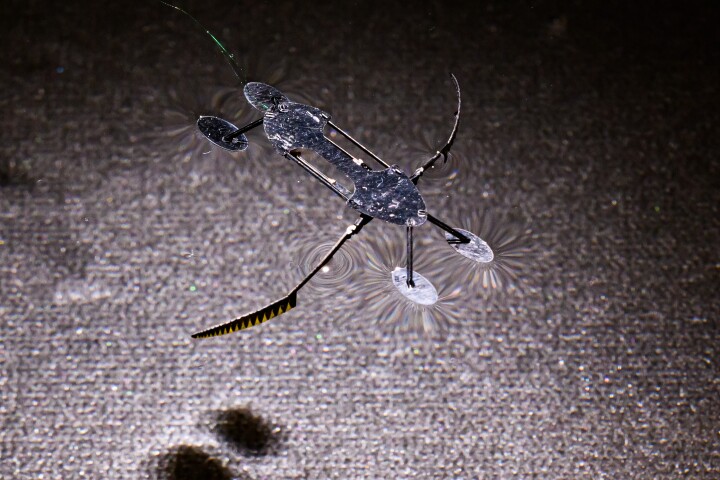 Water striders are fascinating to watch, as they scoot across the water while supported by surface tension. Scientists have now built a tiny robotic version of the insect, which utilizes a record-breaking actuator to get a move on.
 -
 Researchers have uncovered a brain mechanism that causes 'the munchies' after cannabis use, paving the way for therapeutics to treat appetite disorders like anorexia and obesity and to improve the appetite of patients undergoing cancer treatment.
 -
 Electrically conductive "smart fabrics" have many potential applications, but their specialized fibers typically aren't as soft and flexible as those made of regular materials. An experimental new fiber, however, is both flexible and conductive.
 -
 While titanium implants such as artificial hips can greatly improve patients' lives, they're also subject to serious bacterial infections. An experimental new antibacterial titanium alloy, however, could make such problems a thing of the past.
 -
 There is a growing body of evidence that points to night shift work being extremely bad for our health. But scientists believe some big, hairy "extreme shift workers" may hold the cellular secrets to staying healthy amid circadian rhythm disruptions.
 -
 A new study has found that a majority of medical cannabis users suffering from insomnia and poor-quality sleep are ditching conventional over-the-counter and prescription sleep aids in favor of using the drug to treat sleep-related problems.
 -
 Normally, staying up for extended time periods leads to the need for extra sleep. But researchers have just found that activating astrocyte cells in mice caused the rodents to stay awake for six hours longer than usual, with no noticeable sleep debt.
 -
 Different types of metal have different qualities, so combining them can result in items that outperform those made of any one metal. A new technique now allows such mixing to be performed by 3D printers, faster and easier than ever before.
 -
 Robotic versions of flying insects hold a lot of promise for numerous applications, but controlling their yaw axis while in flight has proven challenging. A new bee robot, however, addresses that problem with a clever design.
 -
 Concrete is one of the largest single sources of human-induced carbon dioxide emissions. Engineers at Washington State University have now developed a new method for making concrete that absorbs more carbon than it emits.
Load More