
VTT
-
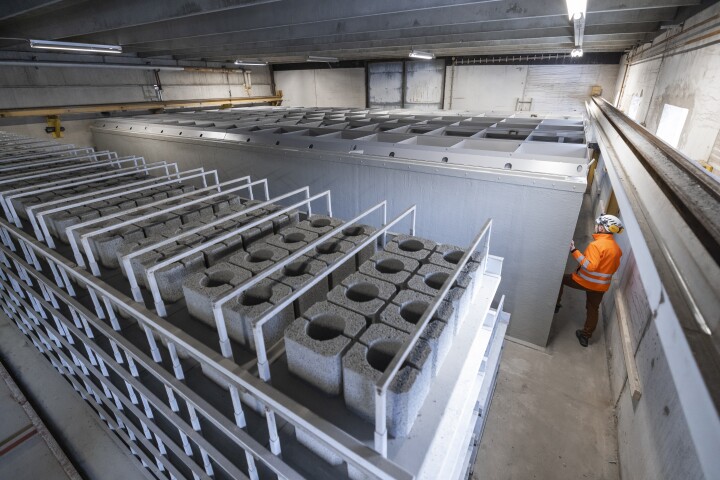 Concrete has been used in construction for thousands of years, it's everywhere. But its production is a major contributor to global carbon emissions. A project spun out of VTT Finland is looking to make concrete manufacture carbon negative.
 -
 We've seen how lab-grown meats could help address the massive environmental costs associated with livestock production, and we're now seeing some interesting possibilities emerge around one of the world's most popular drinks – coffee.
 -
 A short-range radar wearable being developed by the VTT Technical Research Center of Finland could soon be guiding the visually impaired through their outdoor activities. VTT’s Guidesense is a chest-worn monitor that alerts the wearer of potential obstacles through vibrations and voice feedback.
 -
 ScienceWin-win: How Finnish researchers are hoping to ease agriculture's toll on the environment with a device that converts plant cells into food.
 -
 VTT Technical Centre of Finland unveiled its decorative, mass-producible organic photovoltaic (OPV) leaves in January. Now, the company has followed the logical path and come up with an energy-harvesting tree that generates electricity from a variety of sources.
 -
 Scientists at VTT Technical Research Center of Finland have figured out how to "harvest" the energy from mechanical vibrations that occur naturally between surfaces with different work functions, and this energy could potentially be used to power wearables and other low-power electronics.
 -
 By-products are common to most industries. Some are harmless, some dangerous and others useless. Others are simply under-utilized. Finland's VTT is using hydrogen generated as a by-product of the sodium chlorate production process in its pilot-scale power plant to produce electricity.
 -
 Horatio Hornblower meets Jean-Luc Picard on the ship’s bridge of 2025 as Finnish applied research organization VTT and Rolls-Royce present their vision of seafaring ten years from now.
 -
 ScienceA 170-year-old beer recovered from a shipwreck has been analyzed and will be reproduced using modern industrial production methods.
 -
 Researchers in Finland have developed a software called PredictAD that compares database information on patients to help detect Alzheimer's disease earlier.
 -
 VTT is field testing a solid oxide fuel cell system that may someday provide grid electricity from natural or bio- gas.
 -
 Finnish officials are testing a portable system that automatically detects traffic violations and notifies police.
Load More