
Tracking
-
 The tracking of squid and other soft-bodied sea creatures may soon be a lot more doable, thanks to a new bioadhesive interface. It's claimed to be much gentler than current attachment methods, while still remaining up to the task.
 -
 Budget smartwatch maker Amazfit has unveiled the Helio Ring, a smart wearable that's not designed for casual fitness fanatics but is aimed at monitoring key health metrics that athletes need to maximize performance.
 -
 Tiny bursts of electrical energy caused by collisions of objects no wider than a pencil lead could one day allow pieces of space debris smaller than one millimeter in diameter to be tracked, reducing the danger to spacecraft in Earth orbit.
 -
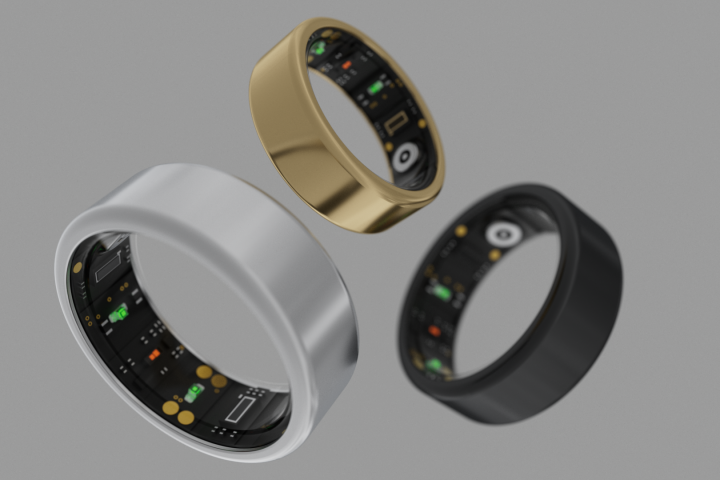 Folks looking to monitor health metrics while on the move will likely pop a smartwatch on their wrist. Those wanting a simpler option might go for a smart ring instead, and wearable outfit Omate has just launched the Ice Ring in Europe.
 -
 Polar's latest premium smart sportswatch has gone up for pre-order. The Vantage V3 features a sharp, bright AMOLED display, comes with offline maps, and packs a new sensor suite called Elixir that's more capable than any Polar wearable before it.
 -
 Nothing has announced the first products from its budget sub-brand CMF, which includes the Watch Pro – a somewhat Apple-like smartwatch rocking a large AMOLED display, built-in GPS, more than a hundred sport modes, and a 13-day battery.
 -
 Though most smartwatches will offer analog-looking faces, companies like Withings have been offering a mix of both worlds for a number of years. Now the company has launched its latest flagship hybrid health tracker in the shape of the ScanWatch 2.
 -
 QR codes are everywhere nowadays, but they don’t have to be. MIT scientists have developed an invisible tagging system called BrightMarker, which embeds fluorescent tags into objects that can be viewed and tracked through an infrared camera.
 -
 Exactly 10 years ago, Omate launched a funding campaign on Kickstarter for a standalone smartwatch called the TrueSmart. Now the company has launched the second generation, this time as a Wearable-as-a-Service platform for seniors and lone workers.
 -
 With grim predictions that all polar bears may be wiped out by the end of the century, it’s vital scientists find a way to better monitor the beasts to see if conservation efforts are having any impact. So they decided to 'fingerprint' them using DNA.
 -
 Amazfit has announced its latest wallet-friendly smartwatch, with the Bip 5 reportedly boasting the company's largest screen on a globally available product. The wearable also runs the health-focused Zepp OS platform – a first for the series.
 -
 Late last year, Sony launched a mobile motion-capture system in Japan that worked with a companion app to create a VR avatar for such things as gaming or chat. Now the Mocopi system is up for pre-order in the US.
Load More