
Telescope
-
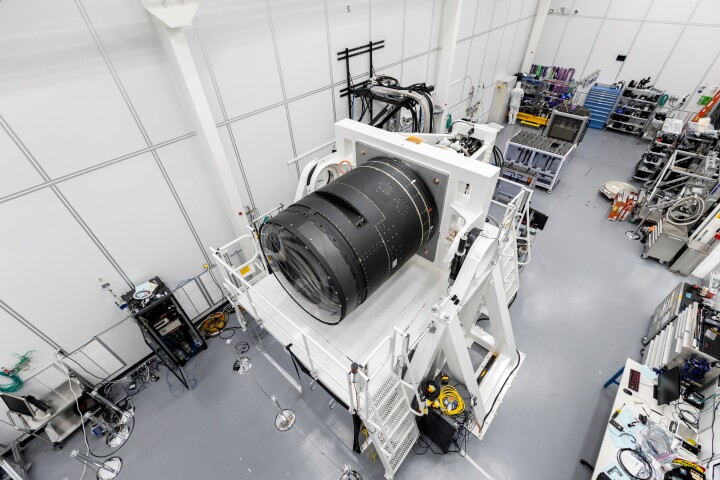 The SLAC National Accelerator Laboratory has announced the completion of the LSST Camera, which is capable of capturing 3,200-MP images, and will now be installed on a telescope in Chile to help unravel some of the biggest mysteries in the universe.
 -
 We’ve all regretted taking too long to make a move, but at least it wasn't 3 billion years. That’s how long the sexual tension has been building between two slow-dancing supermassive black holes, whose eventual congress could rock the entire universe.
 -
 The brightest object in the known universe has just been found. It's a supermassive black hole with the mass of 17 billion Suns, and it swallows another Suns’ worth of material every day, making it also the fastest-growing black hole ever found.
 -
 Mobile apps and AI processing are making things a lot easier for stargazers via smart telescopes that automate complicated and fiddly processes. The latest addition to Celestron's range can also throw celestial captures onto a smart TV screen.
 -
 Astronomers have discovered the most distant – and therefore earliest – known black hole. Hiding in a galaxy called GN-z11, this black hole is bigger than should be possible given the age of the universe.
 -
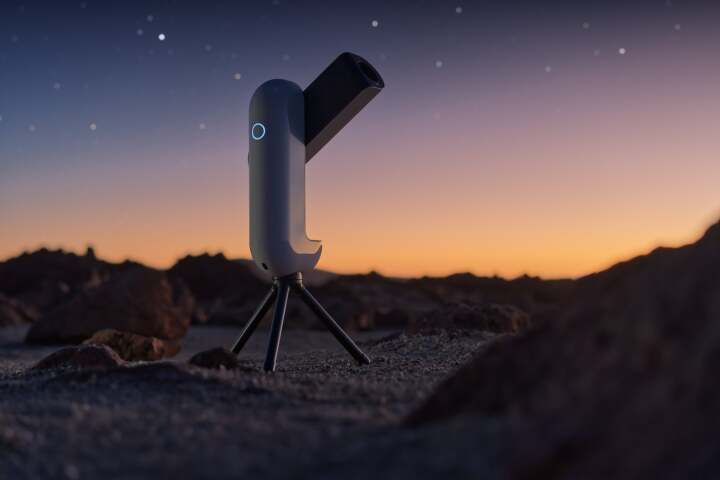 It's safe to say that French smart telescope innovator Vaonis took the internet by storm last year with the launch of the book-sized Hestia. Now the company has returned to its Vespera model for a second-generation upgrade.
 -
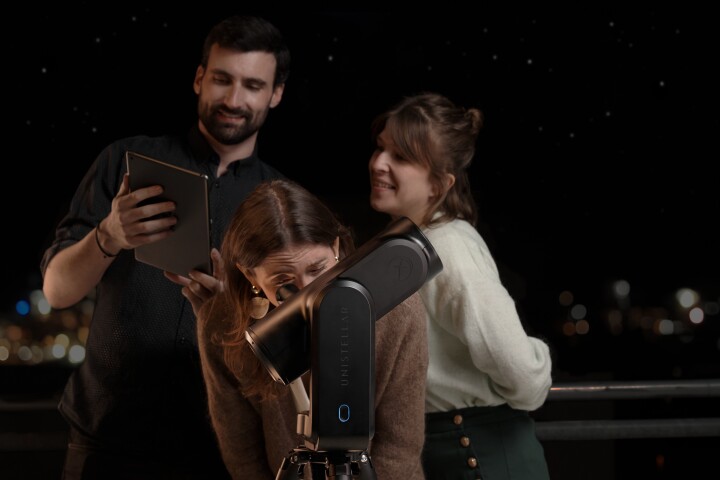 Unistellar has been on a mission to make stargazing easier for amateurs for years, and has now launched its cheapest models to date. The Odyssey range packs in Nikon optics, brings autofocus, and allows for observation of nearby and distant objects.
 -
 You’d never notice one star in the galaxy that wasn’t from around here. Astronomers have now found that a star right near the supermassive black hole at the center of the Milky Way likely originated in a smaller galaxy that ours devoured.
 -
 Earth has been blasted by the second strongest ultrahigh-energy cosmic ray ever observed. While its origins remain unknown, astrophysicists are pointing the finger at the Local Void, a fundamentally empty area of the cosmos next to the Milky Way.
 -
 If you own a DSLR camera, you can simply buy more lenses as your needs dictate, instead of having to buy a whole new camera each time. The Sevunscope is intended to bring that same sort of upgradability to consumer telescopes.
 -
 Chances are that you've been pretty disappointed when pointing your smartphone's camera skyward on a full moon. The Hestia telescope aims to get you closer to the celestial action by using "the power of your smartphone sensor to photograph the stars."
 -
 Back at CES 2023, smart telescope maker Unistellar launched a new model that could digitally remove light pollution from cities to give users a clear view of the stars. Now the company has improved on the formula with its new Deep Dark Technology.
Load More