
Tattoo
-
 Analyzing tattoo inks from US manufacturers, researchers have found that 90% contained ingredients that weren’t listed on the label. The findings highlight the need for tighter manufacturing regulations around tattoo inks.
 -
 While it's important for your dog or cat to have a form of ID in case they get lost, tags can fall off, and microchips can migrate out of place. Japanese scientists are developing an alternative, in the form of quick and painless tattoos.
 -
 Researchers have developed an ultrathin electronic tattoo capable of reproducing the localized sensation of touch in its wearer. The device has the potential to be used to manufacture haptic displays and devices for healthcare and robotics.
 -
 Researchers have created a nanoscale electronic ‘tattoo’ that attaches to an individual cell without damaging it. The breakthrough development could be used to monitor cell health and puts us one step closer to getting the jump on disease diagnosis.
 -
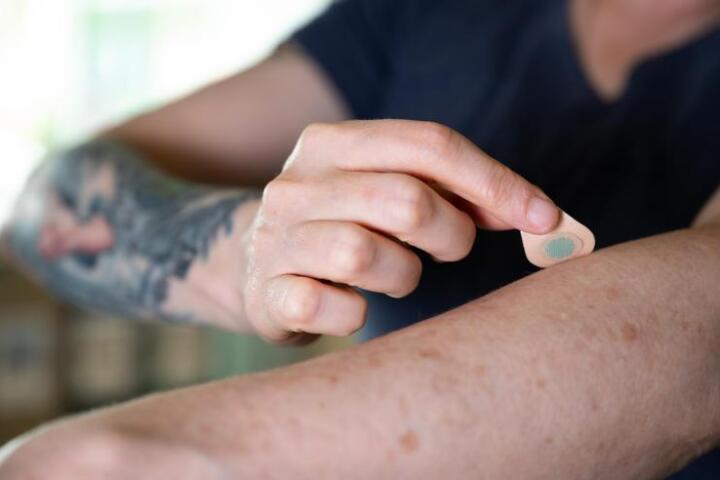 Scientists have developed a microneedle patch that can be self-administered and painlessly deposit a tattoo onto skin in minutes. The technology is proposed for simple medical or animal uses but cosmetic uses are possible in the future.
 -
 New research presented at the fall meeting of the American Chemical Society, analyzing nearly 100 currently used tattoo inks, found many inks contained chemicals not declared on their ingredient list, and at nanoparticle sizes suspected to be harmful.
 -
 Scientists have developed a new electronic “tattoo” that can monitor a patient’s blood pressure continuously. The e-tattoo is made of graphene and can be worn for long periods without getting in the way, allowing for better health data.
 -
 When treating patients for certain conditions, it's important to monitor their blood oxygen levels. A new sub-dermal photosensitive sensor provides a new means of doing so, plus it could one day be used to measure other blood-borne substances.
 -
 Scientists in Europe have leveraged cutting edge OLED technology to produce a first-of-a-kind tattoo that could be used to monitor different metrics of physical human performance, the freshness of food, or even prevent sunburn.
 -
 Do tattoos impair the skin’s ability to sweat? Despite the ubiquitousness of tattoos this question has received little research attention. A first-of-its-kind study suggests inked skin may damage sweat glands and reduce the body’s ability to cool itself.
 -
 Applying the wearable sensors of the future could be as simple as sketching out a shape on your arm, according to new research that investigates the potential for bioelectronics to be applied through graphite pencils and office copy paper.
 -
 Engineers have optimized a novel technology that uses temporary tattoo electrodes to record EEG brain activity. The technology is cheap, can be produced using an inkjet printer, and delivers EEG measurements as accurately as traditional electrodes.
Load More