
Surveillance
-
 There's a lot of news going around today about the French Government's new policy to allow police to remotely take over a suspect's devices, with access to cameras, microphones and GPS data. But if you think that's uncommon, you'd be very mistaken.
 -
 They may be a little brutal on the eye, but Capable says its visually confusing and very pricey cotton knits are designed to throw off AI facial recognition systems, by fooling machine learning systems into thinking you're an animal and not a human.
 -
 The unpredictable nature of the conflict in Ukraine makes it a confusing one from the outside looking in, but Western powers are watching it unfold with intelligence resources that would have been unimaginable half a century ago.
 -
 While AUVs (autonomous underwater vehicles) are often used for scientific studies, they're sometimes also utilized in more secretive applications, such as surveillance. A new system helps hide their location, by having them deploy a micro-AUV.
 -
 Amazon revealed it has supplied Ring doorbell video footage to police 11 times this year without a warrant or permission from the device owner. The revelation comes as part of an investigation into Amazon’s privacy practices by US senator Edward Markey.
 -
 Even before the pandemic struck in 2020, technology was blurring the boundary between home and work. Pressure to be contactable 24/7 led to calls for "right to disconnect" laws protecting employees – calls that have been increasingly heeded in the COVID era.
 -
 A new four-year study using AI-enabled surveillance will track recently released prison parolees. The project’s goal is to lower rates of recidivism by identifying early interventions to help individuals transitioning from prison to regular society.
 -
 A new study from NIST has tested how accurately commercial facial recognition algorithms can identify people wearing protective face masks, revealing some commercially used systems fail at authenticating masked faces up to 50 percent of the time.
 -
 Researchers from Ben Gurion University and the Weizmann Institute of Science in Israel have developed a new way of working out what's being said inside a room without actually hearing the audio: by monitoring the vibrations of a light bulb.
 -
 Google has released a series of COVID-19 Community Mobility Maps, utilizing location history data from users around the world to present insights into how social distancing measures are changing the way people move around local communities.
 -
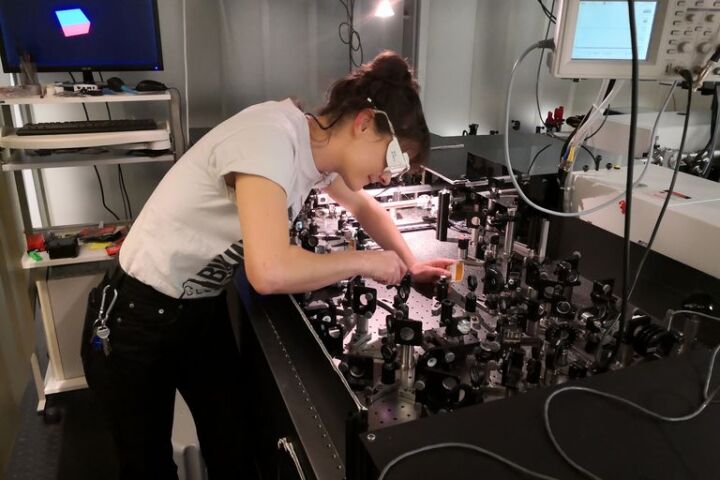 Terahertz radiation is extremely useful but, traditionally, tricky and expensive to generate. Scientists at TU Wien have come up with a new source of terahertz radiation that they claim breaks records for efficiency and the breadth of its spectrum.
 -
 The American Civil Liberties Union is taking several US government agencies to court claiming they have refused to comply with freedom of information requests related to the transparency of law enforcement usage of facial recognition technology.
Load More