
Solar System
-
 Researchers have just revealed that Mimas, one of Saturn's smallest moons, has an ocean of liquid water flowing under its entire surface. What is really making waves though, is how young the body of water is: just 5 to 15 million years old.
 -
 The solar wind is constant in the solar system – except on Christmas Day 2022 when it suddenly vanished completely. The event was detected by a NASA spacecraft orbiting Mars, which found that the Red Planet’s magnetosphere tripled in size in response.
 -
 Our solar system officially houses eight planets, but some scientists say there could be a ninth hiding on the fringes. Now, a new study has found the oddities could be explained by modified theories of gravity, an alternative idea to dark matter.
 -
 Our Sun is capable of terrifying outbursts – and now scientists have discovered evidence of its biggest tantrum on record. Tree rings dating back 14,000 years contain a radiocarbon spike twice as powerful as the previous biggest known solar storm.
 -
 Solar wind – charged particles from the Sun – pervades our solar system, but the exact mechanism behind it remains murky. Now ESA’s Solar Orbiter spacecraft has observed previously unknown tiny flares on the Sun’s surface spewing plasma into space.
 -
 Radioactive isotopes found in meteorites suggest a supernova went off right near the Sun as it was forming – but that should have blasted the young solar system away. So how did we survive? A new study proposes an explanation.
 -
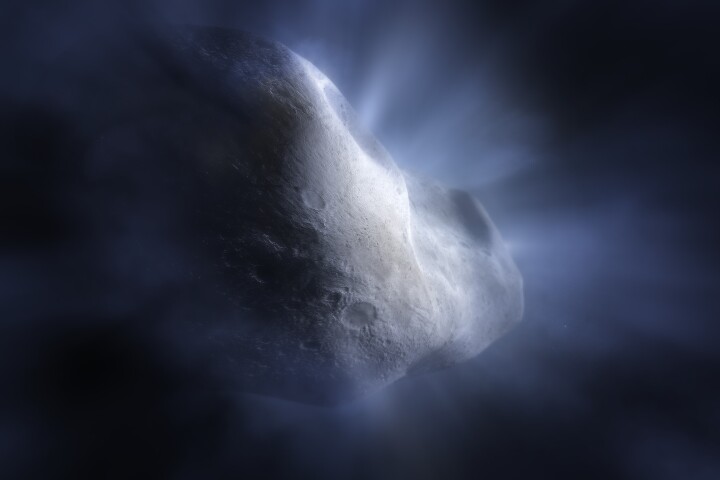 The James Webb Space Telescope has detected water vapor on an object in the asteroid belt, a region of the solar system where it wasn’t known to survive. The new observations also reveal something unexpectedly missing.
 -
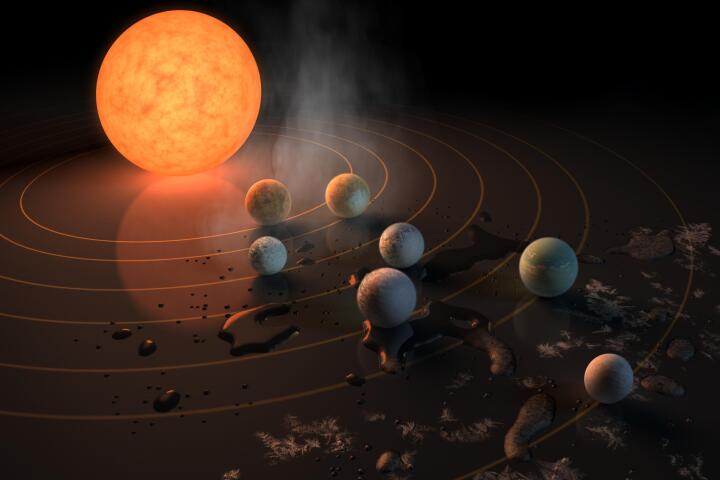 Astronomers have classified planetary systems into four distinct categories, based on the sizes and arrangements of their planets. As it turns out, the architecture of our own solar system is the rarest kind.
 -
 Meteorites often burn up in Earth’s atmosphere, but a fireball over Canada last year may shake up our understanding of the solar system. Scientists traced its origins back to a distant cloud of comets that wasn’t thought to host any rocky material.
 -
 Astronomers have detected an eerie glow of “ghost light” that could represent a previously unknown component of the solar system. Comparing data from two distinct viewpoints – Hubble and New Horizons – researchers discovered a dim, unexplained glow.
 -
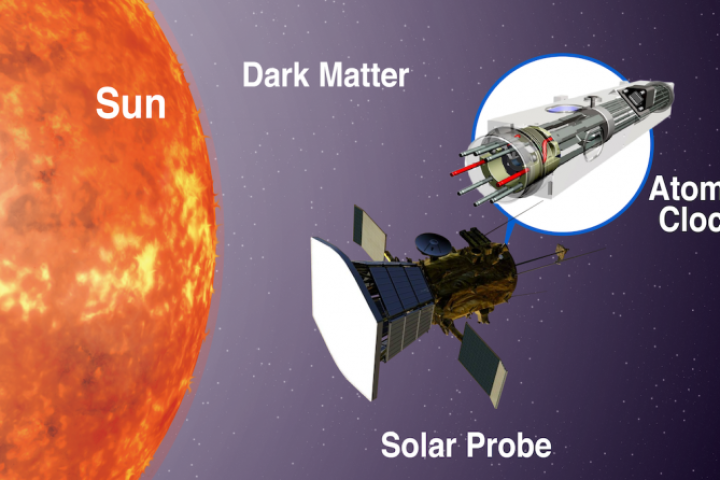 Dark matter remains elusive despite decades of searching. Now physicists have proposed a new experiment that would try to find signals by sending atomic clocks to where dark matter should be at its most dense – right near the Sun.
 -
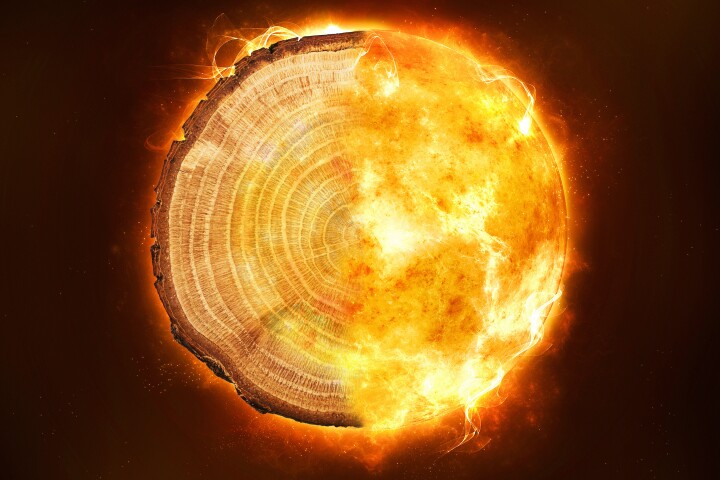 Tree rings can preserve a snapshot of the Earth throughout the tree's life. Now Australian scientists analyzing these records have found evidence of huge radiation storms that periodically bathe the planet – and their origin remains a mystery.
Load More