
Solar Cell
-
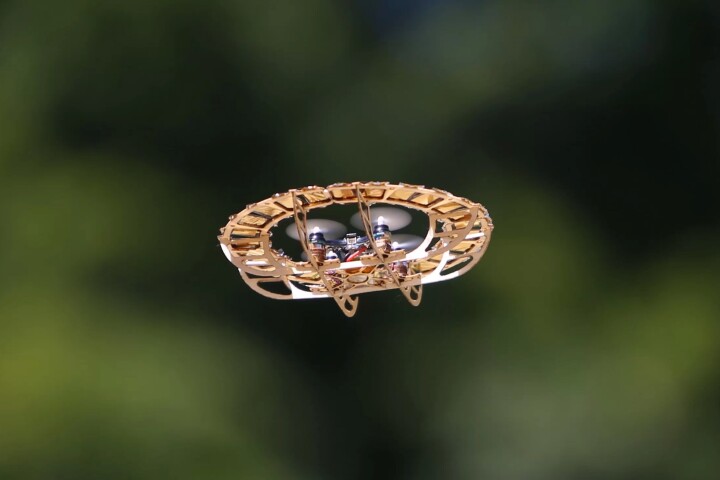 Multirotor drones may one day be able recharge their batteries while out and about, instead of having to return to a charging station. They could do so via onboard ultra-thin solar cells, which have already been tested on a small quadcopter.
 -
 Implanting tiny solar panels into people's eyeballs may sound like science fiction, but that's exactly what a team of Australian scientists are working on. The next-gen tech could vastly improve quality of life for people with incurable eye diseases.
 -
 Solar cell efficiency may get a bump from bumps. New research suggests that building tiny domes into the surface of organic solar cells could boost their efficiency by up to two-thirds, while capturing light from a wider angle.
 -
 One of the most promising, emerging solar cell technologies has received a major efficiency boost. Engineers at UNIST in South Korea have created quantum dot solar cells with a world record efficiency of 18.1%.
 -
 With the aim of allowing astronauts to live off the land as much as possible when they return to the Moon, NASA has awarded Blue Origin a US$35-million contract to develop the company's Blue Alchemist process to make solar cells out of lunar soil.
 -
 Perovskite is quickly gaining on silicon in the solar cell field, but it has one major drawback – durability. Now, a new treatment has been shown to keep perovskite solar cells working at 99% of their efficiency after 1,000 hours of use.
 -
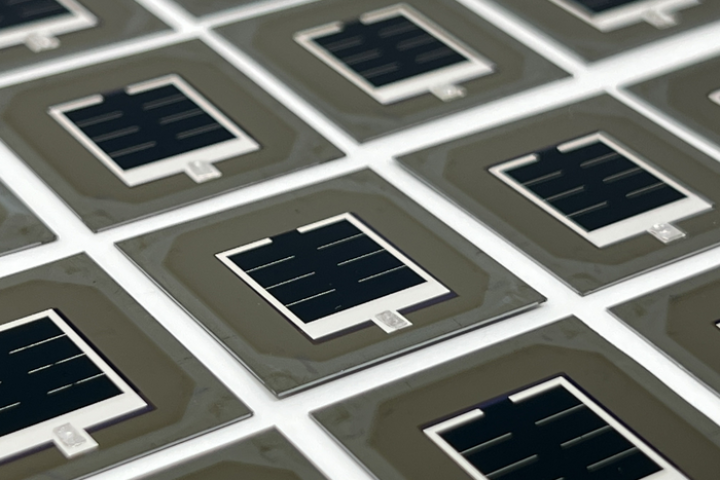 The dynamic duo of silicon and perovskite continue their rampage through the solar cell industry. Researchers at KAUST have developed a new silicon/perovskite tandem solar cell with a record-breaking efficiency.
 -
 Solar cells are good for the environment, but they have downsides. They’re expensive to make, and there are limited ways to recycle them. But researchers have developed a new manufacturing technique that may address both of these issues.
 -
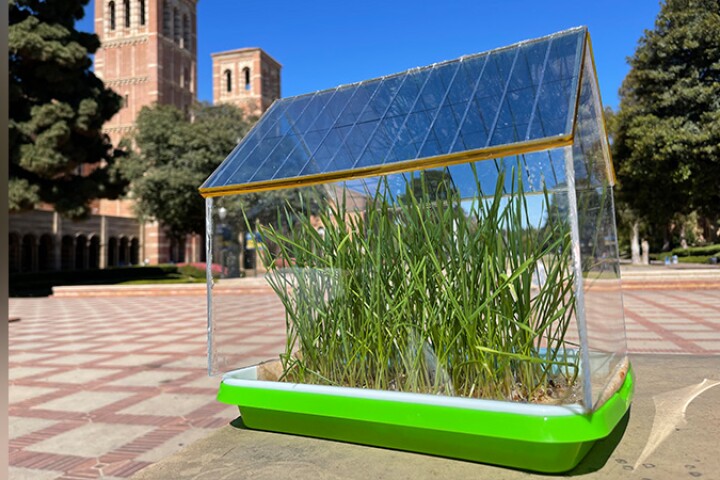 Solar farms and agriculture are competing for land. UCLA Scientists have now tested a way to combine the two by placing semi-transparent solar cells on the glass roofs of greenhouses, finding that they actually improve the growth of plants inside.
 -
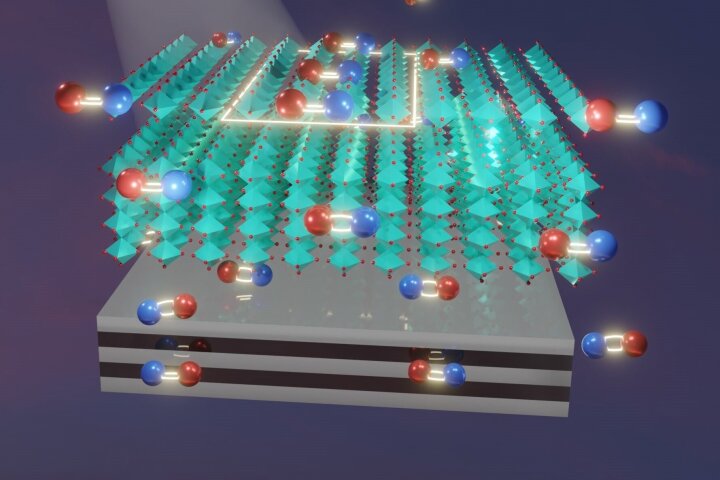 Perovskites are one of the most promising new materials for solar cell technology. Now engineers at the University of Rochester have developed a way to more than triple the material’s efficiency by adding a layer of reflective silver underneath it.
 -
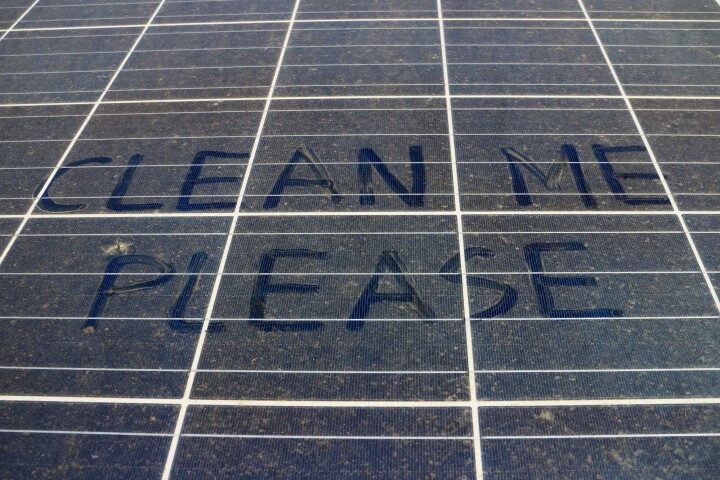 Solar panels can’t operate efficiently if they’re caked in dirt, but cleaning them regularly can be a time-consuming process. Engineers in Germany have now developed an ultra-thin coating that can make solar panels and other surfaces self-cleaning.
 -
 Perovskite and silicon are proving to be a formidable duo in the world of solar cells, and now they’ve hit a new record efficiency. A team at Helmholtz Zentrum Berlin (HZB) have developed solar cells with an efficiency of over 32%.
Load More