
Processor
-
 IBM has unveiled the most powerful quantum processor in the world – the Osprey, with a massive 433 quantum bits (qubits). The new chip headlines a raft of advances in quantum computers announced, as the company prepares for a massive leap next year.
 -
 A quantum processor, developed by German-Australian start-up Quantum Brilliance, runs at room temperature, and will now work in tandem with classical supercomputers at the Pawsey Supercomputing Research Centre.
 -
 Samsung has announced its latest premium mobile processor, which promises to "change the way we experience mobile gaming." The Exynos 2200 comes packing in-house graphics based on AMD RDNA 2 architecture with hardware-based ray tracing.
 -
 A year after announcing the Snapdragon 888 mobile SoC, Qualcomm has pulled back the curtains on the Snapdragon 8 Gen 1, which will enable 200-MP photos and 8K HDR video, promises desktop-level mobile gaming, and boasts faster download speeds over 5G.
 -
 IBM has unveiled the Eagle, the world’s most powerful quantum processor. Boasting 127 quantum bits (qubits), the Eagle is a major step towards commercial quantum computers outperforming traditional machines.
 -
 A new computer processor called Morpheus thwarts hackers by randomly changing its microarchitecture every few milliseconds. The puzzling processor has now aced major tests, repelling hundreds of professional hackers in a DARPA security challenge.
 -
 Highlighting the march of technology, IBM has unveiled new semiconductor chips with the smallest transistors ever made. The new 2- nanometer tech allows the company to cram a staggering 50 billion transistors onto a chip the size of a fingernail.
 -
 Nvidia's newest Central Processing Unit has been unveiled, and it's quite a chip: offering a 10x performance leap over current solutions, it's focused on artificial intelligence calculations and natural language processing.
 -
 The top-tier Snapdragon processors are usually the chipsets of choice for flagship Android phones, and Qualcomm just unveiled the mobile system-on-a-chip (SoC) that's going to appear in plenty of 2021 handsets: the Snapdragon 888.
 -
 Engineers at EPFL have created a new computer chip that can both process and store data in the same circuit. It’s made using a two-dimensional material called molybdenum disulfide, paving the way for smaller and more energy efficient electronics.
 -
 Intel has unveiled its new generation of laptop processors. Codenamed Tiger Lake, the new 11th Gen Intel Core processors are much faster than their predecessors for office work, gaming and content creation.
 -
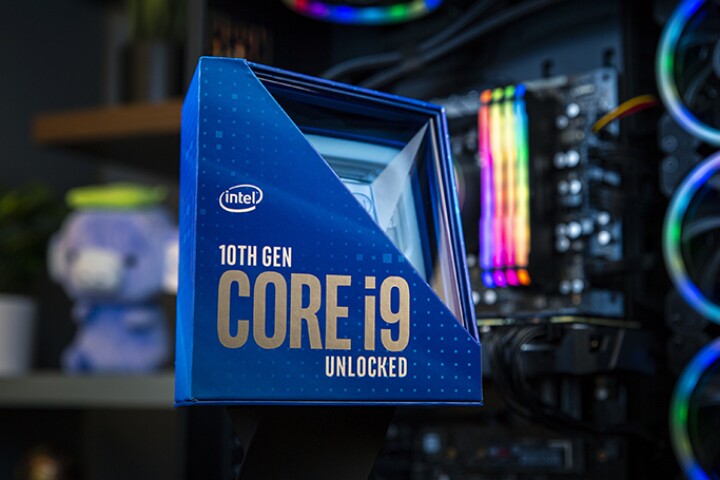 Intel has revealed its latest generation desktop processors. The 10th Gen Intel Core S-series is faster for playing games, streaming content and editing video, with the company claiming the flagship model to be the “world’s fastest gaming processor.”
Load More