
Police
-
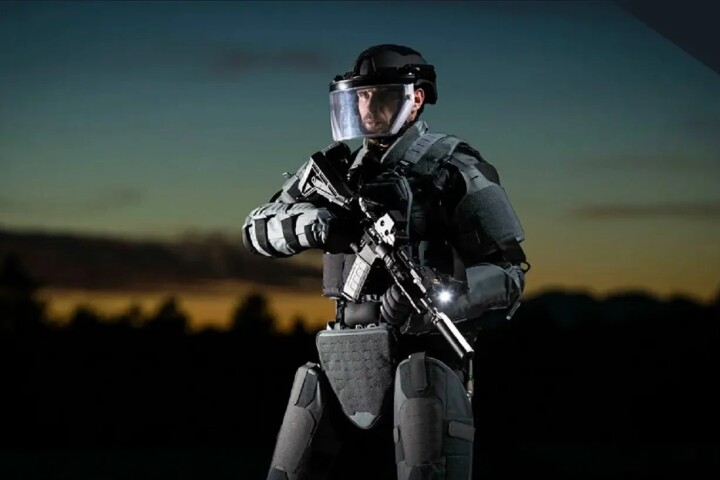 Soldiers and tactical unit police officers often have a lot of heavy gear to carry, including the ballistic body armor that they're wearing. That's where the ExoM Up-Armoured Exoskeleton is intended to come in, as it's load-reducing and bulletproof.
 -
 Although most of our clothes fold and crease with our bodies as we move, our shoes maintain the same shape and appearance pretty much all the time. With that fact in mind, scientists are now developing a method of catching criminals via shoe ID.
 -
 There's a lot of news going around today about the French Government's new policy to allow police to remotely take over a suspect's devices, with access to cameras, microphones and GPS data. But if you think that's uncommon, you'd be very mistaken.
 -
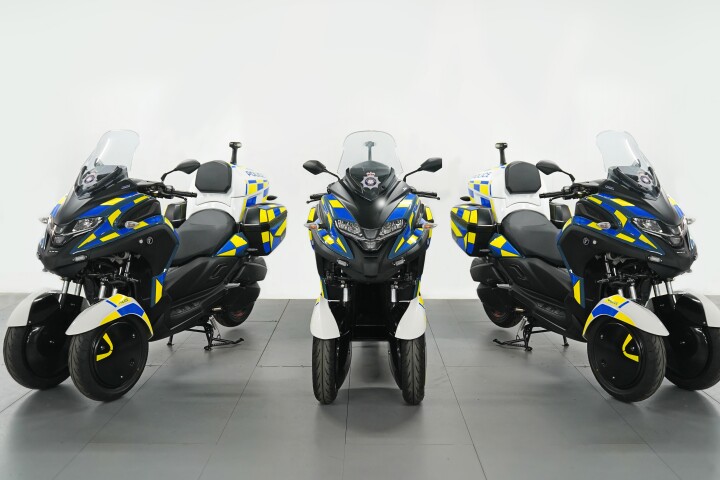 Following the development and rollout of a "big hole" hybrid three-wheeled scooter for police and emergency services, UK-based R&D outfit White Motorcycle Concepts has teamed up with Mahle Powertrain to produce a fully electric version.
 -
 Back in 2016, Ford fitted out a special F-150 truck for serve-and-protect duty as a police service vehicle. Now the company has done something similar with the new all-electric version of the pickup, which has been dubbed the F-150 Lightning Pro SSV.
 -
 Amazon revealed it has supplied Ring doorbell video footage to police 11 times this year without a warrant or permission from the device owner. The revelation comes as part of an investigation into Amazon’s privacy practices by US senator Edward Markey.
 -
 If you hear gunshots in an urban setting, it's important to get the police to their source as quickly as possible. A new system is being developed to help, by combining autonomous drones with an existing shot-locating technology.
 -
 UK company White Motorcycle Concepts, best known for the big hole in its land speed racer, has stuck a big hole and a small hybrid system into a three-wheeled police scooter, and says these two modifications can reduce emissions by up to 50 percent.
 -
 If there's one thing that all types of first responders have in common, it's the fact that they put a premium on speed. The Recruit quadcopter was created for such users, as it can reportedly fly at 140 mph and has a claimed 3-hour flight time.
 -
 Drones may be seeing more use by police forces, but they're still limited by short flight times, and the need for certified operators. Tech company Axon has set out to address the problem, by leveraging the existing Fotokite tethered drone.
 -
 Although the bulletproof shields used by police officers are definitely life-savers, the things are also quite heavy and bulky. The origami-inspired Swift Shield offers an alternative, as it folds down into a lightweight package when not in use.
 -
 Although Tasers are an effective alternative to the use of lethal force by police officers, getting shot by one is still quite a painful experience. That's where the BolaWrap 100 comes in – when fired at a "difficult" suspect, it simply ties them up.
Load More