
Physics
-
 Astronomers have produced the largest 3D map of the universe, including an interactive VR video. In the process, they’ve uncovered some tantalizing hints that our understanding of physics, including the ultimate fate of the cosmos, could be wrong.
 -
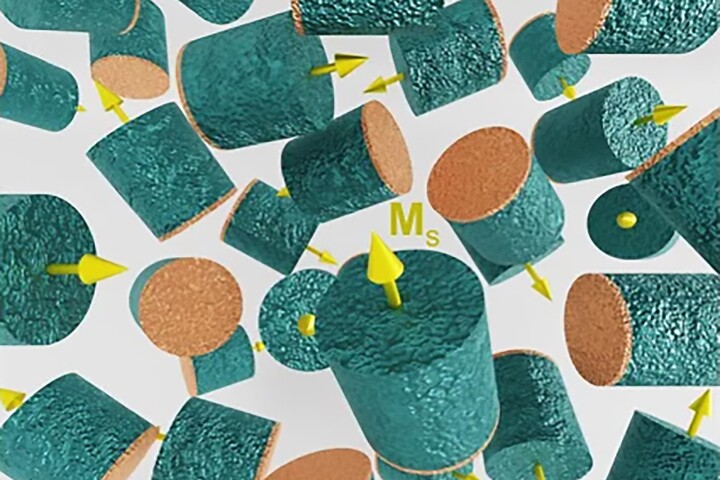 After decades of physics-based theorizing, researchers have succeeded in creating a novel optical metamaterial using conventional materials. Its enhanced electromagnetic effect may make true one-way glass a reality and solar panels more efficient.
 -
 February 11 marks International Day of Women and Girls in Science. The day celebrates both the work of women across vast scientific disciplines, but also recognizes ongoing gender-based challenges. Here, we pay tribute to 11 stars of STEM today.
 -
 Researchers have provided the first direct evidence explaining the function of sleep. They demonstrated that sleep resets the brain’s ‘operating system,’ undermined during waking, returning it to an ideal state to optimize thinking and processing.
 -
 Causality is key to our experience of reality: dropping a glass, for example, causes it to smash, so it can’t smash before it’s dropped. But scientists have now demonstrated how that understanding of time can be violated to charge a quantum battery.
 -
 Contrary to elementary school science class, it turns out that heat may not be necessary to make water evaporate. Scientists at MIT have made the surprising discovery that light alone can evaporate water, and is even more efficient at it than heat.
 -
 Using paired smartphones, motion-capture app OpenCap films video and then uses AI to analyse human movement, providing detailed data for use in rehabilitation, presurgery plans and disease diagnostics – and is 1% of the cost of traditional technology.
 -
 The very fabric of spacetime is constantly warping on unimaginably tiny scales, as ripples from past cataclysms wash over us. Astrophysicists have now detected a background sea of gravitational waves, using a galaxy-scale detector of dead stars.
 -
 Smart textiles and patches are the near future of home health monitoring. The latest in this burgeoning field of medical therapies is one that impressively keeps an eye on your muscles in real time, helping with both injury recovery and prevention.
 -
 Ever dropped a peanut in a glass of beer? If not, researchers say you're missing out, as it triggers an unusual interaction that temporarily defies the principle of buoyancy. We believe the hypothesis was rigorously tested with repeat experiments.
 -
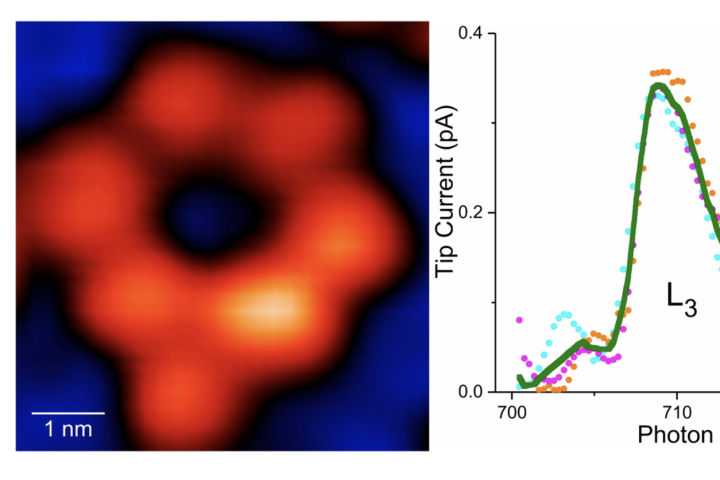 A team of researchers led by Ohio University Professor of Physics Saw Wai Hla has captured the first X-ray "image" of a single atom, allowing scientists to study materials and their chemical states with greater resolution than ever before.
 -
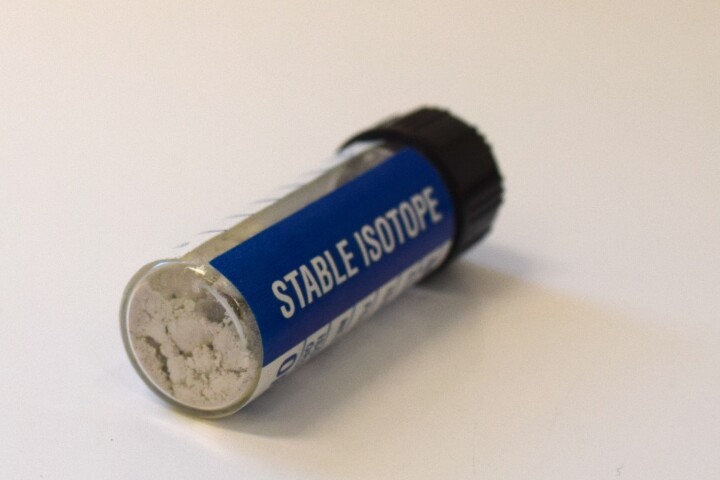 To make the United States self-sufficient in rare exotic elements, the Oak Ridge National Laboratory (ORNL) has developed a latest generation electromagnetic isotope separator (EMIS) to harvest stable isotopes across the entire periodic table.
Load More