
Nanocrystals
-
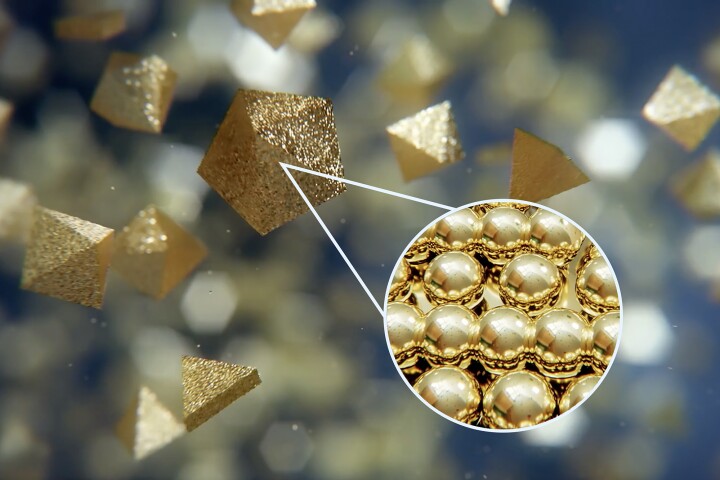 Clinical trials using orally administered gold nanocrystals to treat multiple sclerosis and Parkinson’s disease have produced promising results. The nanocrystals restore crucial energy metabolites in the brain that are depleted in these conditions.
 -
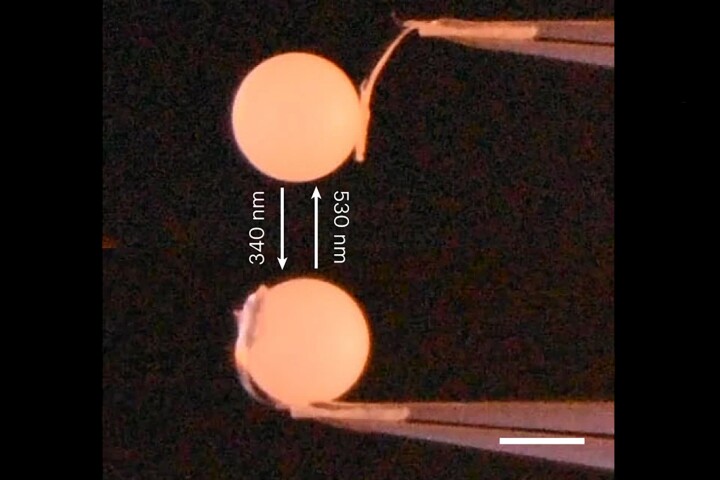 Researchers have developed a novel material using nanocrystals that converts light into a mechanical force able to lift 1,000 times its mass, opening the door for wireless, remote-controlled systems that operate without heat or electricity.
 -
 They're the deadliest animals on Earth, spreading diseases such as malaria, chikungunya and yellow fever and causing more than 350 million illnesses in humans each year. Our latest weapon in the war on mosquitoes could be a cheap, abundant biomaterial.
 -
 Researchers at the University of Texas at Austin have developed a strange new nanocrystal material that switches between gel and liquid states in response to temperature or other triggers. It could be used to make light filters or thermal camouflage.
 -
 Ideally, we protect the body from radiation damage before it reaches us with shielding materials. Researchers have now developed a new nanocrystal treatment that could prevent some of the tissue damage radiation causes.
 -
 A team of researchers has uncovered a new approach to grow synthetic mineralized materials. This exciting breakthrough points to a future of regenerative medicine where doctors could mimic the regrowth of hard tissues including dental enamel and bone.
 -
 ScienceNight vision goggles help the human eye see in the dark, but the devices are bulky, requiring several layers of lenses and plenty of power. But thanks to research from ANU, a new type of nanocrystal could grant night vision powers to a standard pair of specs, without adding any weight.
 -
 Transmitting data on wavelengths we can see might turn out to be more efficient and secure than radio waves. Researchers have developed a nanocrystal that helps boost data speeds transmitted through visible light up to 2 Gbps – while pleasantly lighting the room.
 -
 Using "fools gold" nanocrystals to form part of a larger sodium-magnesium battery, scientists have created a storage cell that not only uses cheap and abundant materials but has the potential to be scaled up to store many terawatt-hours of energy.
 -
 ScienceChemists at the University of California, Riverside have created rewritable paper that can be printed on and erased many times before it needs to be discarded, offering a proposed alternative to current rampant paper consumption and real hope for achieving the promised "paperless office."
 -
 ScienceThere's now yet another potential weapon in the war against counterfeiting. Scientists at MIT have developed tiny color-striped microparticles that could be used to verify the authenticity of currency, medication, consumer goods, or almost anything else.
 -
 ScienceResearchers at Berkeley Labs have produced a "smart" glass coating that can be selectively controlled to block visible light, heat-producing near-infrared (NIR) light or both by applying a small electrical charge to it.
Load More