
Mechanical
-
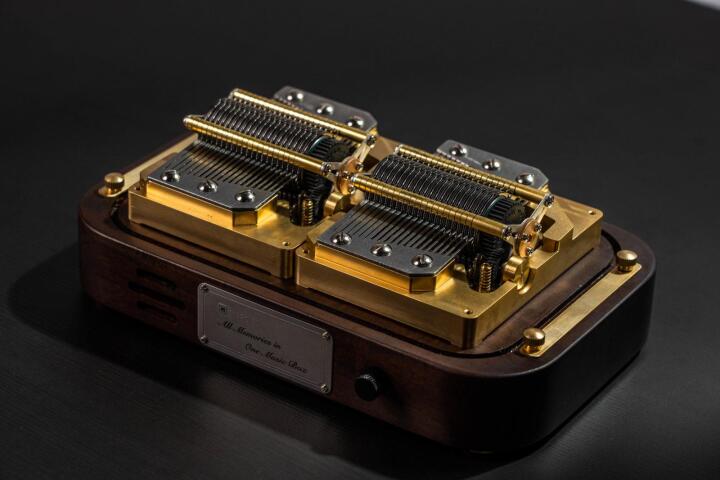 Back in mid-2020, a project out of Taiwan launched on Indiegogo to produce a gorgeous little mechanical music box that could play tunes loaded in using a smartphone app. Now its makers are aiming for double the fun with the Muro Box N40.
 -
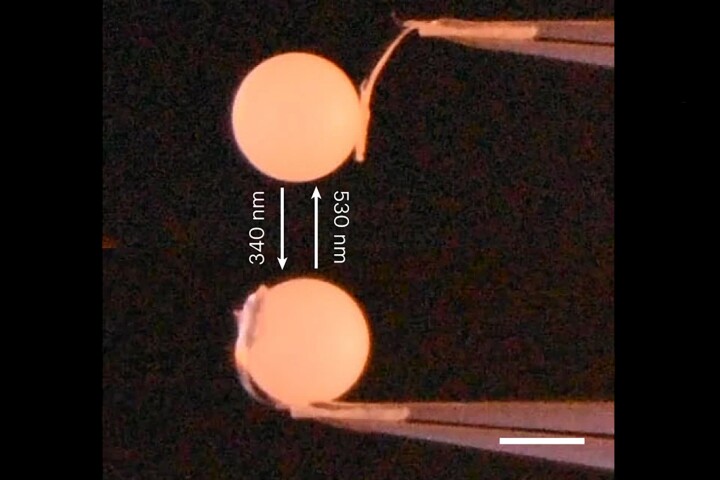 Researchers have developed a novel material using nanocrystals that converts light into a mechanical force able to lift 1,000 times its mass, opening the door for wireless, remote-controlled systems that operate without heat or electricity.
 -
 Overactive bladder syndrome can interfere with a person’s daily activities and affect their mental health. A new hydrogel-based sensor can continuously monitor overactive bladders and potentially improve the treatment of the condition.
 -
 Though we have easy access to high quality music like never before, there's something strangely satisfying about the tinkle tinkle of a music box. With the Muro Box you can load up different tunes using a smartphone app, and even create your own.
 -
 Richard Mille and Airbus Corporate Jets have teamed up to produce a new vibrating mechanical traveler's wristwatch.
 -
 Researchers from the University of Washington have 3D-printed objects and sensors that are able to communicate with Wi-Fi devices such as smartphones or computers without needing to be powered by batteries or a wall socket.
 -
 Last year, Niklas Roy super-sized the music box idea by placing real instruments inside a massive box and got the public to play, erm, tunes by turning a huge hand crank connected to cogs and pulleys. Now, he's created a windmill-powered music box that tinkles away whenever a breeze picks up.
 -
 BrandNewNoise has added the Krankie to its small catalog of handcrafted audio recording devices. It's an old school music box mechanism sat atop a box made of sustainable wood that allows the user to create custom tunes and record the results.
 -
 Dmitry Morozov has created some cool instruments over the years, including a machine that turned cable twists into eerie music and a synthesizer powered by his own blood. His latest project is a strange electromechanical organ that uses three different-sized DC motors to generate synth-like sounds.
 -
 Artist Daniel de Bruin has created a 7 meter (23 ft) high thrill ride that spins at speeds determined by sensors attached to the person strapped in. The Neurotransmitter 3000 gets faster or slower depending on heart rate and muscle tension readings.
 -
 Neil Mendoza's Rock Band is a set of electromechanical instruments that make sounds when genuine rocks are thrown at the them. For its first public outing, the machine was set up to play The Beatles "Here Comes the Sun" - but maybe Rollin' Stone by Muddy Waters would have been more appropriate.
 -
 The electropollock by Dmitry Morozov has been designed as an homage to American expressionist painter Jackson Pollock, famous for his energetic drip painting works. It employs a similar method to get paint onto the rolling "canvas," but the end result is determined by music fed into the system.
Load More