
Matter
-
 Time crystals are a strange state of matter with properties that sound impossible, but they have been created. Now, German scientists have made one that lasts 10 million times longer than in previous experiments.
 -
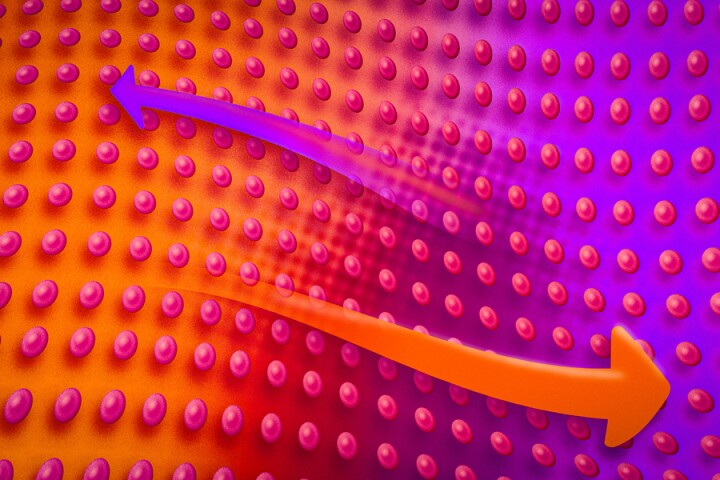 Scientists at MIT have directly captured signs of “second sound” in a superfluid for the first time. This bizarre phenomenon occurs when heat moves like sound waves through an unusual state of matter.
 -
 Astronomers have picked up a radio signal from eight billion years ago, meaning it’s traveled across the observable universe to get here. Thanks to its extensive experience in the cosmos, the signal can actually help us track down “missing” matter.
 -
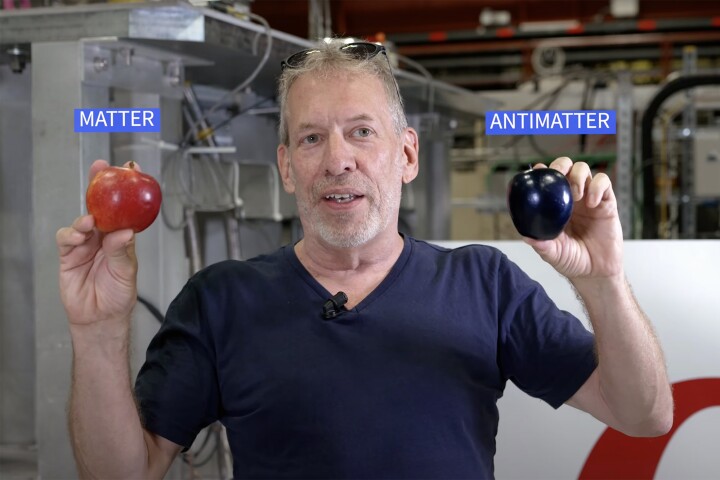 Gravity's effect on antimatter has been a point of disagreement between physicists. New research may have settled the debate by finding that antimatter is affected by gravity in the same way as matter, ruling out the existence of repulsive 'antigravity.'
 -
 Astronomers have put together one of the most comprehensive maps of all the matter in the universe. The huge undertaking hints at a slightly smoother universe than we thought, suggesting that something might be missing from our models.
 -
 Ice and water aren't very exciting to most of us, but they’re super strange from a scientific standpoint. Researchers have now discovered a brand new type of ice that’s described as being a true “snapshot” of water, and may be found on alien worlds.
 -
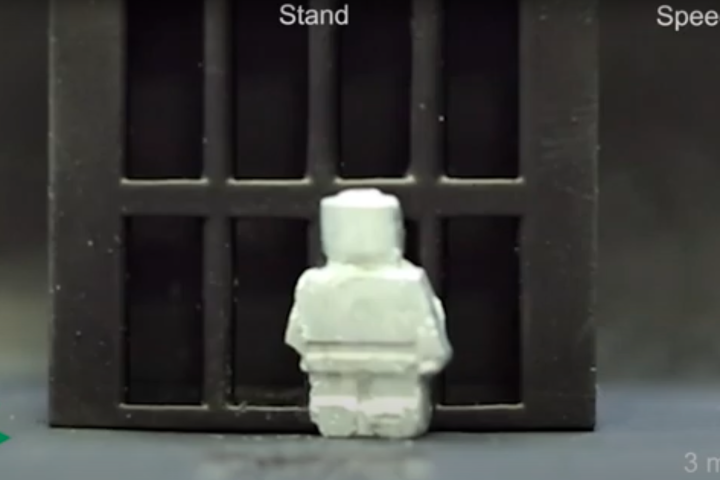 Researchers have created a new class of robots that can shift between solid and liquid forms on demand. In a series of tests, these new bots could change shape to run obstacle courses, carry objects, or even escape from a jail cell like a Terminator.
 -
 The intriguing cosmic mystery of fast radio bursts (FRBs) has now shed light (pun intended) on another mystery. By studying the signature of an FRB from a nearby galaxy, astronomers have found that the Milky Way has far less matter than expected.
 -
 Everything has to end eventually – including the universe itself. It might be hard to imagine a catastrophe big enough to affect the entirety of existence, but here are some of the leading hypotheses about how the universe could end, and when.
 -
 An exotic state of matter originally hypothesized almost 50 years ago has been observed for the first time. Created by Harvard researchers, this material called quantum spin liquid could eventually help improve quantum computers.
 -
 Time crystals sound like something a video game character would be trying to collect, but this bizarre phase of matter is very real – and now one of them has been created in Google’s quantum processor, Sycamore.
 -
 Superconductivity occurs when electrons in a metal pair up. Scientists in Germany have now discovered that electrons can also group together into families of four, creating a new state of matter and potentially a new type of superconductivity.
Load More