
Lunar
-
 NASA has selected three companies to develop extreme off-road vehicles that astronauts will drive on the Moon during Artemis missions starting in 2030, awarding US$4.6 billion in contracts to Intuitive Machines, Lunar Outpost and Venturi Astrolab.
 -
 Toyota's CALTY Design Research celebrates its 50th anniversary this year, having been responsible for "everything from the 1978 Toyota Celica to the 2024 Toyota Tacoma." The futuristic Baby Lunar Cruiser concept has been created to mark the occasion.
 -
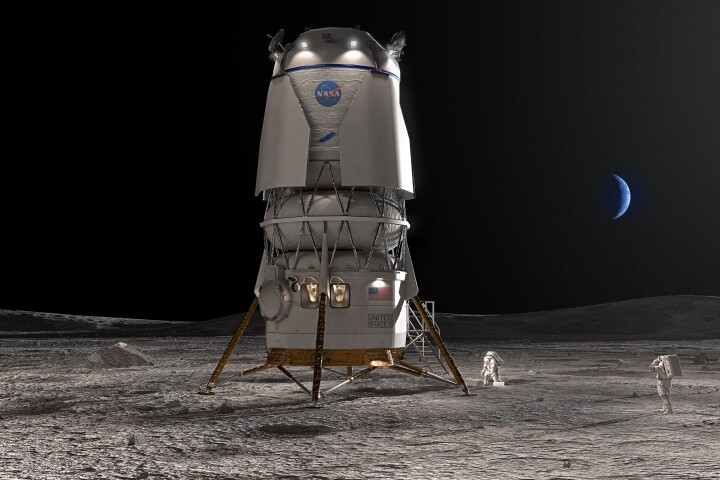 After an initial disappointment, Jeff Bezos is back in the Moon business. NASA selected Blue Origin's Blue Moon crewed lander for the space agency's Artemis V mission to the lunar South Pole in 2029 under a firm-fixed price contract of (US)$3.4 billion.
 -
 Water on the Moon isn't kept in convenient reservoirs, it’s locked away in the lunar soil. Now, a team of scientists has found that thirsty astronauts could one day refresh themselves fairly easily – by throwing a cup of Moon dirt in the microwave.
 -
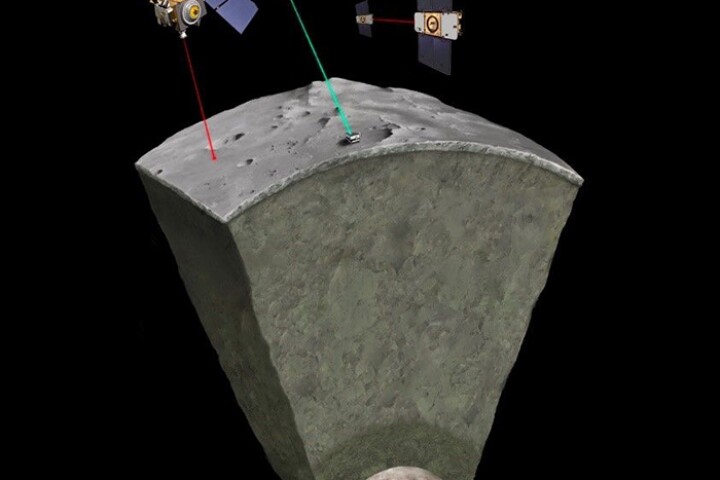 Looking back at data from the geology experiments left on the lunar surface by the Apollo missions half a century ago, scientists have finally determined that the Moon has a solid core surrounded by a fluid outer core similar to the Earth's.
 -
 Last year, we heard how NASA had awarded a service contract to Axiom Space for the design and production of the agency's Artemis III spacesuit. NASA and Axiom have now unveiled a prototype of the outfit.
 -
 No single robot can perform all tasks, yet bringing a bunch of different robots along on Moon missions would be quite inefficient. The WORMS setup offers an alternative, in the form of components that can be mixed and matched to make whatever robot is needed.
 -
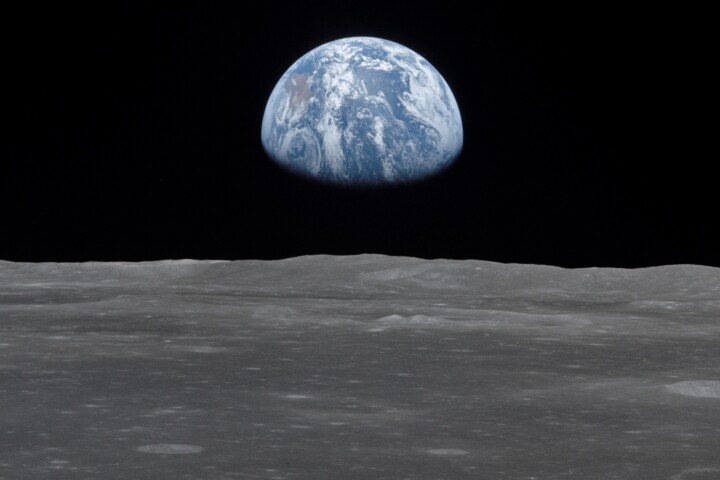 It seems China's Chang'E-5 robotic Moon mission has discovered more than water on the lunar surface. Scientists have confirmed the discovery of a new mineral, a transparent crystal named Changesite-(Y), as well as a promising potential fusion fuel.
 -
 The Moon isn’t the most hospitable place, but that’s not stopping NASA from sending humans back there soon. Thankfully, an orbiter has now found a region of the Moon with year-round jeans-and-jacket weather – underground caves.
 -
 The field of lunar agriculture has taken a step forward, with scientists reporting the first-ever plants grown in soil from the Moon, marking a significant milestone in the effort to sustain a lunar base and carry out missions into deep space.
 -
 NASA is turning to the spirit of healthy competition to boost its chances of success in establishing a presence on the Moon through its Artemis program, today outlining plans for a commercially-developed sidekick to SpaceX's lander.
 -
 As part of a month-long series of real-world and virtual events showcasing upcoming technology, Nissan has revealed a lunar rover prototype it's currently working on with the Japan Aerospace Exploration Agency.
Load More