
Lockheed Martin
-
 Demonstrating that semi-autonomous weapons are the mainstay of the future and not an oddity, the US Navy and Lockheed Martin have completed a test of four Long-Range Anti-Ship Missiles (LRASM) simultaneously in flight with minimal human guidance.
 -
 The US Air Force has completed testing of its hypersonic AGM-183A Air-launched Rapid Response Weapon. The test was carried out on March 17, 2024 when the missile was dropped from a B-52H Stratofortress at the Reagan Test Site in the Marshall Islands.
 -
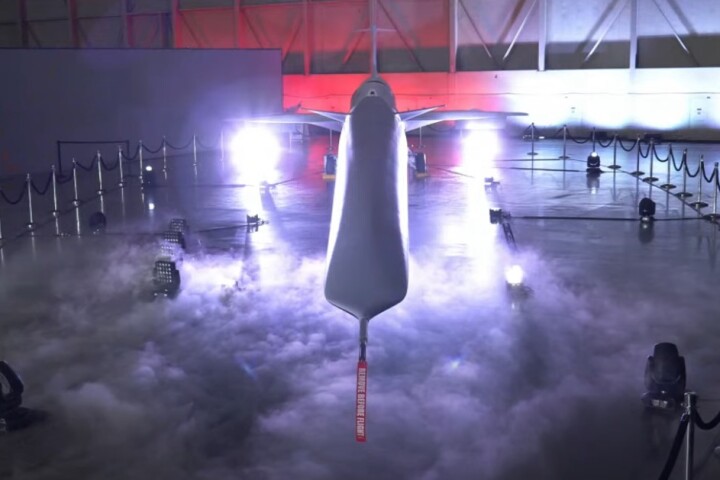 With the usual ballyhoo, NASA and Lockheed Martin have rolled out the X-59 supersonic aircraft today. In a ceremony at the famous Skunk Works in Palmdale, California, the experimental plane was introduced to the public before a party of dignitaries.
 -
 In what seems like a paradox, Lockheed Martin has successfully conducted a short-range qualification flight test of its long-range Precision Strike Missile (PrSM) for the US Army at the White Sands Missile Range, New Mexico.
 -
 Under a US$33.7-million Air Force Research Laboratory (AFRL) contract, Lockheed Martin is developing a next-generation nuclear-reactor-powered spacecraft for the Joint Emergent Technology Supplying On-Orbit Nuclear (JETSON) High Power program.
 -
 The US Navy has highlighted the future of the US/UK seaborne nuclear deterrent by successfully launching a Trident II D5 Submarine Launched Ballistic Missile (SLBM) from the Ohio-class ballistic missile submarine USS Louisiana for a record 191 times.
 -
 A vintage Cold War spy plane is getting a new lease on life as Lockheed Martin's notorious yet secretive Skunk Works completes the first test flight of a Lockheed U-2 Dragon Lady with an upgraded avionics suite and cockpit displays.
 -
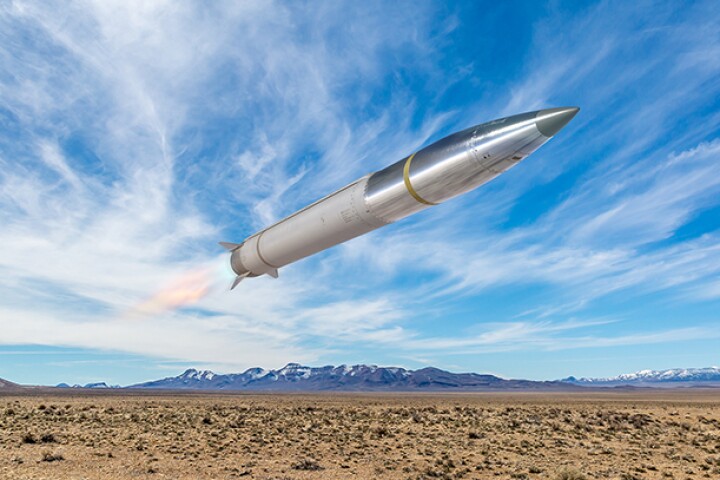 Lockheed Martin has successfully tested the latest in its family of missiles. Its next generation Extended-Range Guided Multiple Launch Rocket System (ER GMLRS) reached a record 150 km (93 miles) at the White Sands Missile Range in New Mexico.
 -
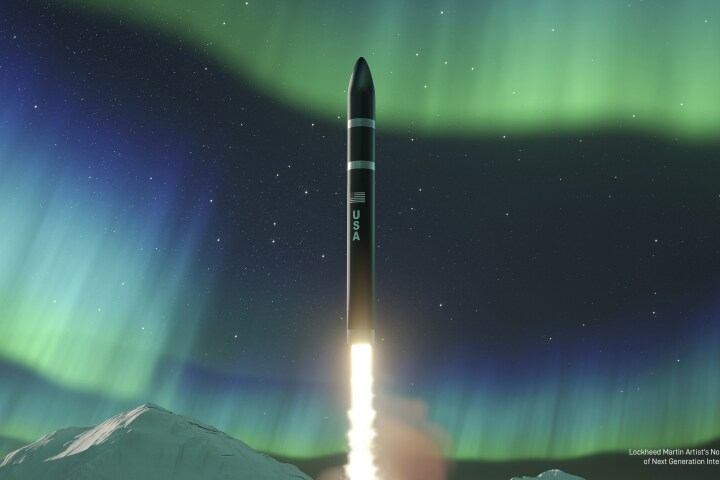 America's Next Generation Interceptor (NGI) for countering rogue state ICBM attacks has passed a major milestone. Lockheed Martin has announced that the US Missile Defense Agency (MDA) has passed all design elements of the company's NGI missile project.
 -
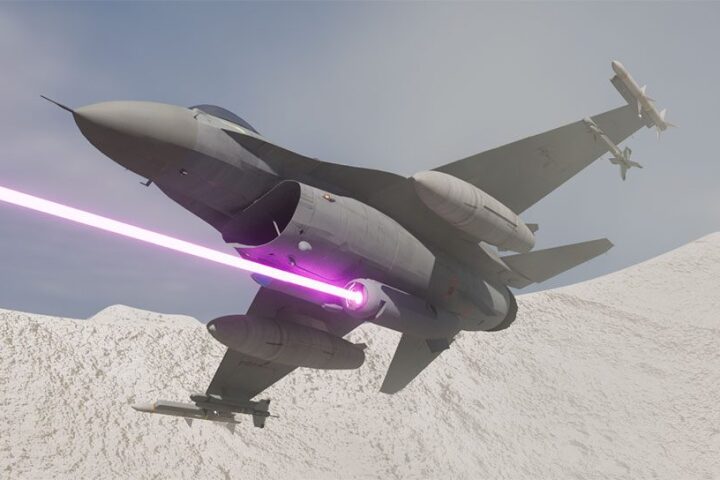 Lockheed Martin is raising the bar on its 300-kW laser weapon system, announcing it is scaling it up to 500 kW under a new contract from the Office of the Under Secretary of Defense for Research & Engineering (OUSD (R&E)).
 -
 The first crewed mission to Mars may get there and back a bit faster and safer if a contract DARPA has awarded to Lockheed Martin bears fruit. The contract is to rapidly advance and fabricate a nuclear thermal rocket engine scheduled to fly by 2027.
 -
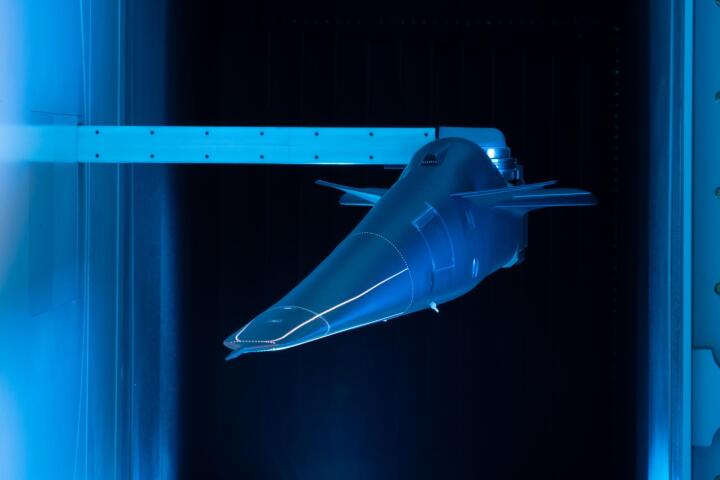 NASA this week marked the 50th anniversary of the total ban of civilian supersonic flights over the US. The milestone comes as the agency continues development of the X-59 experimental supersonic aircraft intended to reintroduce civilian Mach+ service.
Load More