
Life
-
 Scientists have discovered that a once-in-a-billion-years evolutionary event is underway, as two lifeforms have merged into one organism that boasts abilities its peers would envy. Last time this happened, Earth got plants.
 -
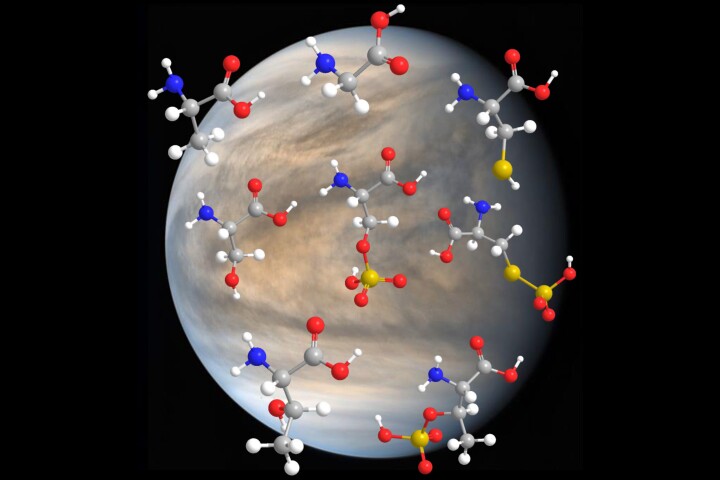 Venus may be a hellscape, but there’s a chance some forms of life could evolve there. A new MIT study has now found that the building blocks of life are surprisingly stable in highly concentrated sulfuric acid – which Venus’ clouds are made of.
 -
 We might find alien life as soon as 2030, suggests a new study. A lab experiment has shown instruments on a spacecraft headed to one of the most promising worlds to find life are sensitive enough to detect a single living cell in a single ice grain.
 -
 Scientists have given yeast a brand new ability – gaining energy from light. The technique was remarkably easy, the team says, and could not only help us understand evolution but make better beer and biofuel.
 -
 Saturn’s moon Enceladus continues to climb the list of best places to look for life beyond Earth. New NASA data has detected a molecule thought to be key to the origin of life, and suggests there’s more chemical energy for life to chow down on.
 -
 Meeting aliens rarely goes well for humanity in movies. Scientists have been practicing by trying to chat to whales in their own language – and judging by early results, we should probably beef up security around the Eiffel Tower and the White House.
 -
 Phosphorus – a key ingredient for life as we know it – was thought to be relatively rare in space. But now, astronomers have detected a surprising amount of the stuff on the fringes of the galaxy, suggesting life may be more common in the cosmos.
 -
 A 15-year project trying to build a synthetic yeast genome has hit a major milestone – yeast cells with more than 50% synthetic DNA for the first time. The team created synthetic versions of almost all its chromosomes plus a completely new one.
 -
 The best places to search for life beyond Earth aren’t planets like Mars – they’re icy moons like Europa. The case for life on this watery world just got stronger, as the James Webb Space Telescope has detected a fresh carbon source there.
 -
 The animal kingdom is home to all kinds of stories – even horror stories. Scientists at Brown University have now uncovered a creepy new zombie story involving worms that propagate by hack their shrimp host's genome to take control of their minds.
 -
 It sounds like a disaster movie: scientists recently revived worms frozen in the permafrost since the Ice Age. Now, these worms have been attributed to a new species, and seem to have passed down their incredible hibernation genes to modern relatives.
 -
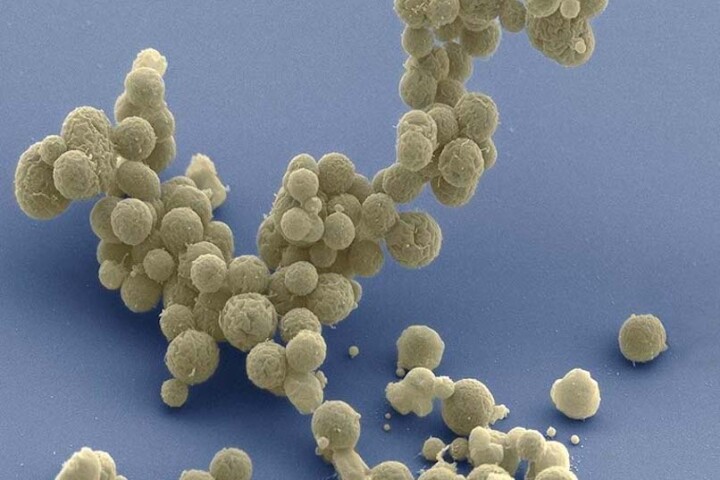 How small a canvas can evolution work on? Scientists have experimented with a synthetic lifeform designed to have the simplest possible genome, and found that given the chance it can evolve lost fitness back, showing that indeed, “life finds a way.”
Load More