
JWST
-
 The youngest neutron star detected so far turned 37 years old last week. To celebrate, James Webb Space Telescope has finally found the most direct evidence of it, hiding among the remains of the supernova cloud it was born in.
 -
 Astronomers have discovered the most distant – and therefore earliest – known black hole. Hiding in a galaxy called GN-z11, this black hole is bigger than should be possible given the age of the universe.
 -
 It feels like every time astronomers get a handle on a cosmic phenomenon, a new one pops up that sends them back to the drawing board. Case in point – Hubble has spotted a burst of light in a region of space where there didn’t seem to be a trigger.
 -
 The James Webb Space Telescope can look farther back in space and time than ever before – and it’s revealed puzzling galaxies that seem to be too advanced for their age. Now astronomers have proposed a new explanation for them – starburst galaxies.
 -
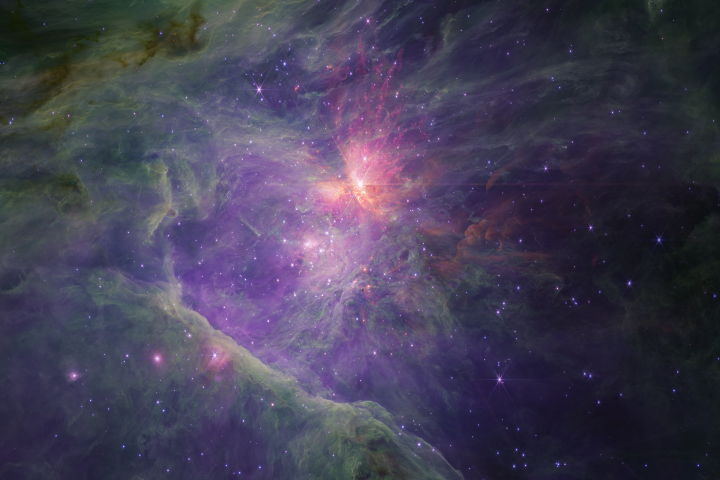 Hiding within new images of a nebula captured by the James Webb Space Telescope, astronomers have made a puzzling discovery – dozens of Jupiter-sized objects that defy explanation.
 -
 The best places to search for life beyond Earth aren’t planets like Mars – they’re icy moons like Europa. The case for life on this watery world just got stronger, as the James Webb Space Telescope has detected a fresh carbon source there.
 -
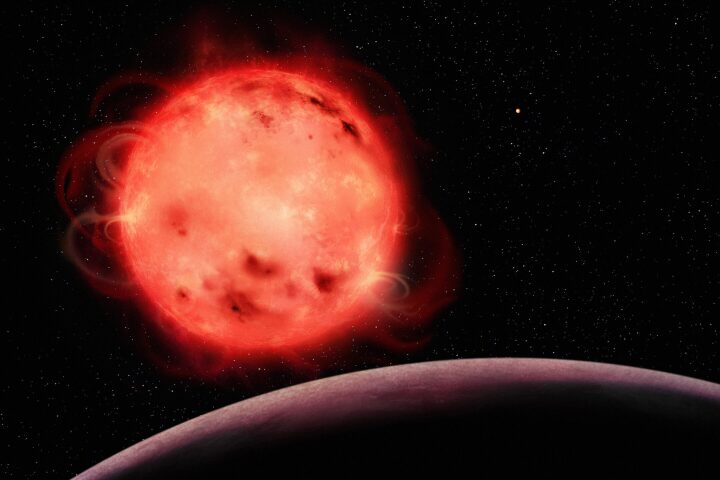 The James Webb Space Telescope has achieved one of the first major science goals announced for it way back in 2017. The infrared instrument has now probed the atmosphere around one of the TRAPPIST-1 exoplanets.
 -
 If a new study holds water it might be the JWST's most important discovery ever. Three bright objects in the distant universe could be the first candidate “dark stars,” hypothetical celestial objects powered by the annihilation of dark matter.
 -
 The James Webb Space Telescope has spotted complex organic molecules, which usually form in smoke, in the very distant universe. With help from a galactic gravitational anomaly, the telescope could see the molecules from 12 billion light-years away.
 -
 Saturn’s moon Enceladus is famous for its plumes that spray water into space. Now the James Webb Space Telescope has watched the biggest known plume so far, spanning thousands of miles, and studied how they feed a huge water “donut” around Saturn.
 -
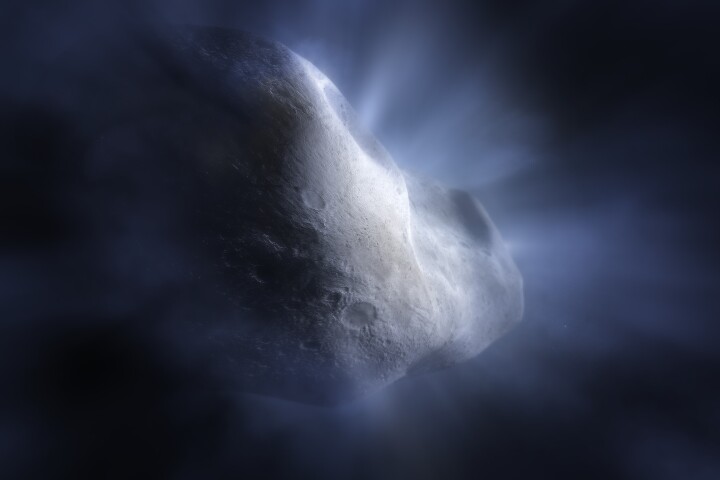 The James Webb Space Telescope has detected water vapor on an object in the asteroid belt, a region of the solar system where it wasn’t known to survive. The new observations also reveal something unexpectedly missing.
 -
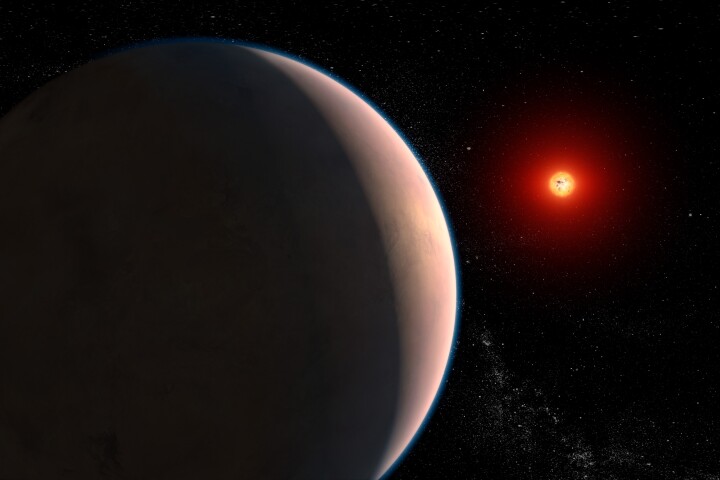 The James Webb Space Telescope has detected water vapor near a planet in another system. Although there's a big if hanging over the find, it could mark the first direct detection of a rocky exoplanet’s atmosphere.
Load More