
Infrastructure
-
 A perfect storm is brewing for China's cities due rising sea levels and accelerated subsiding land. Scientists have now sounded the alarm that, without intervention, urban areas below sea level will triple by 2120, impacting up to 128 million people.
 -
 The Dutch love to cycle. So much so that there are more than 35,000 km of cycle paths snaking through the Netherlands. Two of those bike routes have now been topped with photovoltaic cells to produce renewable energy while they face skyward.
 -
 GridServe has partnered with Cornwall Services to install an Electric Super Hub in the heart of the popular tourist destination, which includes a solar canopy and a huge battery to support the grid supply to a dozen EV chargers.
 -
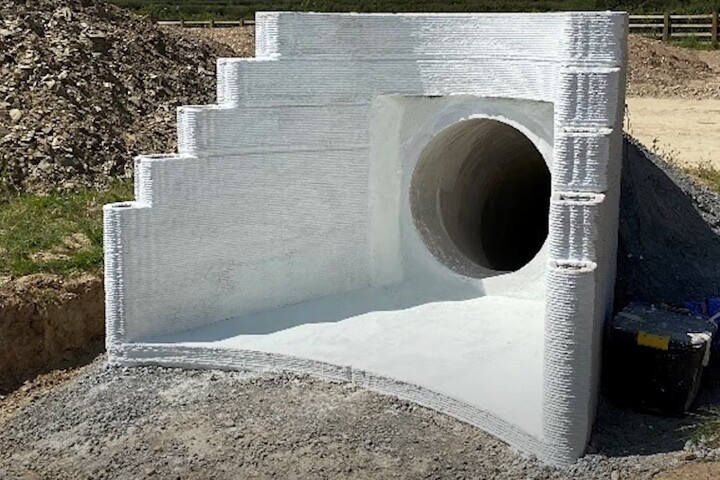 Working with private industry, the University of Cambridge has gone one step beyond 3D printing with a concrete infrastructure unit that was not only made in an hour, but incorporates sensors to make it self-monitoring and, one day, self repairing.
 -
 Bay Area startup Earthgrid says it's developing a plasma boring robot that can dig underground tunnels 100x faster and up to 98% cheaper than existing tech, and it plans to use it to start re-wiring America's energy, internet and utilities grids.
 -
 San Francisco startup Petra says its new contactless thermal drilling robot can make steady progress through super-hard rock that would normally destroy drilling equipment – and it's absolutely mesmerizing to watch "Swifty" in action.
 -
 Although fiber optic internet cable has many advantages over metal cable, it frequently has to be distributed underground – this limits its usability. Facebook, however, has developed a robot that could wrap the cable around existing power lines.
 -
 Startup Ample has come out of R&D stealth mode to help move EV adoption along with the launch of an automated battery swap solution for electric vehicles, which makes use of modular battery packs that can be retrofitted into existing EVs.
 -
 Swapping batteries in ebikes is pretty common, but things get more complicated for electric cars. EV maker Nio has had swappable batteries at the heart of its design language for a while now, and has recently celebrated its 500,000th battery swap.
 -
 It looks like it was designed for the zombie-apocalypse, but the TF-19 Wasp from Ohio-based Throwflame is a serious piece of kit with potentially life-saving applications. From clearing critical infrastructure to pest management and forest fire back-burns, this modern-day dragon is nobody's toy.
 -
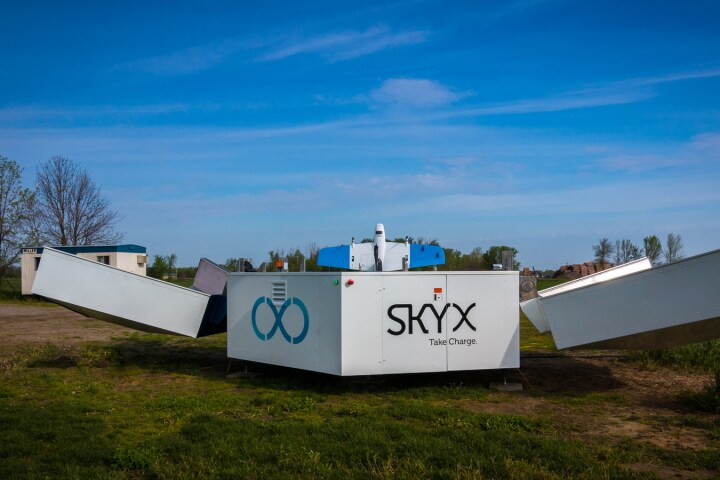 UAVs could be useful for monitoring railroads or gas pipes if they weren’t limited by battery life. Now SkyX has installed its first xStation, a recharging dock that can be placed periodically along a route to extend the range of its drones almost indefinitely.
 -
 Intel thinks it could use drones to make infrastructure a little safer. Intel CEO Brian Krzanich presented the company's vision for how its commercial drones can perform bridge inspections and close mapping that have previously required putting human inspectors in some precarious positions.
Load More