
Fingers
-
 Most exoskeletons are big, expensive, wearable devices designed to reduce the load on body parts such as the shoulders, arms or back. The Artus is different, in that it's made to protect the fingers … and it costs less than US$110.
 -
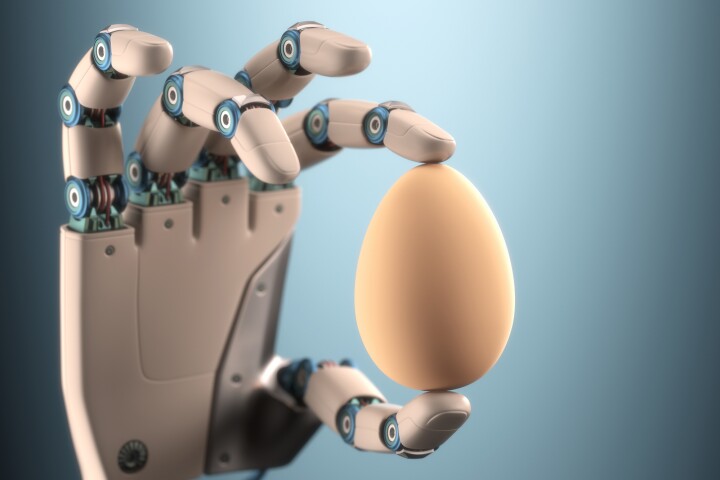 Researchers have overcome a challenge in robotics by developing a sensor that can slide over braille, accurately reading it at twice human speed. The tech could be incorporated into robot hands, providing fingertip sensitivity comparable to humans.
 -
 Prostheses that replace fingers are typically complex, expensive devices, the cost of which often isn't covered by medical insurance. The student-designed Lunet, on the other hand (no pun intended) is simple and can be made from open-source plans.
 -
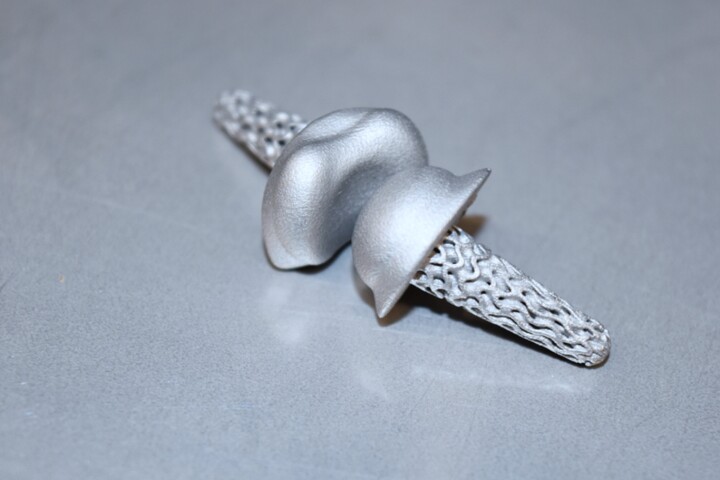 We hear a lot about artificial hips and knees, but finger joints? They do exist, but their fit and functionality is limited. Germany's Fraunhofer research group aims to change that, with artificial finger joints that are 3D-printed for each patient.
 -
 If you were trying to gauge the reaction force of an insect's leg, you couldn't just push it with your finger – the size difference between the two would be too great. A set of hand-controlled soft robotic microfingers, however, can get the job done.
 -
 Back in 2016 we told you about a wearable device known as the Tap Strap, which lets users control Bluetooth-linked devices via finger-taps. Its inventors have now announced its sleeker and more capable successor, called the TapXR.
 -
 We've been hearing a lot about synthetic skins made for robotic hands, which would give the devices human-like qualities. Scientists in Japan have gone a step further, by covering a robotic finger in a self-healing skin made from live human cells.
 -
 It goes without saying that surgeons require a very delicate, precise touch. A new set of surgical training gloves were designed with that fact in mind, as they monitor their wearer's hand movements, and provide feedback on their technique.
 -
 Could an existing piano player adapt to playing the instrument with an extra, robotic thumb? A new study suggests that the answer is yes, and interestingly enough, even people who are new to the piano are equally adept at using the added appendage.
 -
 A few years ago a designer named Dani Clode introduced the world to the Third Thumb, a robotic finger controlled using pressure sensors under one’s feet. Now neuroscientists are using the device to investigate how our brain's adapt to extra limbs.
 -
 Currently, if you want a VR setup to "know" what your individual fingers are doing, you either have to wear special gloves or place your hands directly in front of a camera. A new system, however, keeps tabs on the fingers via a simple wristband.
 -
 It sometimes seems that as soon as another form of biometric ID authentication is developed, someone devises a way of fooling it. According to its creators, however, a new 3D finger vein-scanning system cannot be duped.
Load More