
Eye-tracking
-
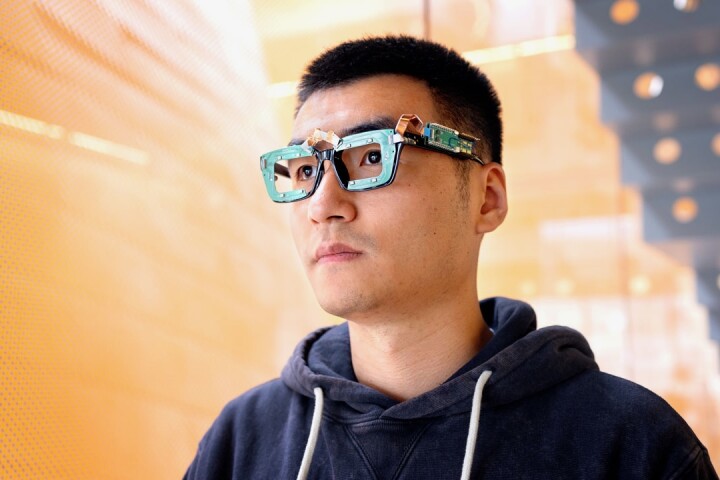 Two new technologies allow a single pair of glasses to track eye movements and read the wearer's facial expressions, respectively. The systems use sonar instead of cameras, for better battery life and increased user privacy.
 -
 If you're on a sightseeing tour in a bus, you really don't want to be looking away from the passing attractions to Google them on your smartphone. The AR Interactive Vehicle Display is intended to help, by showing relevant information on the vehicle's window glass.
 -
 In fast-paced sports such as tennis, keeping your eye on the ball – and on your opponent – is essential to success. The FalconFrames wearable was designed with that fact in mind, as it's claimed to help boost its user's neuro-visual skills.
 -
 While breathalyzers make it quick and easy to tell if someone is drunk, it takes more time and effort to determine if they're intoxicated by drugs such as cannabis. A new device known as Gaize could reportedly soon change that.
 -
 Autism spectrum disorder (ASD) symptoms generally appear in the first two years of a child’s life. A new study has found that toddlers’ visual attention to geometric images is a reliable biomarker for the early identification of autism.
 -
 After developing hardware for computers and laptops for years, Sweden's Tobii Dynavox has now brought its eye-tracking know-how to Apple's iPad, giving a voice to folks with conditions like cerebral palsy, ALS and spinal cord injury.
 -
 A study is describing a biomarker to identify a person’s risk of developing anorexia nervosa. The research proposes measuring levels of anxiety alongside a type of twitching eye movement can identify those with, and at risk of developing, the disorder.
 -
 Although it's certainly best to start addressing autism as early as possible, the disorder is often difficult to detect in young children. A new iOS app has been designed to help, by tracking a child's eyes as they watch videos.
 -
 ScienceEye tracking cameras and AI analysis can reveal your identity, gender, age, ethnicity, weight, personality traits, drug habits, emotions, skills, abilities, fears, interests, and sexual preferences, says a rather dystopian research review.
 -
 When tracking a sleeping person's eye movements, you typically have to stick hard-wired electrodes onto their face. Soon, however, an unobtrusive flexible mask could do the job – while also measuring their heart rate.
 -
 We've already seen electronic glasses that watch the wearer's diet and automatically change focus, among other things. An experimental new pair monitors the user's health, lets them control games, and switch to being sunglasses as needed.
 -
 For some time now, the tracking of eye movements has served as a means of assessing neurological health. A new system is said to do so more precisely than ever, providing highly accurate readings in just 10 seconds.
Load More