
Explosion
-
 It feels like every time astronomers get a handle on a cosmic phenomenon, a new one pops up that sends them back to the drawing board. Case in point – Hubble has spotted a burst of light in a region of space where there didn’t seem to be a trigger.
 -
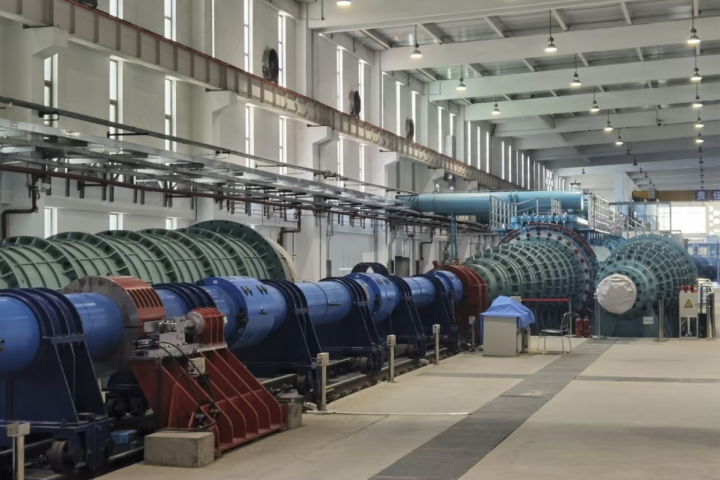 The Chinese Academy of Sciences has announced that the world's fastest hypersonic wind tunnel is up and running, a detonation-driven shock tunnel that'll allow aerodynamic testing for aircraft, spacecraft and missiles at air speeds up to Mach 30.
 -
 Astronomers have captured the biggest cosmic explosion ever detected. About 100 times bigger than the solar system and two trillion times brighter than the Sun at its peak, the mysterious miasma has remained visible for three years.
 -
 UCF researchers say they've trapped a sustained explosive detonation, fixed in place, for the first time, channeling its enormous power into thrust in a new detonation engine that could propel a hypersonic aircraft up to 17 times the speed of sound.
 -
 Supernovae are some of the most energetic events in the universe, and the resulting nebulas are a favorite for stargazers. To better understand the physics behind them, researchers at Georgia Tech have created a “supernova machine” in the lab.
 -
 Gamma-ray bursts (GRBs) are the most energetic events in the universe, second only to the Big Bang itself. We don’t usually get any warning, but now astronomers have spotted the telltale signs of a star system that could blow its lid any moment – and it’s far too close to Earth for comfort.
 -
 Even if an armored military vehicle isn't destroyed when a land mine detonates underneath it, its occupants can still receive traumatic brain injuries. Scientists are trying to keep that from happening, with a new shock-absorbing system that could also have applications in civilian products.
 -
 Looking to tackle the early signs of traumatic brain injury, the US Navy is developing small sensors that, when paired with specialized scanner, can quickly convert blast pressure into a clear signal of whether of not that soldier should stand down.
 -
 SpaceX is hopeful it will resume launches of its Falcon 9 rocket by the end of the year as it narrows down the possible causes of the explosion on September 1 that destroyed the booster and its AMOS-6 satellite payload.
 -
 A new study is shedding light on a type of binary star system theorized to transition into a state of hibernation lasting thousands of years following powerful nova explosion events.
 -
 An international team lead by astronomers from Queen's University Belfast have identified the fastest ever star on an escape trajectory from the Milky Way – the white dwarf US708, which is traveling at a staggering 1,200 km per second.
 -
 A US Air Force weather satellite exploded in Earth orbit on February 3, scattering debris along its path. In a report by Space.com, Air Force and space officials indicated the breakup of DMSP-F13 was due to a malfunction of its battery system rather than a collision with a foreign body.
Load More