
Education
-
 The XPeng Unicorn is a pony-sized robotic companion with the foundations to become much more. Shown to the world for the first time this week at the Bangkok International Motor Show, the Unicorn has the potential to become a market maker.
 -
 A desktop companion. An open-source education platform. An AI-powered robotics lab. Doly is all that and more. Technology startup Limibit out of Ontario, Canada, has launched on Kickstarter to bring the cute lil buddy bot to life.
 -
 The latest project from music education company Loog Guitars isn't a three-stringed Gibson classic to go with its pint-sized Fender Strat or Tele electrics, but a 37-key portable piano for kids of all ages.
 -
 For more than 10 years, Duolingo has been helping folks to learn a new language with ad-supported mini lessons designed to be fun and engaging. Now the company is taking its gamified model to music education.
 -
 For more than 10 years, Loog has been making learning to play a guitar a less daunting task for youngsters. Now the company has teamed up with Fender for a pint-sized Tele and Strat – each rocking three strings, a single pickup and a short skinny neck.
 -
 Ultra-short-throw projectors are great for viewing large when you don't have the space to set up a long-throw beast. Epson has now released a new PowerLite model that can throw 80-inch 4K visuals from just an inch away from a wall or screen.
 -
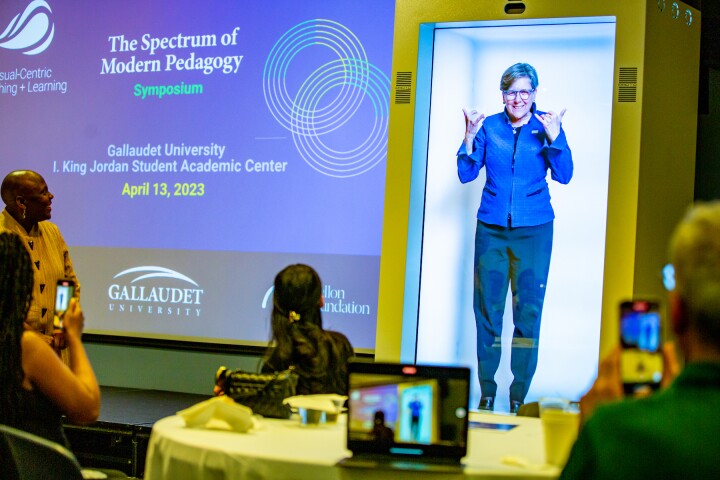 At a teaching symposium earlier this month, the world's only liberal arts university for deaf students explored the potential for remote learning by testing out a life-size holoportation device called the Epic from Proto Inc.
 -
 Students with learning disabilities struggle often require additional, individualized support to fill educational gaps. A team of researchers and experts have found that a cute little robot may help children with learning disabilities stay focused.
 -
 Back in 2015, developer Kevin Bates launched a credit-card-sized open-source 8-bit gaming system on Kickstarter called the Arduboy for folks with keen eyesight to play, create and share free games. Now an even smaller version has landed.
 -
 It's ironic that while violins are popular instruments for children to learn to play, they can also be pricey. The Montreal-based AVIVA Young Artists Program has set out to change that, by creating an inexpensive yet nice-sounding 3D-printed violin.
 -
 Minnesota company Upper Story has sent us its Turing Tumble, a fascinating educational toy that quietly tricks kids into inventing binary logic computers using nothing more than tiny marbles dropping through a series of clicky-clacky plastic pieces.
 -
 Luxonis has launched a hackable, open-source roving robot called rae that packs AI processing and machine learning, depth-sensing cameras, app control and fun RGB lighting into a pint-sized package designed "for every age, and every skill level."
Load More