
Diamonds
-
 Fraunhofer scientists have used ultra-thin diamond membranes to drastically cool electronic components and boost electric vehicle charging speeds, taking advantages of diamond's outstanding thermal conductivity.
 -
 With 2023 drawing to a close, it's once again time to look at the significant, intriguing, and sometimes just plain daft science stories of the year. So, let's dive in and see what the science types have been up to.
 -
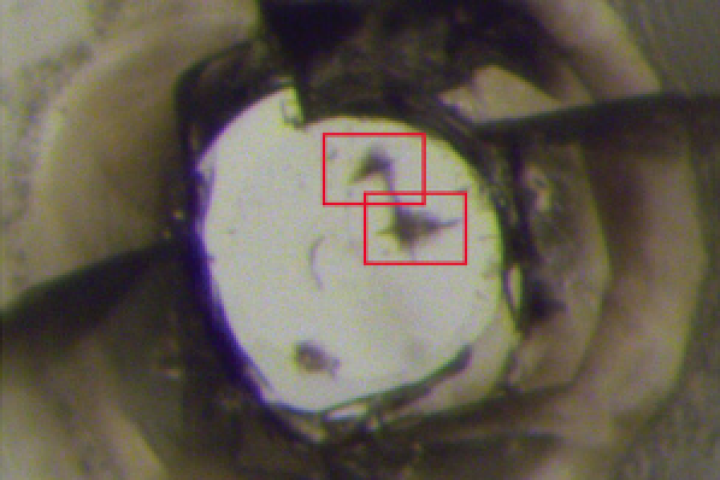 It’s taken more than three decades, but scientists have cracked the code and created a material that’s near-impossible to break and rivals diamond as the hardest substance on the planet. The applications for this long-sought-after substance are vast.
 -
 Diamond is a promising material for data storage, and now scientists have demonstrated a new way to cram more data onto it, down to a single atom. The technique bypasses a physical limit by writing data to the same spots in different-colored light.
 -
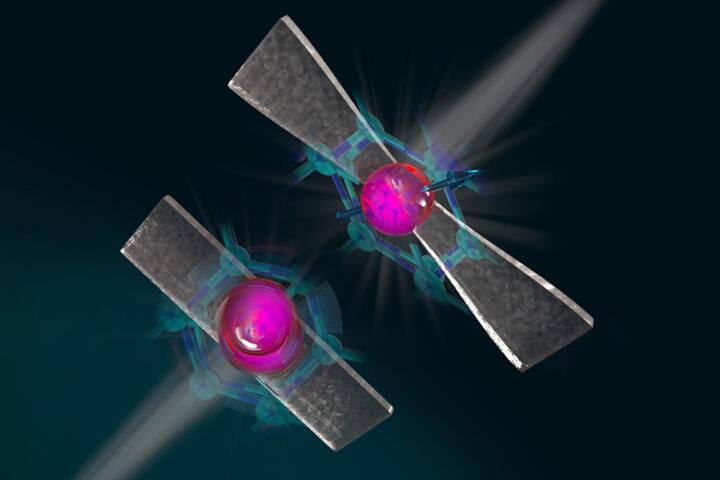 Researchers are claiming a breakthrough in quantum communications, thanks to a new diamond-stretching technique they say greatly increases the temperatures at which qubits remain entangled, while also making them microwave-controllable.
 -
 Locating diamond deposits in the earth isn't always an exact science, so the greater the number of methods of doing so, the better. A new study now suggests that soil microbes may point the way to such buried treasures.
 -
 Sometimes it seems that as soon as an anti-counterfeiting process is created, someone finds a way of circumventing it. A new system could be particularly hard to foil, however, as it utilizes tiny diamonds.
 -
 Australian scientists have discovered strangely folded diamonds in rare meteorite samples. In investigating how they came to form, the team found evidence that they were forged in a cataclysm on an ancient dwarf planet.
 -
 Scientists have turned plastic into diamonds. Using high-powered lasers, the team zapped samples of common PET plastic, which produces intense heat and pressure to form tiny diamonds that may naturally rain down on planets like Uranus and Neptune.
 -
 Arkenlight and Axorus have teamed up to prototype the first artificial neuron powered by a diamond betavoltaic battery made from nuclear waste. The goal is to develop medical-grade implants with energy sources that will last decades without charging.
 -
 A team of Harvard engineers working to advance laser technology have turned to one of the strongest known materials in diamonds, which they've used to form a new mirror that can endure beams strong enough to burn through steel.
 -
 Researchers in Japan have developed a new method for making 2-in wafers of diamond that could be used for quantum memory. The ultra-high purity of the diamond allows it to store a staggering amount of data – the equivalent of a billion Blu-Ray discs.
Load More