
Cornell
-
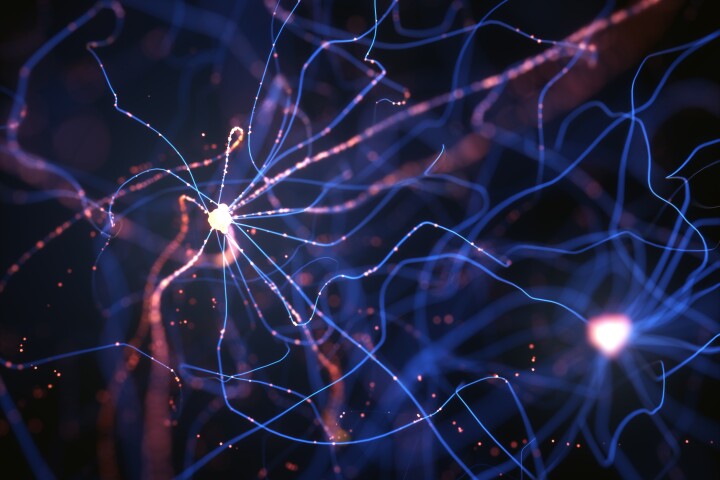 For the first time, scientists have identified how the region of our brain that powers memory is made up of two very different sets of neurons: one that deals with previous associations, and one that is predictive, actively shaping future behaviors.
 -
 More than 40 years after launch, Voyager 1 is still making new discoveries. The latest achievement by the craft is the detection of a faint, plasma “hum,” indicating that there may be more activity in interstellar gas than previously thought.
 -
 Home to oceans of liquid methane, Saturn’s moon Titan is one of the most fascinating bodies in the solar system. Now scientists have used radar to probe the depth of its largest sea, Kraken Mare, and estimated it to be at least 300 m deep.
 -
 Engineers at Cornell University have developed a new technique for 3D printing metallic objects – and it involves blasting titanium particles at supersonic speeds. The resulting metals are very porous, making them useful for biomedical implants.
 -
 In the most recent analysis of Cassini data, Cornell astronomers have determined that a three-decades-old assumption about the relationship between Saturn's moon Janus and the planet's A ring is just plain wrong.
 -
 Frogs are increasingly having more sex on dry land than in rivers and lakes and new research says that the reason for this might be for males to avoid competition from other males. In arriving at this theory, the researchers took a look at frog testes.
 -
 Researchers have reportedly restored near-normal vision to blind mice, using a prosthesis that incorporates the retina's natural neural code.
 -
 ScienceResearchers from Cornell University have demonstrated a working "temporal cloak" that is able to conceal a burst of light as if it had never occurred.
 -
 A team of researchers has bypassed the traditional human hand and fingers design to create a versatile gripper using everyday coffee grounds and a latex party balloon.
 -
 It might not have been setting a cracking pace but a Cornell University robot named Ranger set an unofficial world record on July 6 when it walked 14.3 miles in about 11 hours on a single charge.
 -
 ScienceA single-atom transistor developed by Australian and Finnish scientists could prove extremely useful in the search of a better quantum bit for the next generation of personal computers.
 -
 ScienceCornell University researchers have developed nanoscale resonators for light beams that can exert strong forces on tiny particles, leading the way to advancements in MEMS and MOMS systems.
Load More