
Construction
-
 An experimental new helmet could save drivers of construction vehicles from serious injuries. The device measures the extent to which its wearer is being shaken up while driving, and sounds an alert when the shaking gets to be too much.
 -
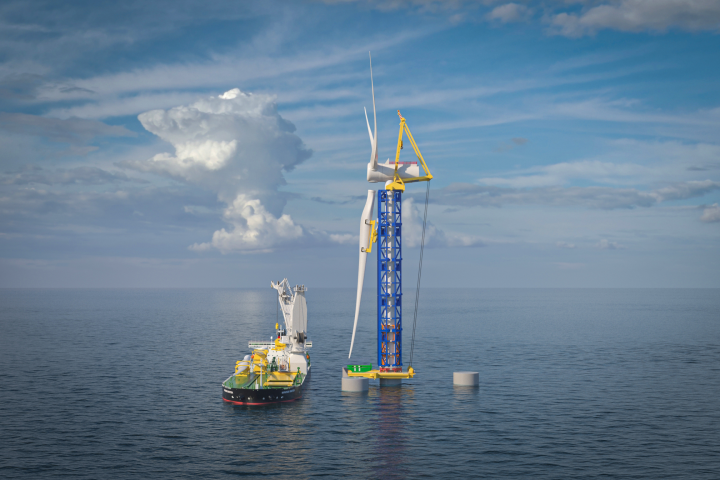 Part of the exorbitant cost of offshore wind energy is the massive crane ships required to install the damn things – but Norwegian company Windspider has come up with a brilliantly lightweight crane system that promises to slash costs in half.
 -
 A new 3D construction printer from Icon can whip out two-story concrete buildings faster and cheaper than its previous Vulcan printer. It has already been used to build a 27-ft-high structure called Phoenix House, now on display in Austin, Texas.
 -
 Thanks to our high demand for concrete, the world may eventually run out of accessible sand. Scientists at Rice University have now shown that substituting graphene can not only save sand, but makes concrete lighter, stronger and tougher.
 -
 China's Xuzhou Construction Machinery Group recently took its new XCA3000 wheeled crane to a wind farm in the Liaoning Province to lift a 25-ton blade some 107 meters above the ground, before it was installed in the turbine hub.
 -
 Concrete may seem strong, but it can be surprisingly vulnerable to the elements. Now researchers at Drexel University have demonstrated a type of self-healing concrete embedded with “BioFibers” that use bacteria to patch up cracks as they form.
 -
 To build or maintain today's colossal wind turbine towers, you either need an absolute monster of a crane – or something like this. The KoalaLifter self-climbing crane is quick, compact, handles heavy loads and creeps up turbine towers of any height.
 -
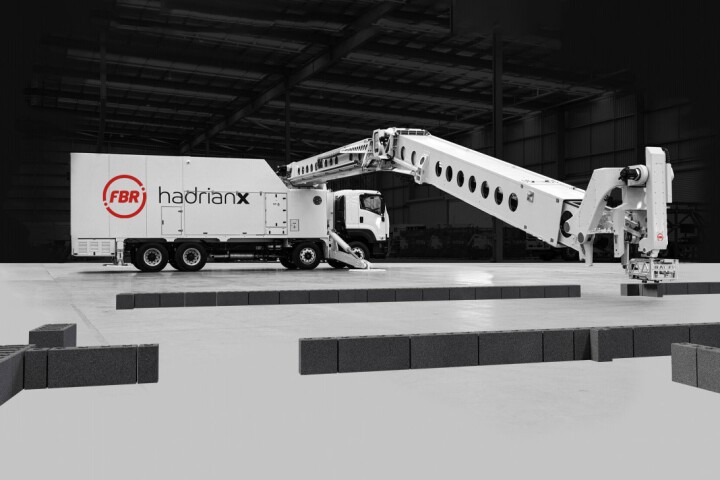 The extraordinary Hadrian X bricklaying robot rocks up to a building site looking like a regular truck, then extends a 32-m (105-ft) boom arm and starts precisely laying up to 300 large masonry blocks an hour. It's pretty remarkable to watch.
 -
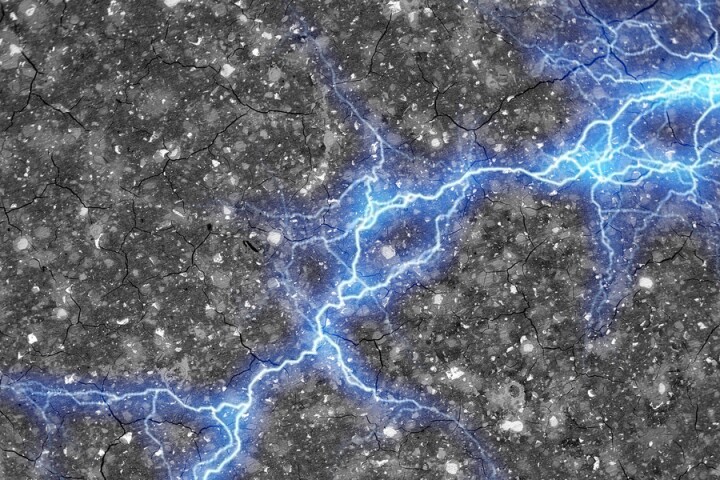 MIT researchers have discovered that when you mix cement and carbon black with water, the resulting concrete self-assembles into an energy-storing supercapacitor that can put out enough juice to power a home or fast-charge electric cars.
 -
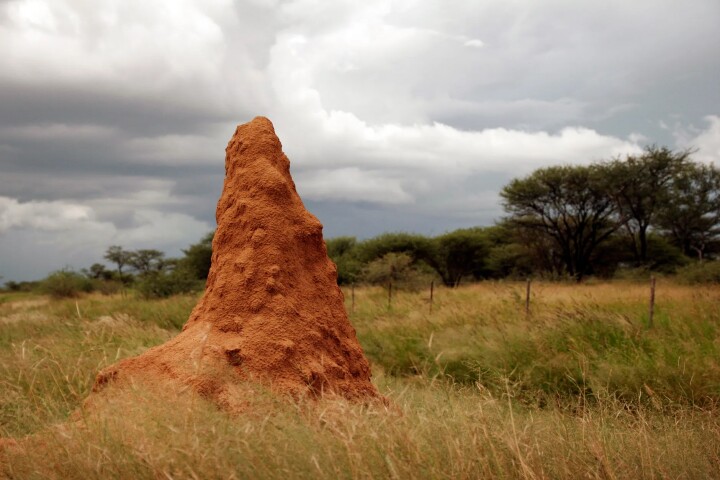 Looking to nature can provide inspiration, especially in construction. Researchers studied the complex internal structure of a termite mound in hopes that we can one day construct to a building that can regulate its own internal climate.
 -
 The Exchange tower in Detroit is nearly finished, a 207-ft-tall proof-of-concept for an advanced modular construction technique. Its floors were each pre-built on the ground, then hoisted up on central spines and installed from the top down.
 -
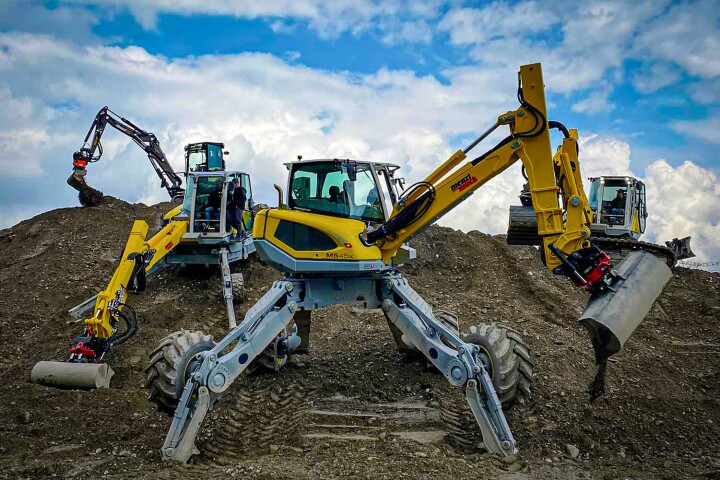 These little-known machines have to rank as some of the greatest sandpit toys in history. Walking spider excavators offer an extraordinary range of capabilities through their articulating, extending legs, stabilizers, tilting wheels, and buckets.
Load More