
Computers
-
 This week’s global NVIDIA GTC, GPU Technology Conference, included a discussion about using accelerated computing to drive climate action. Three startup companies have taken advantage of NVIDIA's AI and Earth-2 platform to do just that.
 -
 Backlit monitors can be harsh on the eyes, causing some people to suffer from eye strain. Introducing the Eazeye Radiant, the world's first portable monitor to incorporate transflective LCD to effectively use natural light as a light source.
 -
 Two of the first-ever desktop computers have been found in storage boxes at Kingston University in London. A milestone in human achievement, the Q1 microprocessor computer was released more than half a century ago, and only one other is known to exist.
 -
 The eggplant emoji may be more famous in the digital world than in real life, but it's not the case for most organisms. Biologists have made the case for 'animal underdogs' to have better emoji presence to aid real-life conservation and biodiversity.
 -
 Twas the night before Halloween, and Apple held a “spooky” event to announce some “scary fast” new products. The company unveiled its next generation chips, the M3 family, as well as the first iMacs and MacBooks that will feature them.
 -
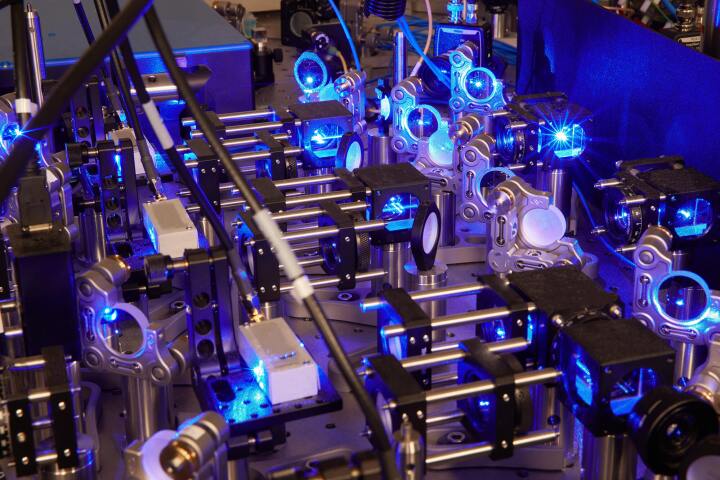 Atom Computing has announced the first quantum computer to pass the 1,000-qubit milestone. The prototype, due to become available for use in 2024, leapfrogs IBM’s announcement of its new quantum computer platform expected in the next few weeks.
 -
 With more than 1,000 bacterial species, the gut microbiome is an untapped resource of disease-fighting power. Now, scientists have found a way to rank crucial members of this 'microscopic multicultural community', which has massive medical potential.
 -
 Finally, science has given us permission to play with our food. Taking a unique recipe featuring a modified electronic plate and plenty of imagination, researchers have dished up a fun way of enhancing a food experience for both a chef and the diner.
 -
 You may think that computer tape memories died out before Rubik's cubes came in, but IBM and Fujifilm have teamed up to develop a record-breaking new sixth-generation tape storage system that can backup a whopping 50 TB of data.
 -
 Last year, Monash University scientists created the "DishBrain" – a semi-biological computer chip with some 800,000 human and mouse brain cells lab-grown into its electrodes. Demonstrating something like sentience, it learned to play Pong within five minutes.
 -
 Cambridge scientists have developed a new prototype for computer memory that could make for faster chips that could hold up to 100 times more data. The system is made up of barium bridges between films of a disordered material.
 -
 Today at its Worldwide Developers Conference, Apple has announced what it says are the most powerful Macs ever made. One is the revamped Mac Pro, while the other is the latest and greatest take on the Mac Studio.
Load More