
Combat
-
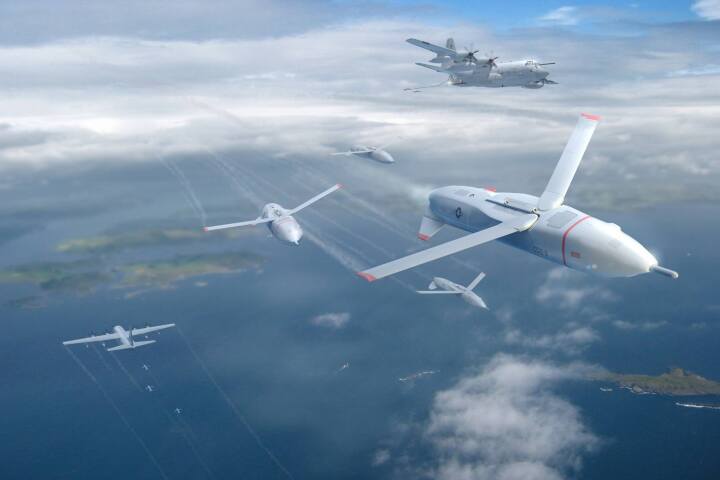 The US Deputy Secretary of Defense has officially kicked off the AI drone wars, announcing a radical "Replicator" plan to put many thousands of intelligent autonomous war drones into service within 18-24 months, to deter a Chinese invasion of Taiwan.
 -
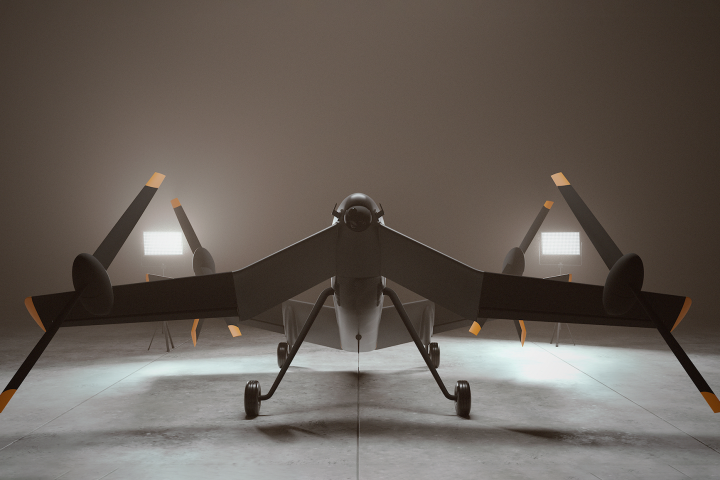 BAE Systems has unveiled a fascinating new autonomous, hybrid, VTOL UAV for military use. The STRIX, developed in Australia, folds to fit inside a shipping container, and is capable of carrying 160 kg (353 lb) of payload over 800 km (500 miles).
 -
 Next-generation fighter jets will go into combat with semi-autonomous wingman drones designed to act as force multipliers. Here's one in development: Airbus has just dropped its Remote Carrier demonstrator out of a cargo plane, for a mid-air launch.
 -
 The age of the unmanned combat jet is a step closer after Boeing Australia announced that its Loyal Wingman aircraft has fired up its commercial turbofan engine for the first time in anticipation of its first test flight.
 -
 At a recent live-fire exercise in Tapa, Estonia, the latest version of Milrem Robotics and ST Engineering's ground combat robot showed off its ability to operate under Beyond Line Of Sight (BLVOS) control while equipped with the ADDER DM Remote Weapon Station.
 -
 DARPA has launched an initiative to develop an artificial intelligence (AI) that can engage in dogfighting aerial combat. Despite its Terminator-like description, the goal is to produce an AI wingman that human pilots can trust to watch their backs while they handle command decisions.
 -
 A colossal battle two years in the making is about to be joined, with a USA vs Japan duel pitting metal-shredding 15-foot robots against each other set to take place this Tuesday.
 -
 DARPA’s unmanned aerial systems (UAS) can be fitted for a wide range of missions, but compact UAS can usually only carry one such instrument at a time, and need to land fr a swap over. Now, DARPA and BAE Systems are collaborating on a program to enable smaller UAS to multitask.
 -
 America laid down the challenge; Japan has accepted. In one year's time, the two countries will face off on neutral soil for the world's first international giant robot dual.
 -
 You could describe it as live Tekken, but to appreciate this new cyborg gladiator sport, you need to see it in action. Here's your chance – this two minute video will give you a good idea of what UWM combat will feel like to watch ... and Loz Blain is ready to enter the first tournament in 2016.
 -
 Two expert martial artists, clad head to toe in high-tech articulated armor, going at each other full force with ancient and modern weapons, fighting to the virtual death. That's the concept behind UWM – the first bloodless bloodsport that can give its fighters an accurate, real time health bar.
 -
 BAE Systems is in the process of developing and testing a next-generation radar system for the Eurofighter Typhoon. The Captor E-Scan boasts a number of improvements over more traditional radar systems, including a wider field of regard, and the provision of advanced electronic warfare protection.
Load More