
Carnegie Mellon
-
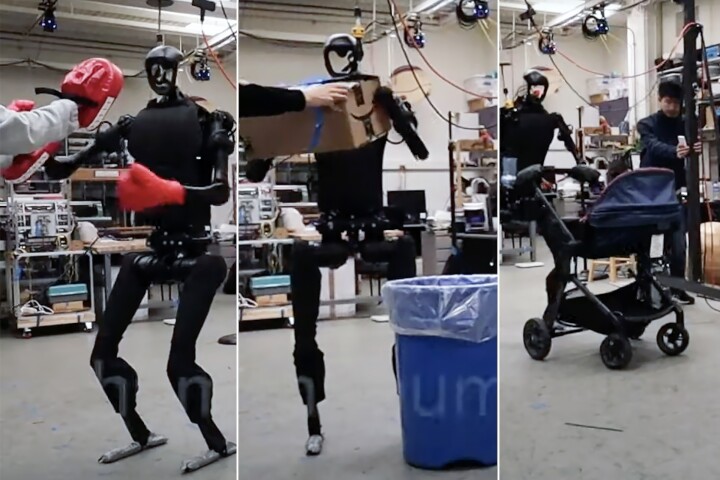 Researchers have developed a reinforcement learning-based framework that allows a full-sized humanoid robot to be teleoperated by a human in real-time using only an RGB camera. Which begs the question: Will manual labor soon be performed remotely?
 -
 Ordinarily, when there's a leak in an underground natural gas pipeline, the affected section of pipe has to be excavated and replaced. Soon, however, a pipe-inspecting and -repairing modular robot may make doing so unnecessary.
 -
 Walking bipedal robots excel at tasks such as traversing uneven terrain, but because they're so mechanically complex, they can't be made very small. That could soon change, however, thanks to the development of the Mugatu robot.
 -
 Pleurocystitid was a marine organism that existed almost 450 million years ago, long before the first dinosaurs. Scientists have now built a soft-bodied robotic replica of it, which could inspire new methods of locomotion for future robots.
 -
 While it's important for dermatologists to know how itchy a person's skin is, patients' self-assessments are quite subjective. A new wearable sensor could help, by objectively measuring the frequency and intensity of its user's scratching sessions.
 -
 The spotted lanternfly is a serious invasive pest, causing considerable damage to crops such as apples, grapes and hops. That's why it's important to destroy the insect's eggs – which is exactly what the TartanPest robot is designed to do.
 -
 In order to keep from hurting their human coworkers, many robots have sensors that detect contact with people or other objects. Scientists have now devised a high-tech sweater which brings this functionality to robots that don't have it already.
 -
 Stroke can be tricky to diagnose as patients don’t always present with classic symptoms, and other conditions can mimic it. Researchers have now developed a machine-learning model that accurately predicts stroke and may make diagnosis easier.
 -
 While quadruped robots may surpass their wheeled counterparts at traversing rough terrain, they still aren't able to move along narrow ridges. That could change, though, as scientists have devised a method of allowing them to walk on a balance beam.
 -
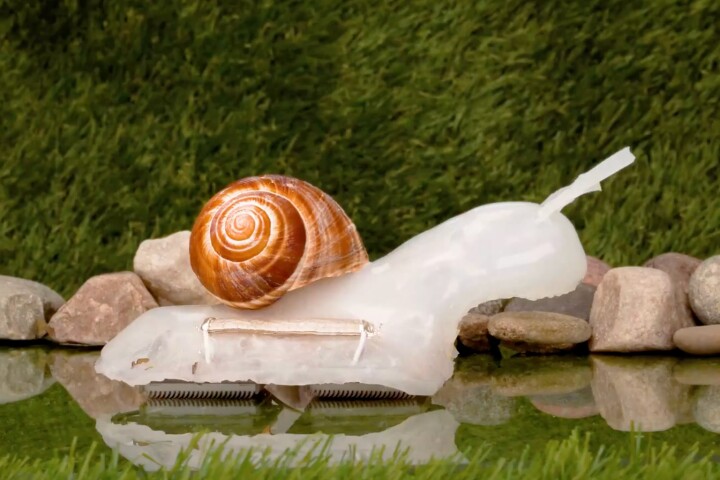 In order to reach their full potential, soft robotic devices can't just consist of rigid electronic components encased in squishy rubber. A new material could help in that regard, as it's soft, self-healing and electrically conductive.
 -
 Using drones for aerial seeding may seem like a good idea, but … the seeds could easily just blow away if left on the surface of the soil. A bio-inspired seed carrier has been designed to help, by corkscrewing its seed load down into the ground.
 -
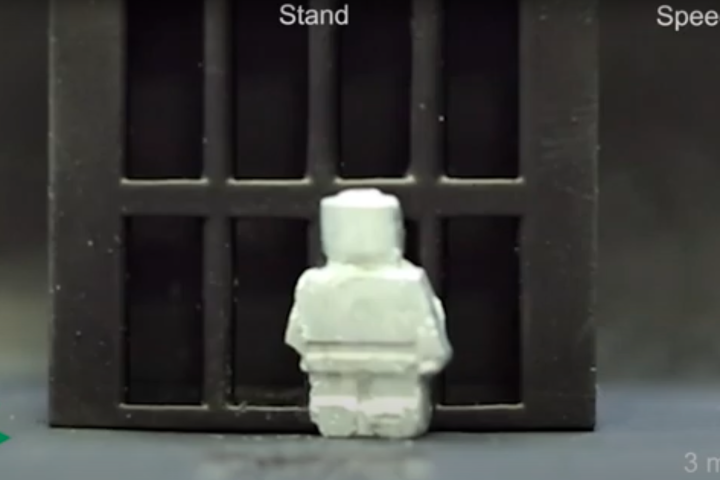 Researchers have created a new class of robots that can shift between solid and liquid forms on demand. In a series of tests, these new bots could change shape to run obstacle courses, carry objects, or even escape from a jail cell like a Terminator.
Load More