
Bombs
-
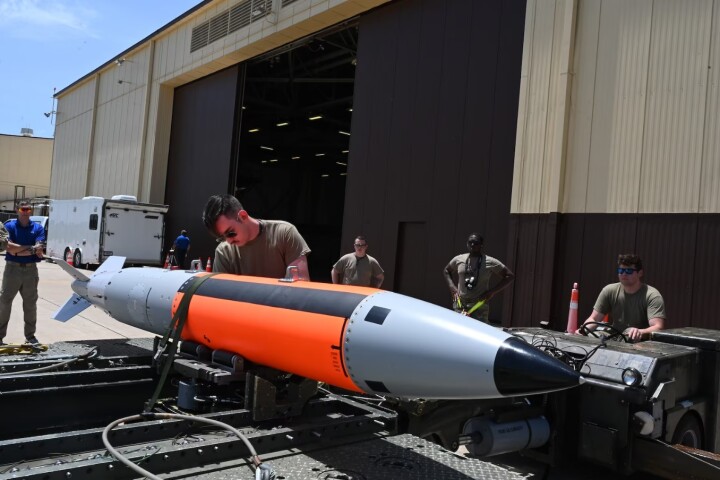 The US Department of Defense (DoD) has announced that the Department of Energy's National Nuclear Security Administration (NNSA) will build a new high-yield nuclear gravity bomb called the B61-13 once given Congressional approval and funding.
 -
 Boeing and Kratos Defense & Security Solutions have signed a Memorandum of Understanding to develop a jet-turbine-powered kit that turns a standard 500-lb (228-kg) "dumb" iron bomb into a miniature precision cruise missile.
 -
 Sinclair International has begun human trials of a new anti-radiation drug called HOPO 14-1 that is designed to help decontaminate those who have been exposed to radioactive elements as a result of a nuclear accident or dirty bomb attack.
 -
 MIT scientists have developed a finger-like sensor with the ability to dig into granular media like sand or gravel to get a sense of objects buried beneath the surface, which could lead to better ways of detecting and disarming land mines.
 -
 Scientists have developed a new AI-powered tool that could make finding unexploded bombs a lot easier, with an ability to detect craters through satellite imagery and therefore help reveal where the undetonated devices might remain.
 -
 New research has shed light on how nuclear war could seriously alter the chemistry of Earth’s oceans, and in so doing damage the life that dwells within. The scientists used an advanced climate model to predict a range of nuclear scenarios.
 -
 Improvised Explosive Devices (IEDs) can be difficult for soldiers to detect, as they're made in a variety of shapes and sizes, and are typically buried in the road. A new vehicle-mounted system, however, is designed to "spot the signs" of IEDs.
 -
 ScienceTiny glassy particles that litter the beaches near Hiroshima in Japan are likely the resolidified remains of the city destroyed by a US atomic bomb on the morning of August 6, 1945, according to the results of a newly published study.
 -
 Bomb disposal work is as dangerous as it comes, but the British Army will now have an advanced new tool to help them with the task at hand. Welcomed into the ranks this week is a shiny new set of ground vehicles that will afford the bomb disposal team some useful capabilities.
 -
 A team of scientists from the University of Reading has found that the bombing raids against the Axis powers by Allied forces during the Second World War were so intense that their effects were detected on the edge of space.
 -
 The US government has just released 62 newly declassified videos showing footage of atmospheric nuclear tests from the first half of the 20th century. The videos, never before seen by the general public, have been uploaded to YouTube.
 -
 The announcement that testing is underway using GBU-38 JDAM guided-bombs with the American hunter-killer MQ-9 Reaper UAV didn't make a lot of general news coverage, but it is a reminder that drone warfare is getting much cheaper and more precise.
Load More