Boeing
Boeing announce plans to accelerate bio-jet fuel development
Image Gallery (2 images)
October 8, 2007 In a move designed to accelerate the development of viable and sustainable clean fuels for commercial aviation, Boeing will team up with Air New Zealand and Rolls-Royce to conduct a biofuel demonstration flight planned for the second half of 2008. Read More
Boeing-led test successfully intercepts target missile
Image Gallery (3 images)
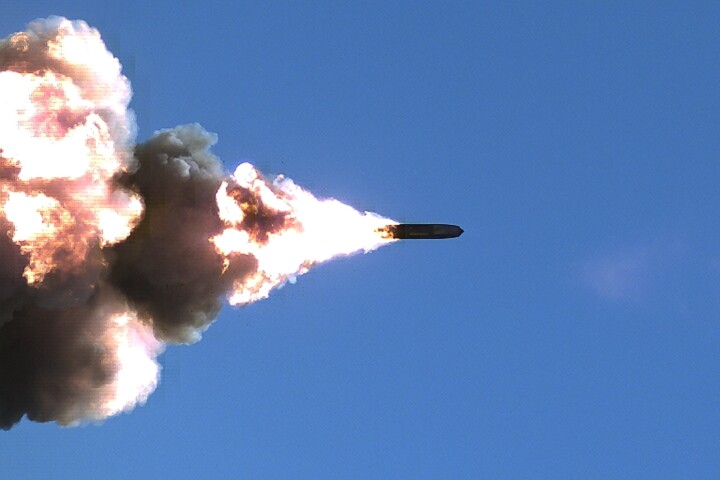
October 4, 2007 The Boeing Company, working with industry teammates and the U.S. Missile Defense Agency, has successfully completed a missile defense flight test resulting in the intercept of a target warhead to demonstrate the capability and reliability of the nation's only defense against long-range ballistic missiles. Read More
Airborne Laser project achieves development milestones
Image Gallery (4 images)
September 5, 2007 Successful testing of an aircraft mounted laser weapon system has been carried out by the US missile defense agency and industry partnership team at Edwards Air Force base in California. The Airborne Laser (ABL) team has demonstrated the ability to point and focus the Lockheed Martin developed Beam control/Fire control system on an airborne target. Read More
Hypersonic civil aviation: Sydney to Brussels in four hours
Image Gallery (4 images)
August 30, 2007 Imagine long-distance air-travel that could get you to the other side of the globe in less than a quarter of the time it presently takes? Researchers from Reaction Engines, a company created for design and development of advanced space transport and propulsion systems, are investigating the possibility of hypersonic civil transport in a three year study to examine the feasibility of reducing long-distance flights (e.g. from Brussels to Sydney) to less than 4 hours. Read More
Boeing wins construction bid for Ares I
Image Gallery (3 images)
August 29, 2007 Boeing has been awarded a lucrative contract worth more than $500 million to create part of a new NASA crew launch vehicle for Ares I, the rocket set to succeed the space shuttle as NASA’s primary vehicle for human exploration in the next decade. Boeing Space Exploration will manufacture a key element which will provide navigation, guidance, control and propulsion required for the ascent of the second-stage Ares I rocket into low-Earth orbit. Read More
Boeing site delivers 3,000th widebody airplane
Image Gallery (3 images)
August 28, 2007 Airplane manufacturing giant Boeing has announced the completion of its 3,000th aircraft built its Everett site in Washington. Coincidently, the factory is also celebrating 40 years in operation this year. The widebody 777-200ER (Extended Range) model was delivered to Korean Air and joins the a worldwide fleet of Boeing 747, 767 and 777 airplanes that have flown more than 34.5 million flights across 71 billion nautical miles. Read More
New Chinook unveiled at Fort Campbell
Image Gallery (3 images)
August 21, 2007 Aviation history was made at Fort Campbell recently as a newly designed CH-47 Chinook helicopter was officially ushered into operation. Allowing greater capability and Soldier safety, the new $30 million bird was turned over to Company B, 7th Battalion, 101st Aviation Regiment, 159th Combat Aviation Brigade. Read More
Boeing's CH-47F Chinook helicopter fielded to first U.S. Army Unit
Image Gallery (3 images)
Aug 16, 2007 Boeing has announced that its new CH-47F Chinook helicopter has been certified combat-ready by the U.S. Army and fielded to the first operational unit. Since being first unveiled in mid 2006, the new Chinook has successfully completed 60 rigorous flight test hours including simulated mission scenarios. Read More
Aeroscraft ML866: the ultimate corporate aircraft
Image Gallery (3 images)
The trend towards radical new aircraft designs aimed at achieving new levels of efficiency and operational capability beyond anything currently gracing our skies is on the rise. Recently Gizmag examined Boeing’s Blended-Wing Body (BWB) and now Aeros have announced the new Aeroscraft ML866 aircraft which utilizes a combination of buoyant and dynamic lift to create usage possibilities that far outstrip currently available aircraft platforms. The ML866 can be utilized as a private air yacht, corporate air vehicle, business office in the sky, or commercial commuter, providing its passengers with far more space than any existing business jet. Read More
Blended-Wing Boeing completes first test flight
Image Gallery (10 images)
July 30, 2007 The traditional airplane shape is well tried and tested, but manufacturers like Boeing are moving beyond the "tube with wings and a tail" design in the push to improve fuel economy and the environmental impact for the next generation of jets. Inspired by "flying wing" designs from earlier decades like 1988's B-2 Stealth bomber, the company has been collaborating with NASA to test the viability of a Blended Wing Body (BWB) aircraft, using a flat, wide body that tapers out to thin wing-tips and aims to strike an effective middle ground between the tube and flying wing designs. A BWB design allows the entire body of the plane to generate lift and reduces drag in comparison to a tube-shaped fuselage - both of which are key factors in reducing fuel usage. The BWB design also provides a much greater cargo and passenger capacity - making it particularly attractive to the military. After months of development, ground testing and wind-tunnel testing, Boeing flew its first BWB prototype last week with the 8.5 per cent scale, 500-pound X-48B aircraft reaching 7500 feet before a successful landing under remote control. Read More
Boeing debut 787 Dreamliner
Image Gallery (4 images)
July 9, 2007 After a six year development involving 70 companies Boeing has premiered its 787 Dreamliner with of one of the largest corporate TV and Internet broadcasts in history. An estimated 15,000 people attended the hour long ceremony at the company’s final assembly facility in Everett, Washington, which coincided with a webcast and live broadcast in nine different languages to more than 45 countries. The newest addition to the Boeing family will have quieter takeoffs and landings, produce fewer carbon emissions and use 20 percent less fuel per passenger than similar aircraft.
Boeing demonstrates simultaneous control of multiple UAVs
Image Gallery (4 images)
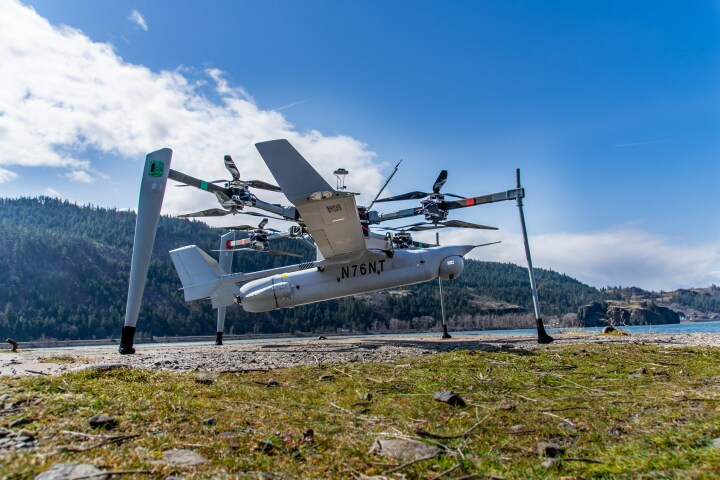
June 28, 2007 Boeing has successfully demonstrated the simultaneous command and control of multiple unmanned aerial vehicles (UAVs) by a single operator. The demonstration at Boeing's Boardman test range utilized advanced autonomous control software, three ScanEagle aircraft and an Airborne Warning and Control System (AWACS) console. Already an effective and proven weapon in the field, this next-generation of UAVs this will see future battlefields transformed by large numbers of unmanned craft that can operate through a central control point as well as having the ability to self-organize and make decisions independently. Read More
Boeing Wedgetail moves into flight testing
Image Gallery (4 images)
June 14, 2007 Despite expensive project delays, Boeing have commenced flight testing of Project Wedgetail, a specially modified 737 aircraft that will provide state-of-the-art airborne battle management and surveillance capabilities to the Australian armed forces. Featuring Multi-role Electronically Scanned Array (MESA) radar, an expanded passive surveillance system and a highly effective self-defense capability, the aircraft will form a key part of Australia's defense strategy. Read More
Fuselage sections for 787 Dreamliner delivered in Large Cargo Freighter
Image Gallery (4 images)
May 12, 2007 The 787 Dreamliner is the fastest-selling airplane in aviation history, with firm orders for 567 airplanes from 44 airlines. Perhaps even more intriguingly, it required a complete redesign of an existing plane to create the Large Cargo Freighter just to carry the parts in from suppliers so that its advanced construction technique could be implemented. We’ve covered the story from conception to now (here, here and here), the point where the first of the large composite fuselage sections have begun arriving at Boeing’s Everett plant for assembly.The all-composite forward section, known as section 41 and shown here wrapped in white, is manufactured by Spirit AeroSystems at its facility in Kansas. The complex structure is 21 feet in diameter and 42 feet long. Its landing gear is installed.
The SUGV Early – Boeing and iRobot join forces to create the next generation Reconnaissance Robot for military, civil and commercial Use
Image Gallery (16 images)
April 24, 2007 The remarkable success of robots in Iraq and Afghanistan is now well documented. UAVs have proven invaluable at every level and robotic ground systems, primarily iRobot’s Packbot, have performed tens of thousands of missions and saved countless lives from the dreaded Improvised Explosive Device (IED). The PackBot is used daily in war zones to disarm IEDs and search buildings, caves and tunnels. Now, the Boeing and iRobot are to combine knowledge to build a next generation of the robotic military ground platform. The SUGV Early will be a smaller, lighter version of the PackBot, and will provide military, civil and commercial users with unprecedented reconnaissance and secure, real-time intelligence capabilities. Read More
Boeing working on Fuel Cell Airplane
Image Gallery (3 images)
March 28, 2007 With all the effort we are witnessing in developing environmentally progressive technologies for automotive applications, it’s great to see that Boeing researchers and industry partners throughout Europe are planning to conduct experimental flight tests this year of a manned airplane powered only by a fuel cell and lightweight batteries. The systems integration phase of the Boeing Research and Technology Europe (BR&TE) Fuel Cell Demonstrator Airplane research project was completed recently and thorough systems integration testing is now under way in preparation for upcoming ground and flight testing. The Boeing demonstrator uses a Proton Exchange Membrane (PEM) fuel cell/lithium-ion battery hybrid system to power an electric motor, which is coupled to a conventional propeller. The fuel cell provides all power for the cruise phase of flight. During takeoff and climb, the flight segment that requires the most power, the system draws on lightweight lithium-ion batteries. Read More
Boeing Dreamlifter Delivers First Assemblies for 787 Dreamliner
Image Gallery (3 images)
January 17, 2007 Given that we’ve been reporting on Boeing’s swing-tail Large Cargo Freighter known as the Dreamlifter since the project began (here, here, and here), we’re pleased to announce that Boeing yesterday delivered the first major assemblies for the all-new 787 Dreamliner to its partner Global Aeronautica, completing the first-ever delivery cycle using the Dreamlifter, a specially modified 747-400. Read More
Boeing begins using Moving Assembly Line for 777 Jetliners
Image Gallery (5 images)
November 14, 2006 The moving production line concept was around for more than a century before Henry Ford famously used it to speed output and cut costs and hence transform the automotive industry a century ago. So do we now know all there is to know about manufacturing efficiency? Not by a long shot! The Boeing Company has just started using a moving assembly line for the first time to build its market-leading 777 jetliner. Earlier this year, Boeing began work to transform its 777 assembly line into a leaner and more efficient production system. This initial use of a moving line during final assembly represents substantial progress with that transformation effort. Assembled one-by-one, it takes 26 days to assemble the 777’s three million constituent parts, but with a moving production line, the aim is to cut that time to just eight days. For now, the moving assembly line is used only during final assembly positions for the airplane, moving it at a steady pace of 1.6 inches per minute during production. Read More
Inside the 747-400 Large Cargo Freighter (LCF)
Image Gallery (3 images)
September 16, 2006 Believe it or not, this is the inside of an aircraft – not just any aircaraft mind you, but the 747-400 Large Cargo Freighter (LCF), the first of three specially modified 747-400 passenger jets that will be used to transport the large composite sections and wings of the all-new Boeing 787 Dreamliner. The new aircraft touched down at Seattle's Boeing Field at 8:08 a.m. PDT on September 16, ending a non-stop, 13-hour, 17-minute flight from Taiwan. Previous reports and images here. The LCF is a key element of the lean, global production system that is critical to the 787's success. Flying the large components reduces shipping time to as little as one day from as many as 30. Read More
Boeing 747 swing-tail LCF first flight
Image Gallery (12 images)
September 10, 2006 The Boeing 747-400 Large Cargo Freighter took to the skies for the first time yesterday, initiating the flight test program that will culminate in U.S. Federal Aviation Administration (FAA) certification. The two-hour, four-minute flight was the first of 250 expected flight test hours for the unique freighter, a specially modified 747-400 that has been created with the sole intention of transporting major composite structures of the all-new 787 Dreamliner. The enormous 747-400 LCF has an enlarged upper fuselage that can accommodate three times the cargo by volume 65,000 cubic feet (1,845 cu m) of a standard 747-400 freighter. Moving major 787 assemblies by air to the 787s Everett, Wash. final assembly facility could save 20 to 40 percent compared to traditional shipping methods, and reduce delivery times to as little as one day from as many as 30 today. Such savings will allow Boeing to recoup its initial investment in the 747s during the first few years of 787 production. Read More
Air New Zealand to be first with Boeing 787-9
Image Gallery (2 images)
May 12, 2006 Air New Zealand will be the first airline in the world to fly the new Boeing 787-9 Dreamliner in December 2010. The 787-9 has exceptional fuel efficiency and economics, and will offer the economics of large jet transports to the middle of the market, using 20 percent less fuel than any other airplane of its size. Capable of carrying 290 passengers on routes up to 16,300 kilometres, the 787-9 is a slightly bigger version of the 787-8 and has a list price of US$183 million. The super-efficient 787-9 has an innovative new interior environment with higher humidity, wider seats and aisles, and larger windows. Read More
Boeing Phantom Works to lead research on X-48B Blended Wing Body Concept
Image Gallery (6 images)
May 05, 2006 In cooperation with NASA and the U.S. Air Force Research Laboratory, the Phantom Works organization of Boeing is taking another step toward exploring and validating the structural, aerodynamic and operational advantages of a futuristic aircraft design called the blended wing body, or BWB. A more fuel-efficient blended-wing body looks different than most airplanes, as it has a modified triangular-shaped wing. Two high-fidelity, 21-foot wingspan prototypes of the BWB concept have been designed and produced for wind tunnel and flight testing this year. The Air Force has designated the vehicles as the X-48B, based on its interest in the design's potential as a flexible, long-range, high-capacity military aircraft. Read More
Boeing Apache demonstrates UAV Control
Image Gallery (7 images)
April 13, 2006 It hardly seems fair really. As if the AH-64D Apache Longbow helicopter isn’t scarey enough on its own, it has now demonstrated the ability to control an unmanned aerial vehicle (UAV) weapon payload. Boeing demonstrated the capability recently at its Mesa, Arizona, facility, home of both Apache helicopter production and the company's Unmanned Little Bird (ULB) UAV technology demonstrator used in the milestone test. During the test, the Apache Longbow, the AMUST-D aircraft, took control and commanded multiple payloads on the unmanned aircraft, an A/MH-6 derivative in development by Boeing known as Unmanned Little Bird. The Apache was on the ground during this engineering phase of remote weapons control while the ULB was several miles away.
Boeing delivers first JTRS Cluster 1 Radios for Future Combat Systems Program
Image Gallery (5 images)
February 1, 2006 Boeing and teammates BAE Systems, Rockwell Collins and Northrop Grumman have delivered the first seven Joint Tactical Radio System Cluster 1 (JTRS C1) radios, as scheduled, to the U.S. Army's Future Combat Systems (FCS) program. Additional units will be delivered to the FCS program in increments, to bring the total number of radios to 50 by late (Northern Hemisphere) summer. The software-defined radios will now undergo integration by the FCS program at several sites across the country and ultimately bring Internet-like capabilities to the nation's warfighters while they're on the move. The Cluster 1 radios are designed to provide networking capabilities to the battlefield. They provide the warfighter with new, secure capabilities, which include the transmission/receipt of real-time information -- both voice and text, the ability to stream live video and audio, draw and share maps, conduct Net-Meetings and use Voice over Internet Protocol (VoIP).
Boeing 777-200LR Worldliner to break long distance record
Image Gallery (2 images)
November 9, 2005 Boeing is set to make aviation history today when a Boeing 777-200LR Worldliner takes off from Hong Kong flying eastbound to London, attempting to set a world distance record. The 777-200LR (Longer Range) will take off with a full load of fuel and 35 passengers and crew, flying nonstop on a route that is likely to exceed a distance of more than halfway around the world. Apart from meaning the 777-200LR is now capable of connecting any two cities non-stop, it will fly farther than any previous commercial jetliner and will surpass two notable current distance records. For an airplane its size and class, it will break the record set by a 747-400 in 1989 that flew 9,200 nautical miles (17,039 km) non-stop from London to Sydney. Also, it is expected to exceed the distance travelled by a 777-200ER (Extended Range) that flew 10,823 nautical miles (20,044 km) from Seattle to Kuala Lumpur in 1997, setting a speed and distance record. Read More
Boeing Starts F/A-18F Aft Seat Testing of Joint Helmet-Mounted Cueing System
Image Gallery (4 images)
November 4, 2005 Boeing is conducting flight tests with a view to integrating its Joint Helmet Mounted Cueing System (JHMCS) into the aft cockpits of the U.S. Navy’s F/A-18F Super Hornet. The testing marks the first time both the pilot and weapon systems officer have used the helmet in an F/A-18F and brings the Navy closer to providing aircrews with a significant increase in situation awareness and combat effectiveness. First used in Operation Iraqi Freedom, JHMCS gives flight crewmembers the ability to rapidly acquire and designate a target simply by looking at it. By putting an aiming cross, which is projected on the helmet visor, over the desired target and pressing a button, the pilot can quickly and easily aim weapons and sensors to designate and attack airborne or ground targets. JHMCS also displays aircraft altitude, airspeed, gravitational pull and angle of attack on the visor, as well as tactical information, to increase the crew member's awareness of the state of the aircraft and the combat situation. Read More
Boeing enters the Combat Search and Rescue Vehicle Acquisition race
Image Gallery (6 images)
September 16, 2005 The Boeing Company has announced its entry in the U.S. Air Force combat search and rescue aircraft program, the advanced HH-47 CSAR-X tandem rotor aircraft. The U.S. Air Force Special Operations Command will be releasing a final RFP for aircraft for combat search and rescue missions (CSAR) in the near future and a small but elite field of contenders is assembling. The HH-47 will line up against the V-22 tiltrotor, the US101 helicopter and the H-92 Sikorsky for the opportunity to replace the HH-60G combat-search-and-rescue helicopter. Read More
Boeing Unveils 787 Dreamliner Flight Deck
Image Gallery (5 images)
The Boeing Company revealed the flight deck for the all-new Boeing 787 Dreamliner yesterday and the view is so spectacular, we thought it worth running. The flight deck features new technologies while retaining significant operational similarity with the popular Boeing 777 and other Boeing jets. The combination provides airlines with dual benefits -- operational improvements and cost-saving commonality. The new flight deck features much larger display screens than previously seen in airplanes. The five 12-by-9.1-inch screens offer 546 square inches of display space -- twice that of the Boeing 777 -- allowing pilots access to more information. Other key features of the new 787 flight deck are the dual head-up displays (HUDs) and dual electronic flight bag. Boeing has offered HUDs and electronic flight bags on other models but with the 787 they are standard features. HUDs display information on clear screens mounted at eye level so the pilots can see flight data while looking out the windows. Electronic flight bags are the digital equivalent of the pilot's flight bag and include maps, charts, manuals and other data. Read More
Boeing F/A-18 Super Hornet Engages Moving Targets with JDAM
Image Gallery (5 images)
July 29, 2005 Boeing’s precision multiple moving target engagement goals for the F/A-18E/F Super Hornet moved a step closer this week when it successfully demonstrated the capability of a single F/A-18E/F Super Hornet to engage moving land targets during a test at the Naval Air Warfare Center, in China Lake, California. Real-time targeting updates were accomplished using the aircraft's existing Digital Communications System (DCS) to communicate over a standard military link to a 2,000-lb. Joint Direct Attack Munition (JDAM) equipped with a UHF weapon data link module. The weapon data link module included a miniature radio transceiver that transmitted link status back to the aircraft during weapon free-fall. Read More
Boeing X-45A Unmanned Aircraft Demonstrates Autonomous Capability
Image Gallery (11 images)
June 25, 2005 The Boeing X-45A unmanned aircraft continues to impress in trials as it showcases its ability to adapt to a realistic and changing wartime operational environment. During a recent test flight, its 52nd to date, an X-45A departed from NASA’s Dryden Flight Research Center at Edwards Air Force Base in California, climbed to 29,000 ft. and entered the base’s test range. While flying the mission, several simulated Surface-to-Air Missile (SAM) emitters were activated and the unmanned aircraft autonomously created its own flight plan to remain out of lethal range of the simulated SAM sites. Always managed by the pilot-operator, the X-45A then attacked its simulated priority ground target and showcased the ability to suppress enemy air defenses. Once the aircraft had conducted a simulated battle damage assessment, the X-45A safely returned to Edwards. Read More
Boeing's swing-tail Large Cargo Freighter
Image Gallery (8 images)
March 20, 2005 The process of designing and building aeroplanes is a complex task as Boeing’s development of the super-efficient 787 Dreamliner amply demonstrates. The 787 Dreamliner uses composite fuselage sections built as full barrels to reduce the number of parts and improve aerodynamic performance and fuel efficiency. So they had to design and build a new plane to carry the parts from their points of manufacturer all over the world. The pregnant-looking Large Cargo Freighter is a modified 747-400 that will serve as the primary means of transporting major assemblies to the 787 Dreamliner final assembly site in Everett, Washington.
Boeing's Newest Fighter Aircraft Makes First Flight
Image Gallery (12 images)
March 8, 2005 Boeing's newest fighter aircraft, the lethal F-15K Strike Eagle made its first flight in St. Louis earlier this week. Flown by Boeing Chief F-15 Test Pilot Joe Felock and Chief Weapons Systems Officer Rick Junkin, the F-15K completed an aggressive speed run easily surpassing Mach 2, accomplished both engine shut-downs and restarts, and breezed through instrument and avionics checks of primary backup systems. Read More
Boeing Unmanned Combat Aircraft Makes Aviation History
Image Gallery (12 images)
'Target confirmation, arm and release consent.' With those three commands from its human operator, a Boeing X-45A unmanned combat aircraft made aviation history by releasing an inert (non-explosive) Global Positioning System-guided Small Smart Bomb and hitting a ground target at the US Naval Air Warfare Center Weapons Division Range in California in mid-April (2004). Read More
Boeing unveils secret stealth test plane
Image Gallery (3 images)
Boeing has unveiled the "Bird of Prey" technology demonstrator - a once highly classified project that pioneered numerous aircraft design, development and production technologies during the 1990's. Read More