Boeing
JDAM Countermine System shoots 4000 darts
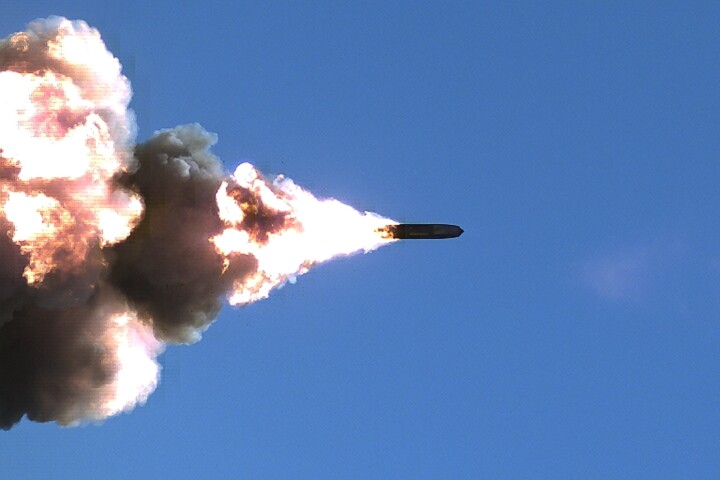
August 10, 2008 Amphibious assaults are a dangerous business, which is why the U.S. Naval Surface Warfare Center is assembling a comprehensive Assault Breaching System. A key part of the new system is a Countermine System (CMS) designed to minimize mine-related human losses and not surprisingly, the new design is innovative, very complex and pretty scarey. Basically, it’s a warhead that dispenses its payload of 4000 neutralizer "darts" at a predetermined altitude to clear a safe pathway for the Marines that follow. The new CMS warhead is delivered accurately above the designated area required for clearance by the equally innovative JDAM guidance platform.
Short-Wave Infrared capability for the ScanEagle UAV
Image Gallery (2 images)
August 8, 2008 The ScanEagle is a low-cost, long-endurance autonomous unmanned aircraft that has been one of the most significant new battlefield technologies to emerge during the wars in Iraq and Afghanistan, performing more than 100,000 combat hours in both theatres and delivering invaluable intelligence, surveillance and reconnaissance (ISR) on a daily basis. The only trouble is that conventional electro-optical and long-wave infrared cameras are severely limited in fog or rain. Now they’ve managed to miniaturize a short-wave infrared (SWIR) camera to fit inside the diminutive ScanEagle, enabling clear vision in any circumstance.
Etihad buys up big at Farnborough Airshow
Image Gallery (4 images)
Soaring oil prices might be putting the squeeze on margins for airlines around the world, but that hasn't deterred United Arab Emirates national carrier Etihad from splurging more than $20 billion on orders for Boeing and Airbus aircraft.
Skyhook and Boeing build the world's largest VTOL aircraft
Image Gallery (2 images)
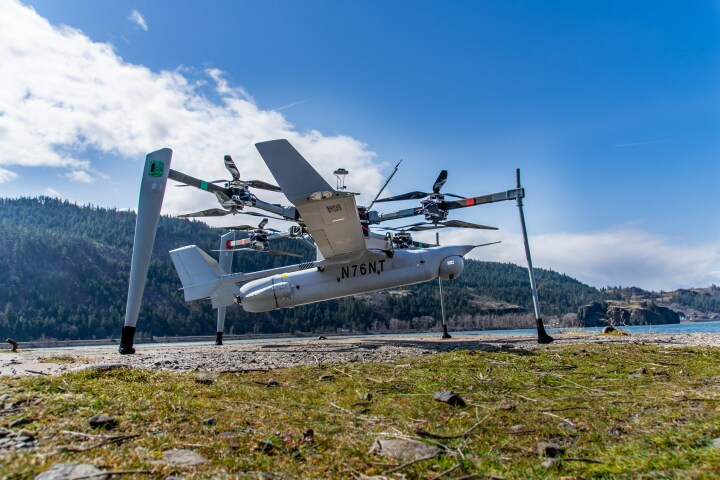
One of the greatest hurdles for major construction in remote areas is moving heavy building materials to the worksite. Road-building is an environmental issue, as well as often being cost-prohibitive and impossible in many terrains. Some areas are unreachable by cargo ship, large cargo planes require good weather and long runways, and helicopters simply can't carry heavy enough loads - which is why Skyhook's Jess Heavy Lifter is so significant. It combines the neutral buoyancy and stability of an airship with the lifting power of four big rotors. Capable of lifting 40 tons (80,000lbs) vertically and transporting the load more than 200 miles without refuelling, the JHL-40 offers twice the load capacity of the world's current largest cargo helicopter.
Boeing announces B-52 airborne electronic attack contract
Image Gallery (2 images)
July 1, 2008 Boeing has been awarded a $14.9 million contract by the U.S. Air Force Research Laboratory to develop airborne electronic attack technologies that can be used over long distances.
Airborne Laser completes activation tests
Image Gallery (2 images)
Boeing and the US Missile Defense Agency have completed the first laser activation testing for the Airborne Laser missile defense program. The tests involved circulating water through the laser to verify its integrity, before circulating chemicals through the laser to confirm sequencing and control.
Airborne Laser completes activation tests
Image Gallery (2 images)
Boeing and the US Missile Defense Agency have completed the first laser activation testing for the Airborne Laser missile defense program. The tests involved circulating water through the laser to verify its integrity, before circulating chemicals through the laser to confirm sequencing and control.
Hummingbird achieves 18 hour flight milestone
Image Gallery (3 images)
Gizmag first reported on Boeing’s A160T Hummingbird Unmanned Rotorcraft back in 2005 and again in 2007 when the craft made its first flight. Now the craft has come very close to achieving the original 20 hour flight times envisioned (and unofficially broken a world record for unmanned aerial vehicles along the way) by remaining in the air for 18.7 hours.
Boeing's 777 Freighter graduates from paint facility
Image Gallery (3 images)
The first Boeing 777 Freighter plane has left the paint facility in Everett, Washington, marking another step towards the scheduled launch of the plane into service late this year. The 777 Freighter is an all-cargo version of the 777-200LR Worldliner, which made Gizmag headlines in 2005 when it set the world long distance record.
Airbus and Honeywell team up on alternative fuel
Image Gallery (3 images)
Virgin Atlantic and Boeing launched the world's first commercial airline flight on biofuel earlier this year, then Continental Airlines joined the push towards alternative fuels and now Airbus has announced that it will partner with Honeywell, IAE and JetBlue in order to develop a sustainable second-generation biofuel for use in commercial aircraft.
NLOS prototype on track
Image Gallery (7 images)
May 14, 2008 The Non-Line-of-Sight (NLOS) Cannon Firing Platform first unveiled back in June 2006 is now approaching its final stages of assembly ahead of delivery of the first prototype to the US Army in June.
Boeing begins assembly on third flight-test 787 Dreamliner
Image Gallery (2 images)
Boeing has begun assembly on the third flight-test airplane for the 787 Dreamliner. The Dreamliner is the first aircraft to be 80% composite by volume, making it lighter and more efficient than competitors. The first airplane to fly is on track for "power on" in June.
DARPA advances plans for five year non-stop flying machine
Image Gallery (3 images)
April 22, 2008 The Defense Advanced Research Projects Agency (DARPA) has selected Aurora Flight Sciences, Boeing and Lockheed Martin as the contractors for the first phase of its Vulture program - a project which aims to design and develop a new breed of solar-powered unmanned aircraft that can remain airborne without interruption for an incredible five years.
How to make a dumb bomb smarter
Image Gallery (4 images)
Boeing has begun delivering the first Laser Joint Direct Attack Munition (LJDAM) kits to the U.S. Air Force. The Precision Laser Guidance Set (PLGS) kits have been created inside just 11 months to satisfy the Air Force and Navy's urgent need for weapons capable of engaging fast-moving land targets. The US$47,000 PLGS gives a JDAM with a 500 pound warhead the ability to hit a target travelling at up to 70 mph. It’s quite an amazing piece of engineering because the PLGS kit goes in the nose, and the US$22,000 JDAM kit fits to the tail of what was once a very dumb bomb. The JDAM kit offers both GPS and inertial navigation, and the PLGS adds laser, meaning it only takes US$67,000 to make a dumb bomb much smarter.
Final assembly begins on P-8A Poseidon anti-sub plane
Image Gallery (2 images)
April 11, 2008 Boeing has begun final assembly of the first P-8A Poseidon, the long-range anti-submarine plane that will replace the P-3 Orion. The US Navy plans to purchase 108 P-8As, and initial operational capability is scheduled to begin in 2013. The P-8A will have anti-surface warfare, intelligence, surveillance and reconnaissance capabilities.
First manned fuel-cell flight
Image Gallery (2 images)
April 7, 2008 Boeing has added another chapter to aviation history by flying a manned airplane powered by hydrogen fuel cells (preview article here). The milestone is the work of Boeing Research & Technology Europe (BR&TE is part of the legendary Phantom Works advanced R&D unit) in Madrid, working with a raft of industry partners across the world. A two-seat Dimona motor-glider with a 16.3 meter (53.5 foot) wingspan was used as the airframe .
ScanEagle UAV gets Synthetic Aperture Radar (SAR)
Image Gallery (8 images)
March 18, 2008 The ScanEagle UAV has proven a revelation in Iraq and Afghanistan, offering another key informational input on the battlefield to help soldiers under fire make better decisions. The bad news for enemies of the United States is that the miniature UAV can now carry Synthetic Aperture Radar (SAR) which can pick out man made objects not readily visible to IR or EO cameras.
Continental Airlines to conduct biofuel test flight
Image Gallery (8 images)
Continental Airlines, in conjunction with Boeing and GE Aviation, has announced plans to conduct a biofuel demonstration flight in the first half of 2009. Continental will be the first major U.S. carrier to undertake such a flight in an effort to identify sustainable fuel solutions for the aviation industry.
Boeing demonstrates biological detection UAV
Image Gallery (8 images)
March 11, 2008 Increasingly sophisticated Unmanned Aerial Vehicles (UAVs) are already playing a key role in reconnaissance and combat missions around the globe by offering a versatile platform which removes the human operator from the line-of-fire. Now the effectiveness of these systems has been demonstrated in one of the most sinister scenarios of modern warfare - biological threat. Boeing, in conjunction with the U.S. Defense Threat Reduction Agency (DTRA) has successfully shown that a modified version of its ScanEagle UAV can intercept, detect and fly through simulated biological plumes or clouds to collect airborne agents in a series of land and sea tests conducted between November 2007 to the end of January 2008.
Boeing completes 787 Dreamliner fuselage tests
Image Gallery (4 images)
March 5, 2008 The Boeing 787 Dreamliner has successfully completed a series of tests revealing how the composite barrel design will fare in extreme weather conditions as part of achieving certification for the 787.
Laser modules installed on Airborne Laser prototype aircraft
Image Gallery (4 images)
February 29, 2008 In another milestone for the US Missile Defense Agency’s Airborne Laser project, the six laser modules that comprise the core of the system have been successfully installed by Northrop Grumman.
Virgin flight into bold biofuel territory
Image Gallery (4 images)
Dubbed a “scam” and a “stunt” by environmental groups and sections of the media, the fact remains that Virgin Atlantic has become the world's first airline to fly one of its commercial planes on biofuel. A mix of standard jet fuel, coconut and babassu oils powered the Boeing 747 jumbo jet from London Heathrow to Amsterdam.
Boeing KC-767 refuels an F-15E in night conditions
Image Gallery (4 images)
January 31, 2008 The Boeing KC-767 tanker aircraft has successfully transferred fuel to an F-15E at night – a world first manoeuvre for that model. Transferring fuel through a boom, via the remote vision system, and during night-time conditions, will significantly reduce risk for future tanker customers like the U.S. Air Force.
US Air Force assumes control of first Boeing WGS satellite
Image Gallery (4 images)
January 30, 2008 Boeing has handed over control of the first of six Wideband Global SATCOM satellites to the US Air Force. WGS-1 is the Department of Defense's highest capacity communications satellite and the WGS line is to eventually replace the Defense Satellite Communications System constellation.
Hammonds Omni-Directional Vehicle to assist in production of Boeing's 787 Dreamliner
Image Gallery (3 images)
January 29, 2008 This UFO-shaped curiosity is the Hammonds Omni-Directional Vehicle (ODV), and its zero turning radius and freely rotating hitch promise a revolution in bulky materials handling. Originally shelved in the aftermath of 9/11, the ODV has finally gone into production, and Boeing have ordered four of these intriguing units to assist with production of their new 787 Dreamliner.
Boeing wins Instrument Unit Avionics contract for Ares I launch vehicle
Image Gallery (2 images)
December 22, 2007 The U.S. Vision for Space Exploration is an important step closer to being realized, with NASA awarding the Boeing Company a $265 million contract to produce the instrument unit avionics for the Ares I launch vehicle - a platform that will eventually be used for manned expeditions to the Moon and Mars.
First succesful Japanese test for the Aegis Ballistic Missile Defense System
Image Gallery (2 images)
December 19, 2007 The Aegis Ballistic Missile Defense System has been successfully tested for the 12th time in an exercise that marks the first occasion the system has been used by the Japan Maritime Self-Defense Force. A Japanese Kongo destroyer launched a Standard Missile-3 Block IA missile, which engaged and destroyed a medium-range ballistic missile target fired from the U.S Navy’s Pacific Missile Range facility in Hawaii at a height of 60 miles above the Pacific ocean.
Production begins on Boeing P-8A fuselage
Image Gallery (3 images)
December 13, 2007 Boeing has started production on its P-8A Poseidon fuselage, the anti-submarine test plane that will replace the P-3 Orion. The first fuselage components were loaded into a holding fixture on the factory floor of the Spirit AeroSystems’ Wichita facility, in a ceremony that included U.S. Navy Personnel.
Autonomous aerial refueling of UAVs demonstrated
Image Gallery (3 images)
December 5, 2007 Recent flight tests by the U.S. Air Force Research Laboratory and Boeing have demonstrated that unmanned air vehicles (UAVs) are capable of autonomous rendezvous with a tanker aircraft for refueling. Given their limited in size and payload capacity compared to larger manned aircraft, the development promises to significantly increase the the flight-times and range of of UAVs.
Active flow control technology allows Boeing to deploy munitions at Mach 2
Image Gallery (3 images)
November 28, 2007 In a landmark demonstration, Boeing and the U.S. Air Force have used "active flow control" technology to deploy munitions from a weapons bay at twice the speed of sound. The MK-82 Joint Direct Attack Munition Standard Test Vehicle was released from a rocket sled at the High-Speed Test Track at Holloman Air Force Base, New Mexico, representing the first safe release of munitions from a weapons bay at high supersonic speeds.
Boeing achieves milestone in unmanned underwater vehicle recovery
Image Gallery (3 images)
November 27, 2007 In a first of its kind operation,
Boeing has successfully demonstrated autonomous launch and recovery of a 21" Unmanned Underwater Vehicle (UUV) from a submarine.
Boeing P-8A Poseidon to replace P-3 Orion
Image Gallery (2 images)
November 8, 2007 Boeing will have five P-8A Poseidon anti-submarine test planes completed by March 2009, with full production expected to commence in 2013. One hundred and twenty nine feet long aircraft with a 117 foot wingspan, the long-awaited replacement for the P-3 Orion will be incorporated into the US Navy and the Royal Australian Air Force. The Poseidon is a long-range anti-submarine plane like its predecessor, and will carry five torpedoes, four anti-ship missiles and two satellite guided bombs.
Boeing tests hydrogen propulsion system for high-altitude UAV
Image Gallery (2 images)
October 30, 2007 The Boeing Company has achieved a milestone in the development of its High Altitude Long Endurance (HALE) unmanned aircraft by successfully testing a hydrogen propulsion system in simulated conditions of 65,000 feet. The test, conducted over more than three days using a Ford Motor Company-developed hydrogen engine (a gasoline version of which can be found in the Ford Fusion and Escape Hybrid) is a further step towards the realization of a UAV designed to remain airborne for more than seven days and carry multi-sensor payloads of up to 2,000 pounds.
Dual-Cockpit Joint Helmet-Mounted Cueing System delivered to the U.S. Navy
Image Gallery (3 images)
October 18, 2007 Boeing has delivered the first factory-installed, dual-cockpit F/A-18F Super Hornet Joint Helmet-Mounted Cueing System (JHMCS) to the U.S. Navy. The system allows the flight crew to rapidly acquire and designate a target simply by looking at it and the new two-seat variant extends this capability to both crew members.
Boeing announce plans to accelerate bio-jet fuel development
Image Gallery (2 images)
October 8, 2007 In a move designed to accelerate the development of viable and sustainable clean fuels for commercial aviation, Boeing will team up with Air New Zealand and Rolls-Royce to conduct a biofuel demonstration flight planned for the second half of 2008.