
Atoms
-
 Time crystals are a strange state of matter with properties that sound impossible, but they have been created. Now, German scientists have made one that lasts 10 million times longer than in previous experiments.
 -
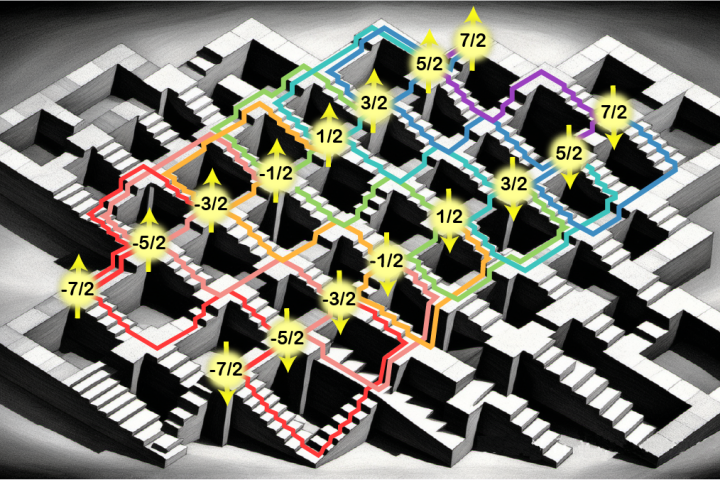 You can cram much more quantum processing power into a given space if you use four different ways to store data on a single atom, according to new research. The method unlocks more powerful quantum computers that are easier to control.
 -
 We’ve all accidentally tied knots that we can’t untangle – but we don’t expect to win any world records. Now scientists have done exactly that, accidentally tying the world’s smallest and tightest knot in a tiny structure made of just 54 atoms.
 -
 Scientists have found that a “superatomic” material is the fastest and most efficient semiconductor ever. Taking advantage of a tortoise-and-hare mechanism, the new material can transport energy much faster than silicon.
 -
 The Royal Swedish Academy of Science has awarded the 2023 Nobel Prize in Physics to Pierre Agostini, Ferenc Krausz and Anne L'Huillier for work that's "given humanity new tools for exploring the world of electrons inside atoms and molecules."
 -
 Scientists have detected the first evidence of a phenomenon called “quantum superchemistry.” Long predicted but never confirmed, this effect could speed up chemical reactions, give scientists more control over them, and inform quantum computing.
 -
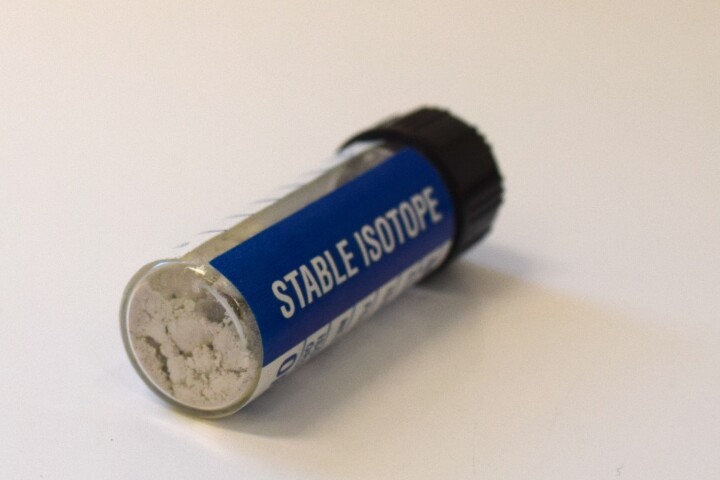 To make the United States self-sufficient in rare exotic elements, the Oak Ridge National Laboratory (ORNL) has developed a latest generation electromagnetic isotope separator (EMIS) to harvest stable isotopes across the entire periodic table.
 -
 Scientists in South Korea have created what they call "the world’s smallest ball game," throwing individual atoms between two optical traps. The research could eventually make for more adaptable and dynamic quantum computers.
 -
 University of Oxford physicists have linked two atomic clocks through quantum entanglement for the first time. The feat can help make these clocks so precise that they begin to approach the fundamental limit of precision set by quantum mechanics.
 -
 Researchers at NIST have shown that a cloud of atoms can be used as a receiver to pick up video transmissions. The team demonstrated this “Atomic Television” by transmitting live video feed and even video games through the atoms to a monitor.
 -
 Researchers have developed a more precise design for "optical tweezers," using a metasurface lens studded with millions of tiny pillars which focus light to trap and manipulate individual atoms. It could pave the way for powerful quantum devices.
 -
 In what's being hailed as an important first for chemistry, scientists have developed a new technology that can selectively rearrange atomic bonds within a single molecule, which could open up exciting possibilities in molecular machinery.
Load More