
Astronomy
-
 A huge comet will grace our skies over the next few months, putting on a grand show through binoculars or telescopes, and will even be visible to the naked eye. So how and when can you see it?
 -
 Sometime this year, the night sky will get a brand new 'star' that will be visible with the naked eye, even in the city. The celestial light show will be the result of an explosive interaction between two neighboring stars that occurs every 80 years.
 -
 A massive volcano has been hiding in plain sight on Mars, says new research. Not only is its sheer size noteworthy, but the team believes it might also harbor glacial ice that could be critical for further exploration and Martian settlements.
 -
 We’ve all regretted taking too long to make a move, but at least it wasn't 3 billion years. That’s how long the sexual tension has been building between two slow-dancing supermassive black holes, whose eventual congress could rock the entire universe.
 -
 In 2029, a large asteroid will whizz past Earth so close it’ll be visible to the naked eye. But could collisions with other asteroids bounce it off-course into us? To find out, astronomers have now crunched the paths of 1.3 million known asteroids.
 -
 In a few billion years, the Sun will destroy the solar system’s inner planets – and if it’s lucky, it might get a big cool scar to brag about. That’s what happened to a newly found white dwarf, which appears to have a bizarre metal scar on its surface.
 -
 NASA has officially selected a new mission – the Ultraviolet Explorer, or UVEX. By scanning the skies in UV light, it will be able to study the hottest objects and fleeting events like supernovae, and create a detailed new map of the cosmos.
 -
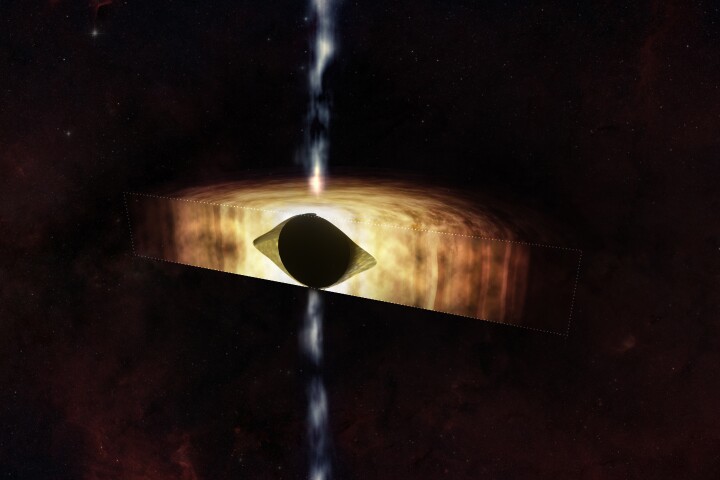 A supermassive monster lurks at the center of our galaxy, and astronomers have now discovered that it’s spinning so fast it’s warping the very fabric of spacetime into a football shape.
 -
 Flat-Earthers might have been right all along – they were just a few billion years late. Scientists at the University of Central Lancashire have found that newly formed planets might take on a flatter shape, before rounding out.
 -
 Astronomers have mapped out half the universe in X-ray light, using a space telescope called eROSITA. The new map, which contains almost a million X-ray sources, is the basis of dozens of new scientific papers, with many more to come.
 -
 “Astronomers discover a completely unknown object floating around in space” is a common news theme, but it’s fun every time. The latest is a brand new type of star – ancient red giants the team has nicknamed “Old Smokers.”
 -
 Mobile apps and AI processing are making things a lot easier for stargazers via smart telescopes that automate complicated and fiddly processes. The latest addition to Celestron's range can also throw celestial captures onto a smart TV screen.
Load More