
Asteroid
-
 In 2029, a large asteroid will whizz past Earth so close it’ll be visible to the naked eye. But could collisions with other asteroids bounce it off-course into us? To find out, astronomers have now crunched the paths of 1.3 million known asteroids.
 -
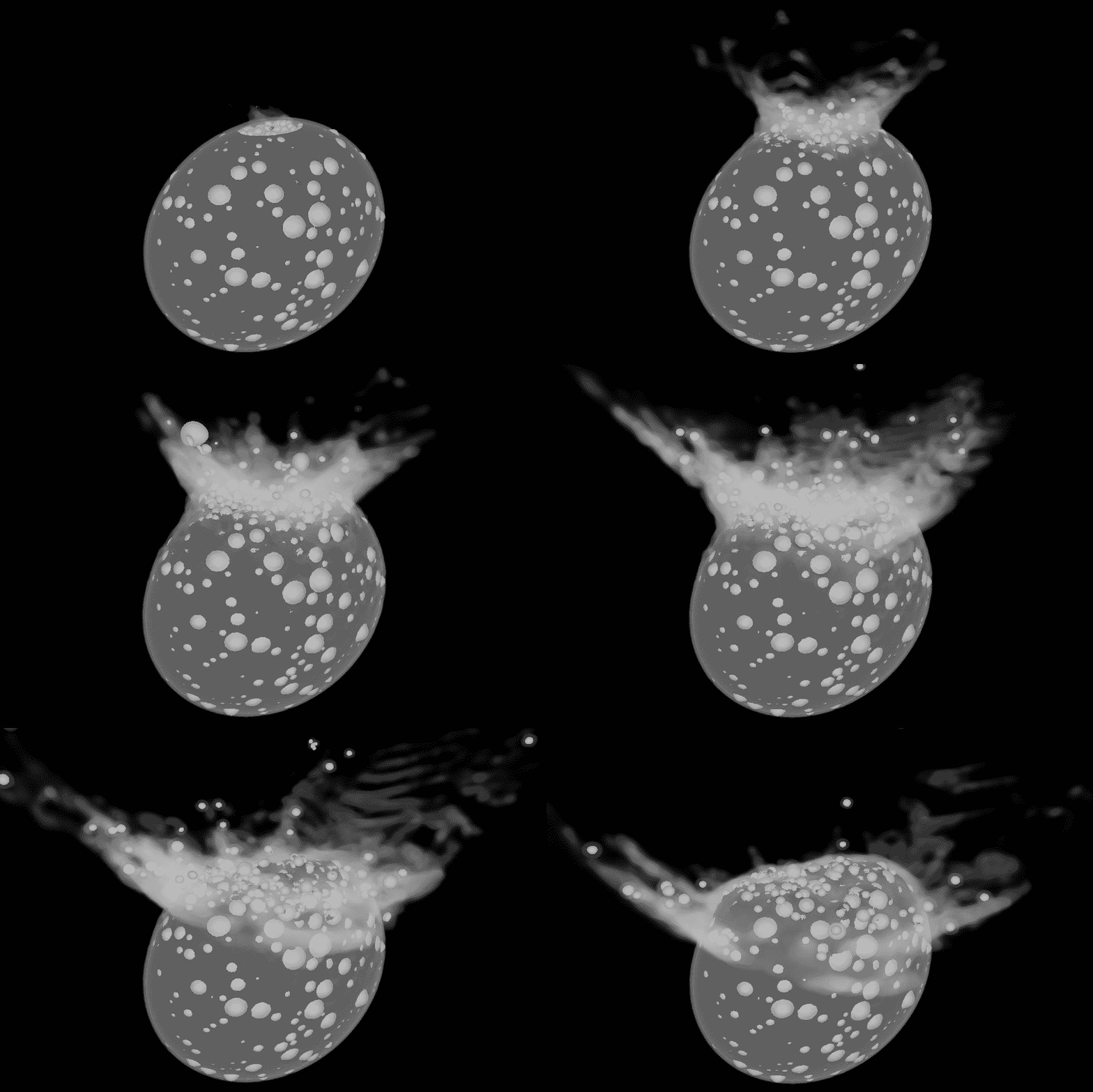 When NASA's DART deep space probe smashed into the asteroid Dimorphos, it didn't leave a crater. Instead, there was a splash, where the asteroid was distorted like a jelly as its entire structure shifted.
 -
 On January 21, 2024, a meteor disintegrated over Germany near Berlin. That's not so unusual, but NASA was able to give warning of its approach 95 minutes before impact thanks to the space agency's international planetary defense network.
 -
 You can breathe easy and take the sticky tape off the windows because the solar system won't be hit by the rogue white dwarf WD 0810-353 in 29,000 years. ESO’s Very Large Telescope (VLT) shows that early calculations were a bit off.
 -
 NASA’s asteroid-exploring spacecraft Lucy has made its first up-close observations – and discovered something unexpected. The asteroid Dinkinesh not only has a small satellite orbiting it, but that mini-moon is made up of two objects stuck together.
 -
 The cascading effects of a giant asteroid impact is credited for killing off the dinosaurs. Now scientists have identified a new factor – fine silicate dust that hung in the atmosphere for well over a decade, blocking sunlight and cooling the planet.
 -
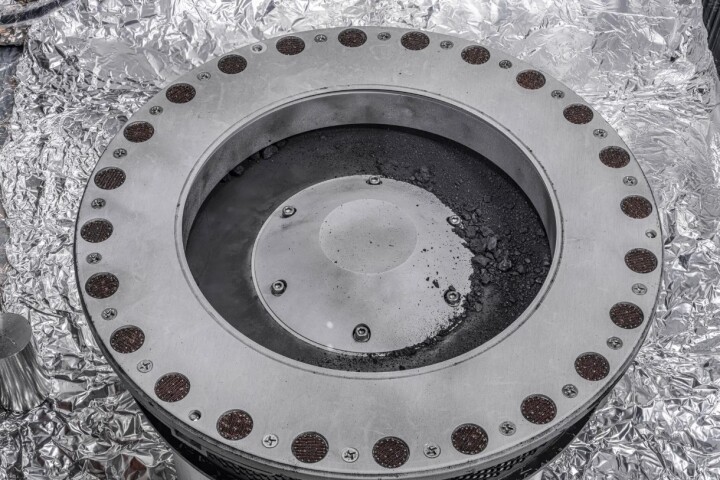 NASA's OSIRIS-REx has begun to pay dividends as the space agency releases the first results of the sample return mission from the asteroid Bennu, showing the presence of a high carbon content and water – the primary building blocks of life.
 -
 NASA's deep-space probe to an estimated US$10-quadrillion metal-rich asteroid is on its way. The Psyche mission lifted off on October 13 at 10:19 am EDT from Launch Complex 39A at the Kennedy Space Center in Florida atop a SpaceX Falcon Heavy rocket.
 -
 After a two-and-a-half-year astral trek and seven years since lift off, asteroid samples from NASA's Origins, Spectral Interpretation, Resource Identification and Security – Regolith Explorer OS(IRIS-REx) have been brought down to Earth.
 -
 When NASA's Psyche probe launches in October on its mission to a metal asteroid as much as 309 million miles (497 million km) from Earth, it will be carrying a new laser communications system that promises to revolutionize deep space missions.
 -
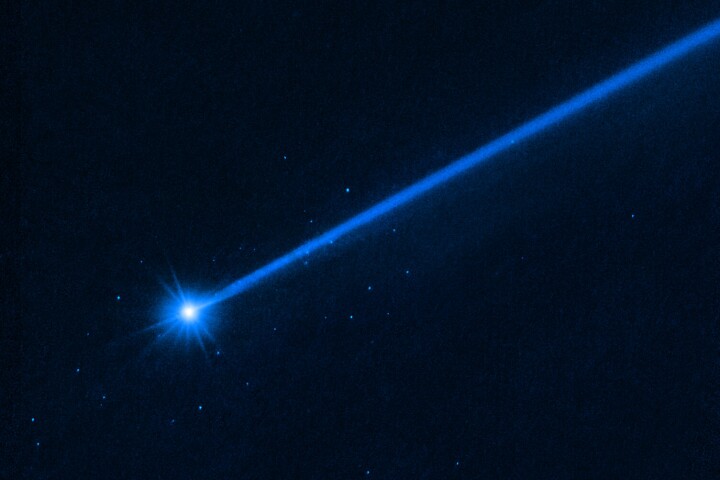 After focussing on an asteroid that was struck in 2022 by a half-tonne NASA robotic probe traveling over seven times faster than a bullet, the Hubble Space Telescope has detected a swarm of 37 boulders that were dislodged by the impact.
 -
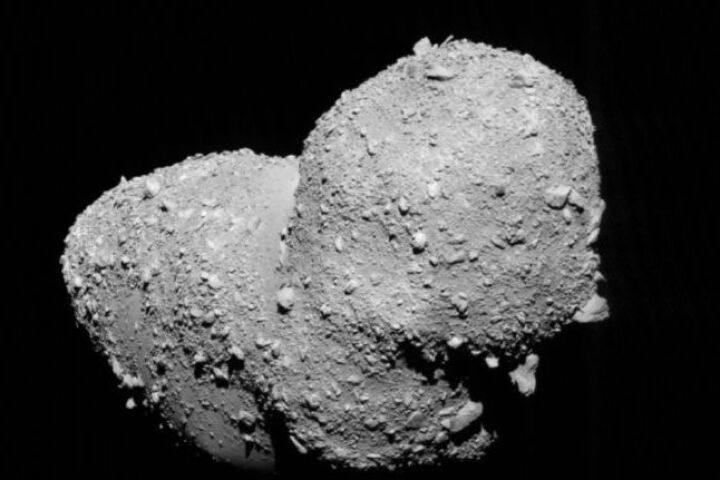 Researchers just can’t seem to keep their hands off the peanut-shaped asteroid Itokawa, and with good reason. Having already revealed some curious mineral quirks, it's now surprised scientists with its salt crystals, hinting at a water-bearing past.
Load More