
Armor
-
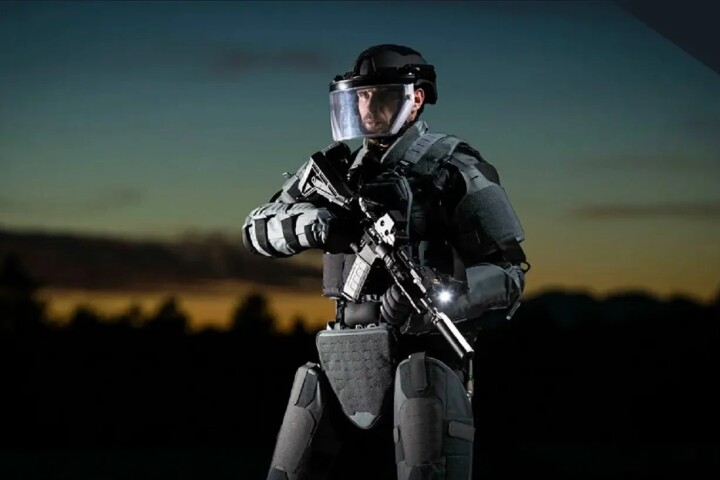 Soldiers and tactical unit police officers often have a lot of heavy gear to carry, including the ballistic body armor that they're wearing. That's where the ExoM Up-Armoured Exoskeleton is intended to come in, as it's load-reducing and bulletproof.
 -
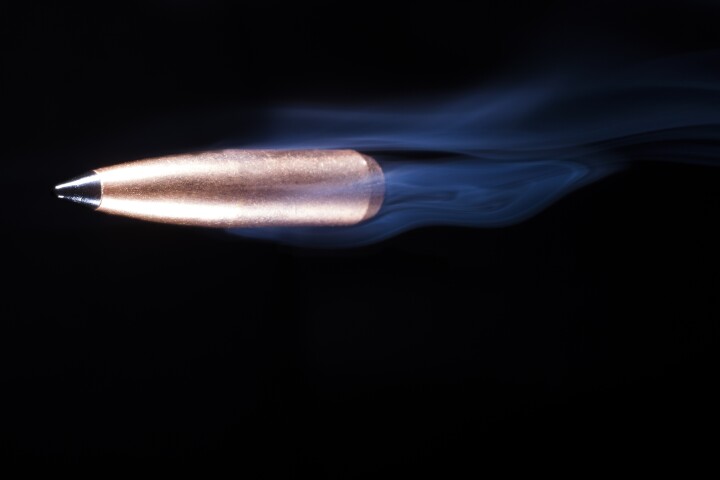 Researchers at the University of Kent have developed a protein-based family of synthetic materials that can withstand supersonic impacts. Called TSAMs, they see these materials one day finding use in military and space applications.
 -
 Highland Systems is adding to its fearsome vehicle lineup in extraordinary style, with an 11-seat armored speed demon it calls the Kronos. Clearly inspired by the manta ray, this hybrid beast rocks folding wings and 1,200 horsepower of propulsion.
 -
 Engineers at the University of Wisconsin–Madison have forged a new type of ultralight armor material described as a nanofiber mat, which features a unique chemistry that enables it to outperform Kevlar and steel.
 -
 A new example of a material with shape-shifting capabilities is modeled on ancient chain mail armor, enabling it to swiftly switch from flexible to stiff thanks to carefully arranged interlocking particles.
 -
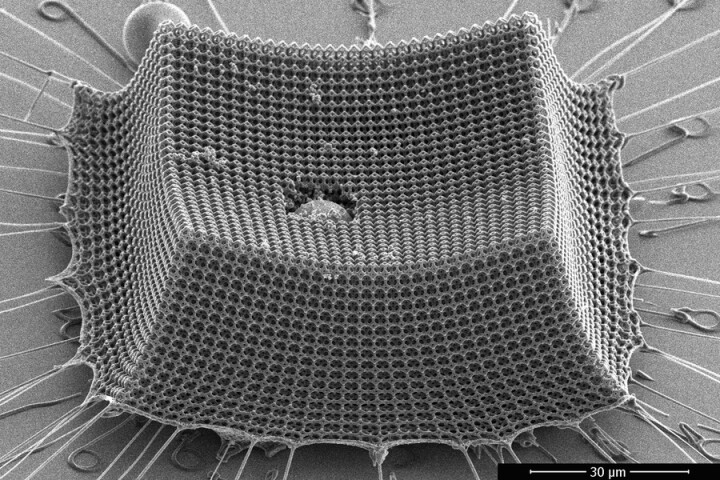 A light weight and slim form are two very desirable attributes when it comes to next-gen armor materials. With this in mind, scientists have used advanced nanoscale engineering to craft a new armor material they say outperforms Kevlar and steel.
 -
 Milirem Robotics has rolled out its Type-X Robotic Combat Vehicle for its first mobility tests. Unveiled in 2020, it's a medium-weight autonomous armored platform, designed to provide reconnaissance and fire support for mechanized units and convoys.
 -
 The first Armored Multi-Purpose Vehicle (AMPV) from BAE Systems is ready for delivery to the US Army. On August 31, 2020, the first of the vehicles that will replace the Army's Vietnam War-era M113s rolled off of the production line.
 -
 Researchers at LANL have hit upon a microstructure with impressive shock absorption. The team 3D-printed cubes with fractal void patterns inside them, which could be a useful structure for new materials in helmets, armor and other protective items.
 -
 Scientists at Texas A&M University have figured out a way to supercharge boron carbide armor's already impressive stopping abilities, adding a little silicon to the mix so that it can withstand bullets traveling at even higher speeds.
 -
 Although the bulletproof shields used by police officers are definitely life-savers, the things are also quite heavy and bulky. The origami-inspired Swift Shield offers an alternative, as it folds down into a lightweight package when not in use.
 -
 When it comes to body armor, there's typically a trade-off – it can either be highly impact-resistant or flexible, but not both. That may not be the case for much longer, however, thanks to an experimental new material inspired by a mollusc.
Load More