
Airbags
-
 Honda has patented a new type of airbag system for motorcycles, which would rapidly inflate in a crash or fall situation, wrap around the rider's torso in a great big hug, and detach from the bike to protect the rider when the two are separated.
 -
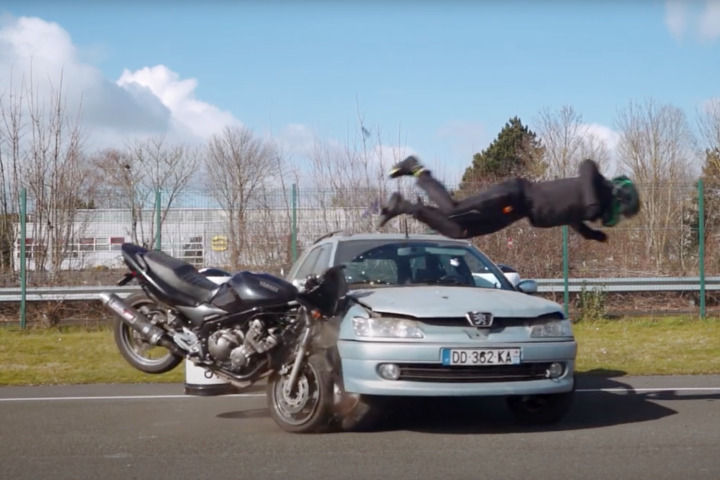 Two companies – France's CX Air Dynamics and Sweden's Mo'Cycle – are now selling airbag jeans for motorcycle riders. They sit flat as you ride, but in a crash, they balloon up like Sam Smith at the Brit Awards, protecting your knees, hips and thighs.
 -
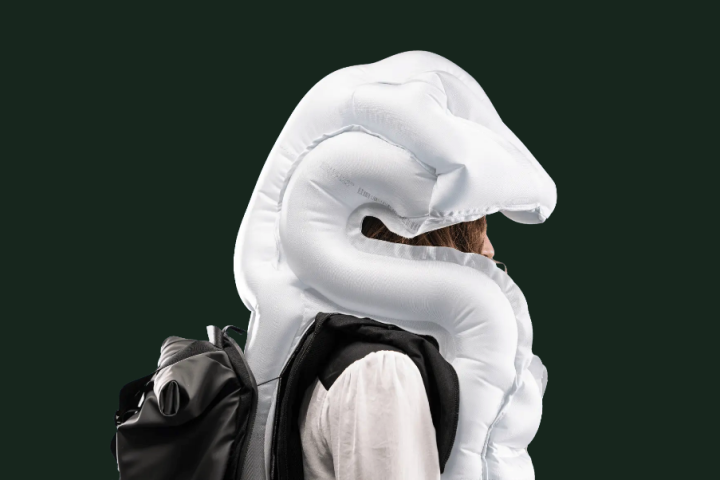 In & Motion is developing a backpack to take bicycle airbag protection to the next level. Its Stan pack works like other protective inflatables but gives the commuter more complete protection around the head, neck, chest and back.
 -
 While bike helmets do provide a great deal of protection, it's still possible to sustain a head injury when wearing one. This fact prompted two Swedish companies to develop an airbag-equipped helmet, which could make a big difference in an accident.
 -
 While most bicycle commuting backpacks simply allow cyclists to carry their stuff, EVOC Sports' newest model offers a little something extra. In the event of an accident, an airbag pops out of it to protect the rider's upper body.
 -
 While it looks like a relatively normal polyester shell cycling jacket, the Cirrus has a trick up its sleeve. In the event of a collision or fall it transforms into a wearable airbag, inflating in just 0.08 seconds to protect the neck and body.
 -
 Helite has years of experience developing specialized wearable airbag systems. The Hip'Air belt it's presenting at CES 2018 can sense a sudden fall and automatically inflate protective airbags within about a third of a second, protecting the wearer's hips.
 -
 Hyundai Mobis has developed the world's first airbag system for panoramic sunroofs. This new system stops the occupants from spilling from the cabin in the event of a rollover and could also reduce serious head injuries.
 -
 Tanker trucks are often equipped with baffles or bulkheads that divide the tank into multiple compartments. That way, when the truck stops, its liquid load won't all go sloshing forward in one big wave. Dr. Erik Eenkhoorn believes that's not enough, however … which is why he created the Cairbag.
 -
 The latest airbag-packing safety clothing to come out of the Dainese Group's D-Air Lab is a jacket aimed at protecting workers from impact due to a fall from on high. The appropriately-named Safety Jacket is based on D-Air technology already found in motorcycle and ski clothing.
 -
 A team at Stanford has put self-inflating airbag helmets like the Hövding through their paces, with drop tests showing that they may be up to six times better at cushioning impact than traditional foam helmets.
 -
 BeBop Sensors has developed a smart fabric that is meant to make car seats smarter and thus safer by monitoring the size, weight, and movement of both drivers and passengers, whether they sit in the front row or back.
Load More