
Accidents
-
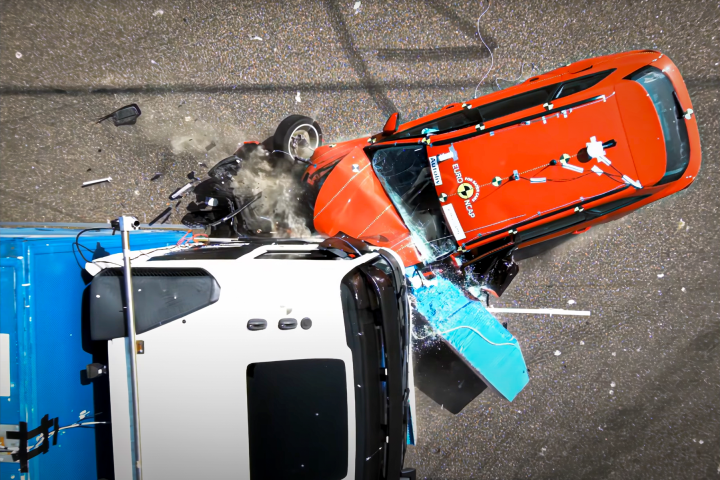 A new Swedish-designed front end for transport trucks could help reduce driver deaths in collisions with passenger cars. The structure is designed to both spread and absorb the force of impact between the two vehicles.
 -
 While bike helmets do provide a great deal of protection, it's still possible to sustain a head injury when wearing one. This fact prompted two Swedish companies to develop an airbag-equipped helmet, which could make a big difference in an accident.
 -
 When a car crashes into a roadside object at an intersection, chances are pretty high that object will be a traffic light pole. If it's a new energy-absorbing pole, however, the likelihood of injury or even death may be significantly reduced.
 -
 While most bicycle commuting backpacks simply allow cyclists to carry their stuff, EVOC Sports' newest model offers a little something extra. In the event of an accident, an airbag pops out of it to protect the rider's upper body.
 -
 Many cars are now equipped with pedestrian-detecting radar systems, but those systems can still be blocked by obstacles such as buildings or other vehicles. A new setup is intended to get around that problem, by taking the radar to the streets.
 -
 Remember back when carabiners were designed solely for hanging one thing from another? Nope, us neither. Now, a new multi-purpose 'biner is claimed to help users get out of crashed vehicles.
 -
 When a spinal cord injury occurs, sometimes it's the body's own immune system that causes the subsequent paralysis. In the not-too-distant future, however, it's possible that an injection of nanoparticles at the injury site may be able to rein in the well-meaning but destructive immune cells.
 -
 Thanks to things like smartphones and automotive infotainment systems, both pedestrians and drivers are probably now less aware of one another than ever before. An experimental new crosswalk could help keep accidents from happening, however, through lights, electronic signs, and an app.
 -
 ScienceA new study has collected seven years of data from Colorado, Washington, and Oregon – three of the earliest US states to legalize marijuana – in order to offer a clearer insight into whether traffic fatalities increased after marijuana legalization.
 -
 With obesity rates rising and boomers getting older, a Michigan-based trauma surgeon and crash-test-dummy maker are hoping to bring car safety up to date with models that represent today’s older and overweight drivers.
 -
 A group of scientists at the Fraunhofer Institute for Photonic Microsystems (IPMS) have developed an electrocardiogram (ECG) that operates from within a car’s driver’s seat.
 -
 The NTSB released the conclusions of its accident investigation of the crash of Virgin Galactic's SpaceShipTwo saying that the accident was due to an error by the co-pilot, who prematurely released the spacecraft's feather system, placing too much stress on the fuselage and causing it to break up.
Load More