
3D Printers
-
 Last year, Anker breezed into the desktop 3D printing space with the AnkerMake M5, launching on Kickstarter to test the market and fund production. Now the company has announced a more affordable follow up called the M5C.
 -
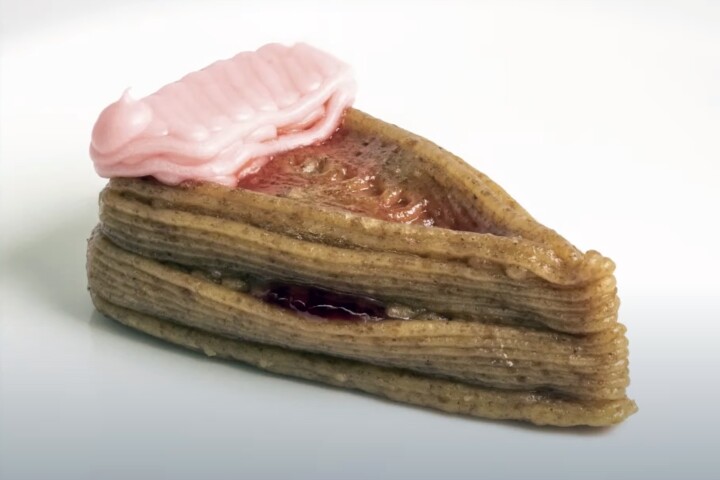 We might soon replace our stovetops, ovens, and microwaves with 3D printers after mechanical engineers from Columbia University successfully created a cooked slice of cheesecake made from a record-breaking seven ingredients.
 -
 Fabricating models and design prototypes on a desktop 3D printer in the home or workplace can be a great time-saver, but prints can still take many hours to complete. Anker has entered the 3D printer space to change that with the AnkerMake M5.
 -
 Leading 3D printing firm Icon has joined forces with prestigious architecture studio Lake|Flato to create what they hope will become a new genre of homes that combine the benefits of 3D printing technology with the design chops of high-profile firms.
 -
 Though 3D-printed architecture is still relatively new, Icon has already produced projects in Mexico and the US. The firm has now teamed up with Lake|Flato Architects to create another new 3D-printed home in Texas using its next-gen 3D printer.
 -
 The Meltio Engine giveth, and it taketh away. It's a production-grade manufacturing system that attaches to any CNC machine or robot arm, and it allows you to add metal through laser deposition, and then shape and refine it through CNC in one step.
 -
 3Doodler has launched a 3D printing pen specifically designed for pre-schoolers and above. The 3D Build & Play package comes with a low-heat drawing device, character and accessory molds and colorful backdrops to encourage learning through play.
 -
 Space travel is conducive to injuries. Now researchers from Dresden Technical University (TUD) have developed a 3D bioprinting method for use in space, creating new skin and bone tissue out of resources that might be available to astronauts.
 -
 To help patch up large wounds that might normally require a skin graft, researchers at Wake Forest Institute for Regenerative Medicine (WFIRM) have developed a new bioprinter that can print dual layers of a patient’s own skin directly into a wound.
 -
 Desktop 3D printers generally spend most of their life in a basement workshop or home office. YouTuber Thomas Sanladerer wanted something that could go where he did so modified a small inexpensive unit to run on battery power and be controlled with a smartphone.
 -
 With a few notable exceptions, the majority of objects removed from a 3D printer bed are fashioned with plastic. But plastic has a nasty habit of ruining our environment at the end of its useful life. Beer Holthuis has built a 3D printer that extrudes paper pulp to build three-dimensional objects.
 -
 Desktop Metal might have set the ball rolling, but it seems HP is getting very serious about 3D metal printing at industrial volumes and automotive-grade production quality. HP Metal Jet is 50 times faster and significantly cheaper than existing methods, and pilot programs are already underway.
Load More