Thanks to its tropical climate, Far North Queensland (FNQ), Australia, is a place where residents regularly have to deal with threats from the environment in the form of cyclones, while being mindful of their impact on the environment. One architectural firm has constructed a building that attempts to address both concerns simultaneously. Designed by Charles Wright Architects, the Stamp House in FNQ is a self-sustaining home that's sturdy enough to withstand a Category 5 cyclone.
CWA built the house for a client with the goal of creating a self-sustaining structure that made good use of the surrounding wetland at the building site. The designers worked with local environmental groups, like the Department of Environment and Resource Management and the Queensland Parks and Wildlife Service, to ensure the project's water system did not interfere with the natural ecosystem.
Constructed on a small patch of land in the middle of a pond, much of the Stamp House is comprised of a mixture of new and used concrete, which provides insulation to keep the temperature more constant throughout the year. The blueprints show two floors with seven bedrooms protruding from a larger living space that includes a kitchen/dining area, an open gym area, a few lounges, and several reflective ponds around a central pool.
Power is provided by solar panels that almost completely cover the roof and which are backed up by a solar-powered generator, eliminating the need for any fossil fuels to produce energy. Visitors reach the house on a raised walkway that stretches over the pond waters to dry land.
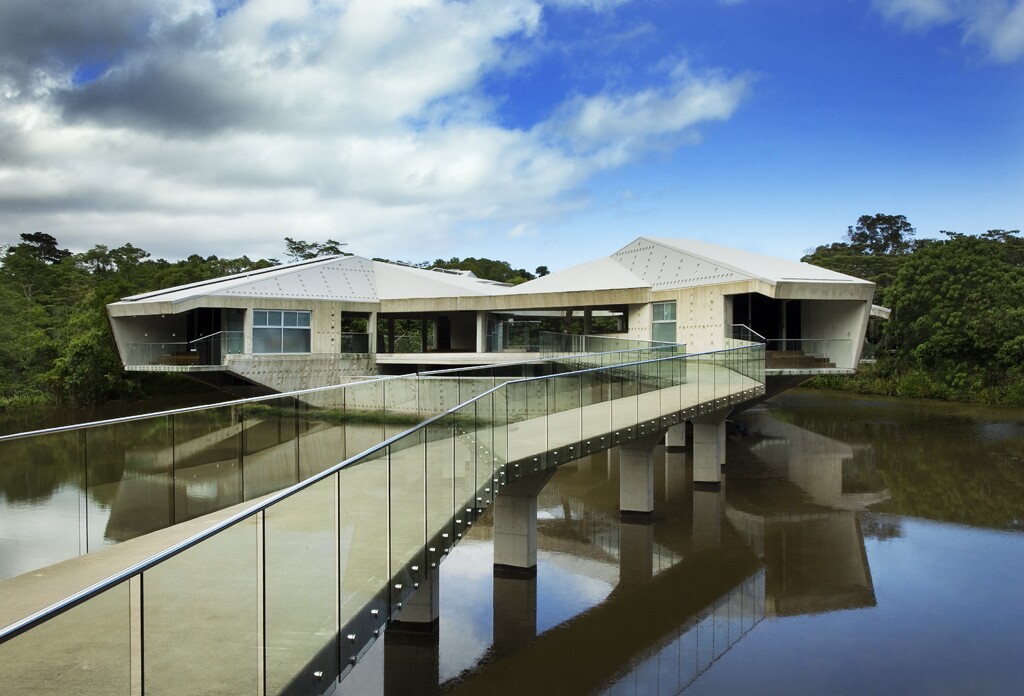
The Stamp House's main eco-friendly feature, though, is it's expansive water system, which is capable of harvesting up to 250,000 liters of water for home use and irrigation. Water used by occupants is recycled right back into the system and the site even has its own tertiary sewage treatment plant. All of the required mechanical and hydraulic facilities are cooled by a self-contained thermal storage tank system and are controlled with a C-Bus home automation protocol.
Aside from blending the design with the location's natural resources, the Stamp House is also engineered to protect against cyclones and the flooding associated with them, which is a real concern for that particular area. Huge cantilevers prevent water from seeping in and CWA claims the entire structure can stand up to a Category 5 cyclone – it's actually classified as a cyclone shelter.
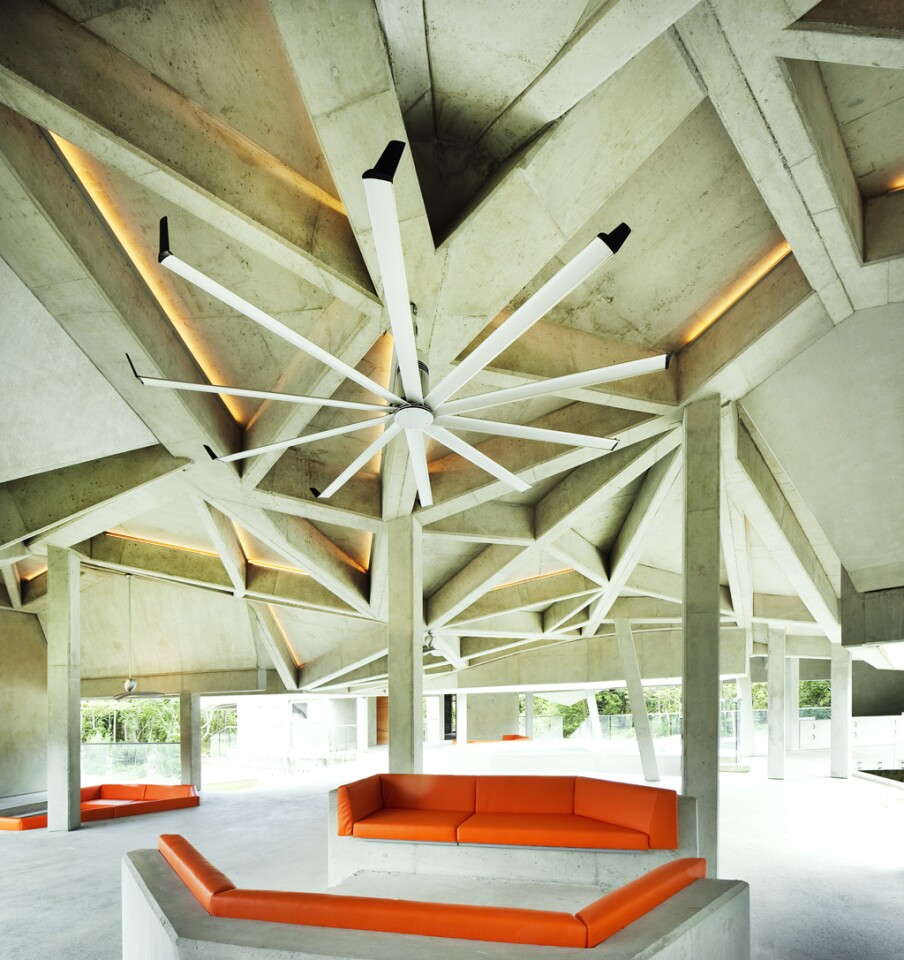
The Stamp House was recently completed, but there has been no word yet on what function it will serve. Regardless of its use though, it does serve as an excellent example of sustainable housing that's tailored to the environment around it.
Source: Charles Wright Architects via ArchDaily