A prototype of the new Lockheed Martin Space Fence radar system is currently tracking orbiting space objects smaller than was ever possible - down to about a centimeter in size. In doing so, it met a key contract requirement during a series of demonstration events by proving it could detect and track such small objects.
Intended to replace the Air Force Space Situational System (AFSSS), a ground-based 217 MHz megawatt-scale radar detector, the prototype for the new Space Fence is capable of tracking more than 200,000 centimeter-sized objects - ten times smaller than can be detected with the previous system. "Our final system design incorporates a scalable, solid-state S-band radar ... capable of detecting much smaller objects than the Air Force’s current system," said Steve Bruce, vice president of Lockheed Martin's Space Fence program.
But is this new Space Fence worth spending a projected US$3.5 billion? In 2009 a pair of satellites collided, releasing roughly the same amount of energy as a Davy Crockett nuclear device, resulting in total destruction and production of thousands of new bits of space junk. Many centimeter-sized holes have been punched through the shuttle's radiator, and nearly every shuttle mission resulted in needing to replace a chipped window or two. Most of these events cannot be predicted or avoided with earlier systems. The colliding debris is simply too small to be seen.
Space is full of junk. Space debris, orbital debris, space waste ... any object in orbit that has no useful purpose is junk, and we don't know where most of it is. The debris ranges from empty rocket casings, dead satellites, and the occasional tool box to the tiniest fragments of paint, glass, or metal. And space junk can be dangerous. With hundreds of thousands of objects in orbit, risk of potential collisions now threatens national space assets providing critical services, including the Global Positioning System, banking and telecommunications.
How big must a bit of debris be to present a significant danger? Currently we can track 10-cm objects. Assuming an impact velocity of 6 miles per second, a 10-cm object strikes with the power of about 20 kg of TNT. Under the same assumptions, a 1-cm object is equal to a 40-mm HE grenade. Even a BB delivers 5 times the energy of a .44 magnum. A tiny paint chip can also be destructive - well over 100 shuttle windows were replaced owing to chips from the impact of tiny objects.
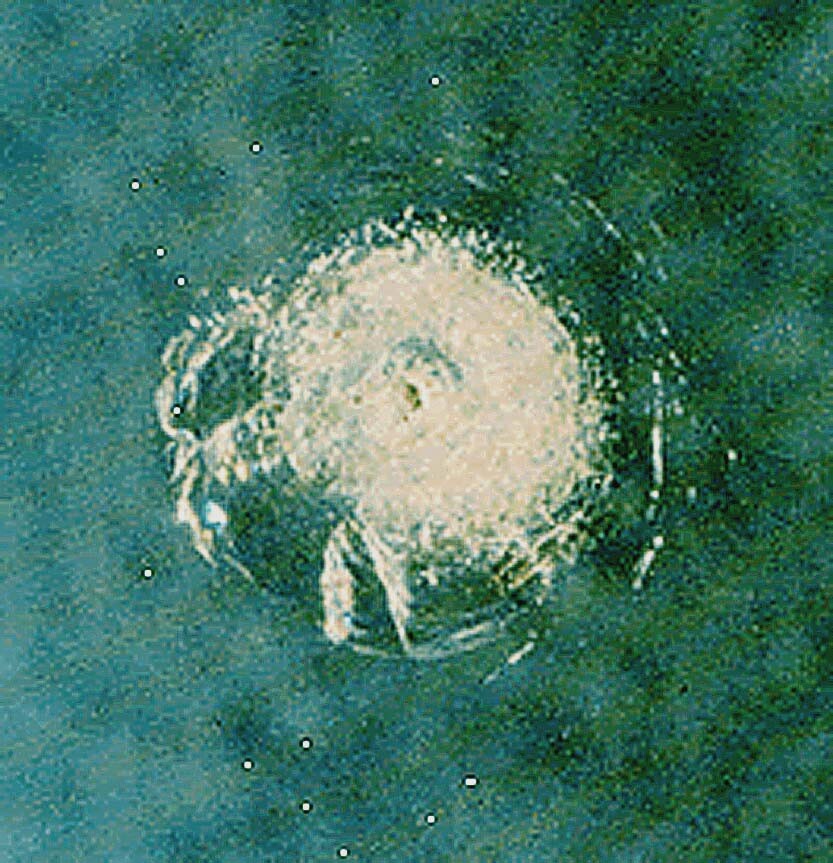
When a major collision occurs, sizable debris clouds form and spread from the collision site. These debris clouds eventually spread out to fill a shell around the Earth. As the density of space junk increases, there will be more and more collisions, generating more space junk and still more collisions. The odds of collision depend on the number of objects in space, so there is a critical density where the creation of new debris occurs faster than the various natural forces remove these objects from orbit. Beyond this point a runaway chain reaction can occur that reduces all objects in orbit to debris in a period of years or months. This possibility is known as the Kessler Syndrome.
By combining better tracking of space junk by the Space Fence with improved maneuverability of satellites and the active prevention of a few particularly messy collisions, we hope to avoid a Kessler Syndrome, and maintain near-Earth space as a base for practical applications and as a staging area for more distant exploration.
There's a video with more information on the Space Fence below.
Source: Lockheed Martin