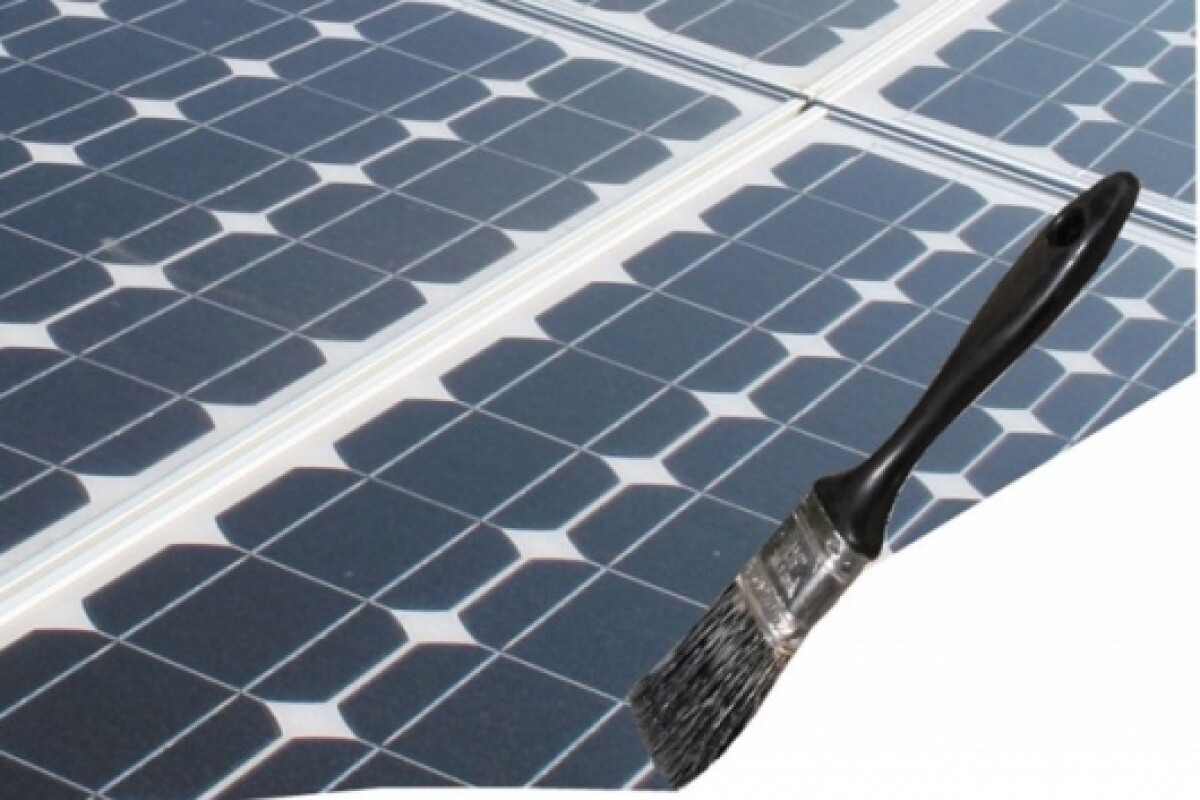


March 31, 2008 Researchers at Swansea University are developing a new way to integrate solar energy into building construction by applying a type of flexible solar-cell paint onto steel cladding.
Dr Dave Worsley, a Reader in the Materials Research Centre at the University's School of Engineering, is investigating the process which unlike conventional solar cells, uses a material that is more efficient at capturing low light radiation and is therefore better suited to the British climate. Paint is applied to steel when it is passed through rollers during the manufacturing process, and it is hoped that the same approach can be used to build up layers of the solar cell system. The researchers' aim is to produce cells that can be painted onto a flexible steel surface at a rate of 30-40m2 (320-430 square feet) per minute.
"We have been collaborating with the steel industry for decades," explains Dr Worsely, "but have tended to focus our attention on improving the long-term durability and corrosion-resistance of the steel. We haven't really paid much attention to how we can make the outside of the steel capable of doing something other than looking good.
"One of our Engineering Doctorate students was researching how sunlight interacts with paint and degrades it, which led to us developing a new photovoltaic method of capturing solar energy."
Dr Worsley believes that the potential for the product is immense, adding that steel producer, Corus Colours, makes around 100 million square meters of steel building cladding a year. He estimates that is it was all treated with the photovoltaic material, and assuming a conservative 5% energy conversion rate, it has the potential to generate around 4,500 gigawatts of electricity through the solar cells each year.
Swansea University is now leading a partnership with Bangor University, University of Bath, and the Imperial College London to develop commercially viable photovoltaic materials for use within the steel industry.
Via Inhabitat.